.png)

Indian Equities Post Biggest Opening Gain In Five Years On US-IndiaTrade Deal
A recap of all that transpired in the Indian markets in early trades, highlighting the major movements and the factors driving them
Richard is an independent financial journalist who tracks financial markets and macroeconomic developments
February 3, 2026 at 4:24 AM IST
Indian equities surged at the open on Tuesday, with the Nifty 50 moving to within about 50 points of record highs as the India–US trade deal removed a key source of uncertainty for markets. The relief rally marked the strongest opening move in nearly five years, reflecting pent-up risk appetite after months of underperformance.
By 0945 IST, the Nifty 50 was up 2.43% at 25687.90, while the BSE Sensex rose 2.38% to 83,602.19. Both benchmarks had jumped close to 5% at the open before paring gains, as investors digested the scale of the policy shift and booked some early profits.
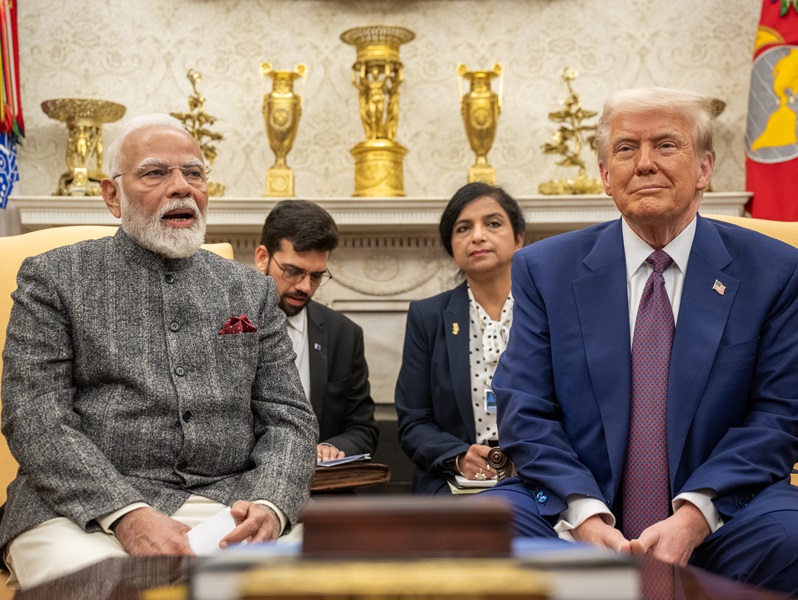
US President Donald Trump announced the agreement late Monday, cutting tariffs on Indian goods to 18% from 50% in return for India halting purchases of Russian oil and lowering several trade barriers. The deal eased fears of prolonged trade friction that had weighed heavily on Indian assets since tariffs were imposed in late August.
Buying was broad-based, with all 16 major sectoral indices opening higher. Mid-cap and small-cap stocks outperformed, rising about 3.5% each, signalling a sharp improvement in risk sentiment across the market.
The rally came after sustained pressure from foreign portfolio investor selling, which has totalled around $23 billion so far in 2025 and driven rare underperformance versus regional peers. Supporting the equity move, the rupee strengthened more than 1% to around 90.30 per dollar, while the 10-year government bond yield fell about five basis points to 6.72%.
The US breakthrough follows closely on India’s trade agreement with the European Union, which is expected to cut or eliminate tariffs on 96.6% of traded goods by value, reinforcing optimism around India’s external outlook.
Bonds
The rebound followed a weak close on Monday, when the 10-year yield ended at its highest level in over a year after the government announced higher-than-expected borrowing plans. The Union Budget pegged gross market borrowings for 2026–27 at ₹17.2 trillion, up 16% from the current year’s budget estimate. Net market borrowing was set at ₹11.7 trillion to fund a fiscal deficit of 4.3% of GDP.
Market participants said the headline fiscal metrics were broadly reassuring and pointed to continued commitment to consolidation. Still, the elevated gross supply of dated securities is expected to keep upward pressure on yields until there is greater clarity on demand. In this context, expectations around Reserve Bank of India support are likely to play a key role in shaping near-term market direction.
Forex
The Indian rupee strengthened more than 1% in early trade, rising to around 90.30 per dollar, as domestic financial markets rallied after India and the US announced a new trade agreement that cuts tariffs on Indian goods to 18% from 50%. The deal provided a sharp sentiment boost, helping the currency retrace part of its recent losses.
The rupee had been the weakest performer among major Asian currencies in 2025, down nearly 5% for the year and more than 2% in the previous month. Persistent depreciation expectations had fuelled a self-reinforcing hedging cycle, with importers accelerating dollar purchases in the forward market while exporters stayed on the sidelines, creating a sustained demand-supply imbalance.
Market participants expect the trade agreement to ease these pressures. As fears of prolonged rupee weakness subside, importer demand for forward dollars is likely to moderate, while exporters may gradually return to the hedging market. This rebalancing could help restore more orderly conditions in the forward segment.
A cooling of depreciation expectations is also expected to trigger a pullback in speculative short positions against the rupee, reinforcing the near-term recovery in the currency.
- Modi–Trump Tariff Deal Sounds Big, But Trade Details Remain Unclear
- Trump’s Trade Tweet Hands India Tariff Relief, But at a High Strategic Cost
- Centre can pursue $3.8 bn arbitral award against Reliance Industries
- India-US deal boosts Make in India, unlocks growth for farmers: Goyal
- Lords committee flags risks for UK industries in India free trade agreement
- Modi Got a Nice US Deal. But What Did He Give Away?
More From BasisPoint