.png)


Krishnadevan is Editorial Director at BasisPoint Insight. He has worked in the equity markets, and been a journalist at ET, AFX News, Reuters TV and Cogencis.
March 16, 2026 at 8:08 AM IST
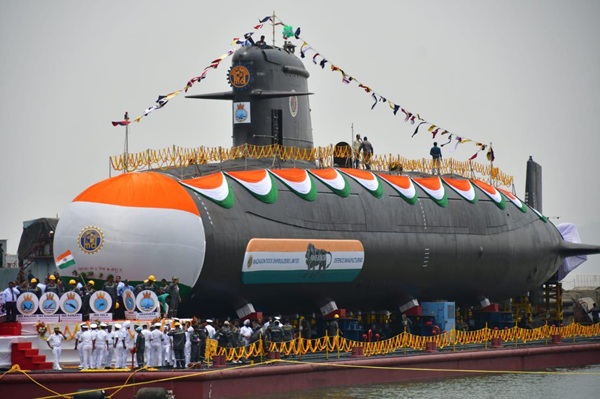
India is preparing to spend about ₹2.35 trillion on its next-generation naval vessels. A ₹700 billion submarine programme is approaching final negotiations, while an ₹800 billion warship tender is in the works. Yet the industrial base expected to deliver much of this pipeline operates through three separate listed companies with modest balance sheets.
Mazagon Dock Shipbuilders in Mumbai, Cochin Shipyard in Kochi, and Garden Reach Shipbuilders in Kolkata anchor the country’s naval shipbuilding capacity. They are listed companies with distinct boards, expansion plans, and reporting ministries. Cochin Shipyard falls under the Ministry of Ports, Shipping and Waterways. Mazagon Dock and Garden Reach report to the Ministry of Defence. Each shipyard is investing to expand capacity, but the projects proceed independently despite serving the same procurement cycle.
That organisational design matters because modern naval construction is as much about balance sheets as it is about engineering. Warship contracts require large advance-payment guarantees, performance bonds and long-delivery commitments. Export credit agencies and project lenders evaluate those obligations against the contractor’s capital base. The ability to underwrite a multibillion-rupee programme depends heavily on the strength of the balance sheet backing the shipyard.
On that measure, India’s shipyards remain small. South Korea’s HD Hyundai Heavy Industries carries a net worth of roughly $12 billion. The combined net worth of Mazagon Dock, Cochin Shipyard and Garden Reach Shipbuilders is around $1.9 billion. The three Indian shipyards together have an order book of about $8.3 billion and annual revenues of roughly $2.9 billion. Individually, they remain far smaller than the shipbuilding groups that dominate global defence and commercial maritime construction.
Each shipyard nevertheless has specialised capabilities. Mazagon Dock builds submarines and destroyers, and remains the only Indian facility that has delivered both. Cochin Shipyard built INS Vikrant, India’s first indigenous aircraft carrier, and operates a major repair complex while also working with South Korea’s HD Korea Shipbuilding & Offshore Engineering on large commercial vessels. Garden Reach Shipbuilders has expanded into autonomous vessels, hydrogen-powered ships and electric ferries, while securing export contracts in Europe.
Technically, the ecosystem covers most segments of modern shipbuilding. Financially, the structure disperses capacity across smaller balance sheets. A shipyard with a ₹50 billion capital base faces limits in supporting a ₹150 billion programme without stronger financial backing. Larger global contractors absorb these risks through consolidated groups that combine shipyards, heavy engineering divisions and financial depth within a single corporate structure.
Other shipbuilding nations resolved this scale question through consolidation. South Korea’s leading shipyards operate within industrial conglomerates that combine shipbuilding, offshore engineering and heavy equipment manufacturing. Japanese shipbuilders sit within diversified groups. China consolidated much of its shipbuilding industry under the state-owned China State Shipbuilding Corporation, creating a contractor with the financial capacity to support large naval and commercial projects simultaneously.
India’s structure has begun to evolve in smaller ways. Mazagon Dock recently agreed to acquire a majority stake in Colombo Dockyard for about $53 million, a move that expands repair capacity across the Indian Ocean. Cochin Shipyard is building additional commercial capacity through its partnership with HD Korea Shipbuilding & Offshore Engineering. Garden Reach Shipbuilders is investing in green maritime technologies. These are rational corporate expansions, yet they do little to reduce the fragmentation of the overall system.
Private industry is entering the sector as well. Larsen & Toubro, Adani Ports and Swan Defence are building programme management capability through subcontracting and joint bids with public shipyards. Mazagon Dock’s partnership with Swan Defence for the ₹350 billion Landing Platform Dock programme illustrates how the supply chain is widening beyond traditional government shipyards.
This widening introduces a different competitive dynamic. Larger private groups can bring capital strength, project management scale and integrated engineering capabilities. Public shipyards bring experience in naval platforms and long-standing relationships with defence procurement agencies. The structure of future programmes may increasingly combine these strengths through consortium bidding rather than relying on a single shipyard.
India’s naval spending pipeline signals clear strategic intent. The corporate structure supporting it remains distributed across smaller corporate units. If procurement volumes continue to rise, the system may gradually shift toward larger consortium structures or deeper integration between public shipyards and private engineering groups. The engineers and facilities are already in place. Getting the financial heft organised around them could be the next step.
More From BasisPoint