.png)


Krishnadevan is Editorial Director at BasisPoint Insight. He has worked in the equity markets, and been a journalist at ET, AFX News, Reuters TV and Cogencis.
February 13, 2026 at 11:54 AM IST
When Hindustan Unilever calls 4% volume growth "competitive" but the market shrugs, the gap reflects an internal execution problem rather than an external demand slowdown. The company's 'Unified India' restructuring only reinforces that conclusion.
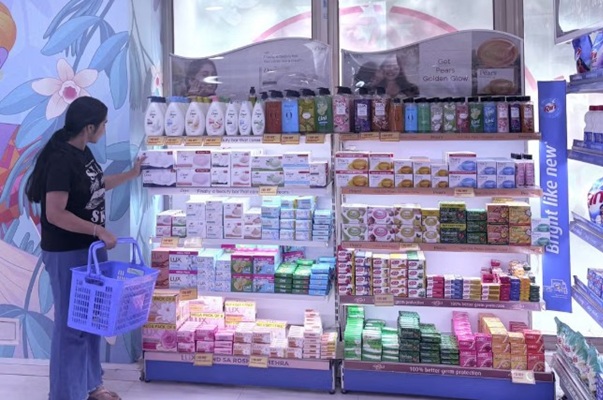
HUL delivered this volume growth against a backdrop of four repo rate cuts, benign inflation and improving consumer sentiment. Yet Home Care managed only mid-single digit volumes despite hitting its highest-ever market share. Personal care volumes declined even as premium segments grew in double digits, while foods posted high-single-digit volume growth, but tea sales grew in low-single digits because HUL cut prices in a deflationary commodity cycle instead of protecting margins.
When a market leader sacrifices pricing to defend volumes, it signals that competitive intensity has exceeded pricing power.
EBITDA margins contracted 70 basis points year-on-year to 23.3% despite gross margins expanding 30 basis points, with the gap coming from staff costs, which jumped 28% to ₹9.14 billion. While ₹1.13 billion reflected new Labour Code liabilities, the remainder represented run-rate overhead growth that outpaced revenue expansion.
Advertising as a percentage of sales declined, indicating lower brand investment even as organisational costs rose.
The acquired direct-to-consumer brands Minimalist and Oziva hit ₹11 billion in annualised revenue. However, fair valuation of acquisition-related liabilities led to ₹4.98 billion hit in exceptional charges. HUL structured these acquisitions with milestone payments, creating repeated accounting charges rather than a single upfront integration expense.
Excluding the ₹46.11 billion gain from the ice cream demerger, core profit grew just 1%, though reported PAT surged 121% as operations delivered flat earnings on higher volumes and lower margins.
Restructuring as Admission
HUL acknowledged that decision-making was too layered, accountability too diffused, and responsiveness too slow, placing underperformance on internal issues rather than external macro factors. Consumer sentiment improved, policy became supportive, and commodity costs moderated, yet HUL underperformed peers because of organisational response time rather than demand conditions.
Whether flattening hierarchies will solve volume weakness depends on whether decisions improve and not just accelerate, as quicker bad decisions amplify problems rather than fix them. HUL's restructuring can enhance agility but does not guarantee better capital allocation, sharper category insights or improved competitive positioning.
The management's 2026-27 outlook promises improvement over 2025-26, led by portfolio and channel transformation, but "better" is soft directional guidance from a market leader.
The company appears to be relying on portfolio changes and channel investments to deliver what the core business has failed to generate organically. This can be interpreted as a lack of conviction in near-term recovery despite supportive macro conditions.
Execution Risk
Blue-chip companies rarely collapse outright. The greater danger is prolonged mediocrity, where “transformation” becomes a recurring justification for modest growth, compressed margins and incremental competitive decline.
India's consumption story remains intact. Smaller, more agile competitors are capturing growth that HUL's scale and legacy structures make harder to pursue. The organisational restructuring addresses internal drag without addressing consumer trading down in mass segments, competitive intensity in premium tiers, or the capital intensity of scaling acquired brands profitably.
While the next year may be better than the current one, the question is whether “better” means competitive or just less weak. For India's most iconic FMCG franchise, that distinction will determine whether restructuring delivers genuine recovery or simply manages decline at a faster pace.
More From BasisPoint