.png)

Fed Hike Case Moves to Payrolls Week
Daily insights on the decisions, signals and risks shaping central-bank policy across the world’s major economies.

June 29, 2026 at 12:28 PM IST
The Big Picture
The US Federal Reserve’s rate hike case has moved from an inflation test to a labour-market and communication test. Thursday’s PCE report was firm enough to keep the Fed uncomfortable, but not strong enough to force a move in July. Headline PCE inflation rose to 4.1% in May, core PCE edged to 3.4%, and current-dollar consumer spending rose 0.7%, while real spending gained 0.3%.
Markets treated the release as a September, not July, signal. Futures pricing after the data implied roughly a 30% chance of a July increase, down from nearly 40% earlier, but around an 80% chance of a September hike. The possibility of a rate hike at the July meeting will remain alive only if this week’s labour data and Fed Chair Kevin Warsh’s communication harden the case.
Friday’s Reuters poll showed an opposing view: most economists still expect the Fed to hold rates through year-end, even though nine of 19 policymakers polled ahead of the June meeting saw at least one hike. That split now defines the week. The market is reacting to realised inflation and Warsh’s anti-inflation tone; economists are assuming the bar for renewed tightening remains high.
The weekend added two constraints. The Supreme Court could rule on whether Governor Lisa Cook can remain on the Board, making the Fed’s independence a market variable again, while the BIS warned that public debt, supply shocks and financial fragilities leave central banks with little room to relax. The question is no longer whether inflation is too high. It is whether the Fed can wait for clearer labour-market evidence before acting.
Today’s Board
On Constitution Avenue: July Hold, September Live
The May PCE data did not settle the Fed debate. It narrowed it.
The June FOMC had already shifted the baseline by holding the funds rate at 3.50%-3.75% while stating that inflation remains elevated relative to the 2% goal and that the Committee will deliver price stability. Thursday’s data gave that language empirical support: inflation moved above 4%, core inflation stayed sticky, and demand did not break.
That combination favours a July hold with a hawkish bias. The Fed can argue that one PCE report does not justify a restart so soon after Warsh’s first meeting, but it can no longer argue that inflation is gliding back to target. A strong payrolls or wage print would make September the market’s default meeting for action.
Sintra: Warsh’s First Global Test
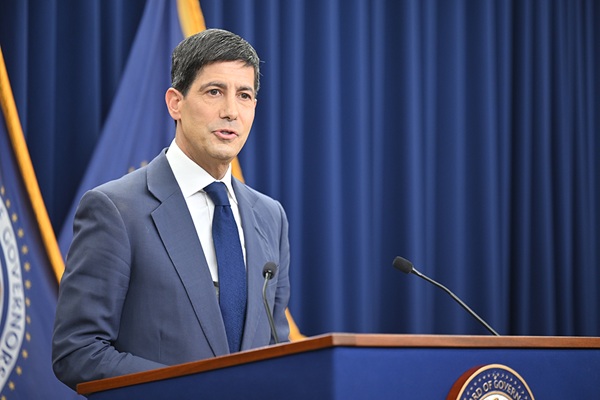
The ECB Forum from today through Wednesday will give Warsh his first major international stage as Fed chair.
The Fed calendar lists Warsh for a policy-panel discussion at the ECB Forum on July 1, alongside a week of heavy US data. Because the Fed Chair has shown little appetite for explicit forward guidance, markets will watch his tone as much as text: does he validate the September pricing, lean against July speculation, or keep both paths conditional?
Warsh’s challenge is to sound firm on inflation without making a near-term hike unavoidable. If he repeats the June message on price stability and avoids softening the reaction function, yields can stay supported even without a formal signal. If he stresses data dependence and energy volatility, a July rate hike risk should fade further.
The legal backdrop matters. A Supreme Court ruling that weakens perceived Fed independence will not change this week’s economic data, but could raise the credibility and term-premium cost of any policy mistake.
Basel: BIS Keeps the Last Mile Hard
The BIS Annual Economic Report released Sunday reinforced the hawkish global backdrop.
Its warning on high public debt, supply shocks, the AI investment boom and non-bank financial fragilities lands at an awkward moment for central banks. Fiscal pressure argues for lower debt costs, but inflation persistence argues against validating that pressure with easier monetary policy.
For the Fed, the BIS message supports institutional caution. Warsh can point to financial-stability resilience in the banking system, but the broader warning is that fiscal and market vulnerabilities make credibility more valuable, not less.
The practical implication is that central banks will prefer conditional holds to pre-emptive easing. They can wait for data, but they cannot sound relaxed about above-target inflation.
Markets: Oil, Dollar and Payrolls Drive the Transmission
Weekend US-Iran flare-ups kept energy and safe-haven channels in the policy discussion, even as renewed talks limited the immediate market shock.
Oil matters for the Fed because the May PCE acceleration was partly energy-led, but it matters for markets because higher energy prices also lift the dollar and short-end yields when they feed hike expectations. That is the export channel from the Fed to emerging markets.
This week, therefore, has a simple sequencing problem. JOLTS and confidence test labour demand on Tuesday; Warsh, ISM manufacturing and euro-area inflation set the Wednesday tone; payrolls and wages on Thursday decide whether the September hike case gets reinforced or repriced.
Policy Themes
The Fed has moved from confirmation to thresholds. PCE confirmed the inflation concern, but the July threshold remains high; the September threshold is materially lower.
Communication is a policy instrument again. Warsh may dislike forward guidance, but a hawkish Sintra tone can tighten financial conditions without an immediate rate move.
Independence risk is a market risk. The Cook case is not just legal background; a ruling that changes perceived presidential influence over the Fed would affect credibility, term premium and the market’s tolerance for inflation.
The Week Ahead
|
Date |
Institution/Event |
Key Focus |
|
Jun 29-Jul 1 |
ECB Forum on Central Banking |
Warsh’s July 1 policy panel is the main communication event; markets will test whether the Fed chair validates a September hike pricing or leaves July open. |
|
Jun 30 |
US JOLTS and consumer confidence |
Job openings will test whether labour demand is cooling enough to offset sticky PCE inflation; confidence will show whether high prices are denting households. |
|
Jun 30 |
Banco de la República |
Colombia decides rates with the benchmark at 11.25%; fiscal risk, inflation credibility and Fed-driven dollar pressure will shape the tone. |
|
Jul 1 |
Warsh, ISM manufacturing and ADP |
A concentrated US day: Fed communication, manufacturing prices and private payrolls will set expectations before the official jobs report. |
|
Jul 1 |
Euro-area flash inflation |
A firm reading would keep ECB tightening risk alive and make Sintra’s global message less dovish. |
|
Jul 2 |
US employment report |
June payrolls, unemployment and wage growth are the week’s main test of whether September hike pricing is justified. |
|
Jul 2 |
US jobless claims and factory orders |
Claims will provide a higher-frequency labour read; factory orders will show whether business spending remains resilient. |
|
Jul 3 |
US Independence Day observed |
US markets are closed and Fed statistical releases shift to July 6; liquidity around Thursday’s data may be thinner than usual. |
Mint Street Notes
Mint Street enters the week with the same problem as other inflation-targeting central banks: oil is the external risk, but domestic inflation has not yet forced a rate response.
RBI Governor Sanjay Malhotra said last week that it was premature to discuss hikes and that the MPC would have shifted from neutral to restrictive if it wanted to prepare markets for higher rates. He also said the committee would decide meeting by meeting, and was watching whether oil prices created second-round effects.
The domestic risk remains the monsoon. Rains were about 43% below average by last week and the government has prepared contingency plans for vulnerable districts. Food buffers reduce immediate inflation risk, but a weak July would bring agriculture, rural demand and food prices back into the MPC’s reaction function.
Mint Street’s position is therefore still a wait-and-watch. The RBI is preserving rate optionality while using foreign-currency inflows, intervention credibility and its neutral stance to avoid validating a premature hike narrative.
The Signal
PCE kept the Fed hike case alive. Warsh and payrolls decide whether it becomes the central case.
Sources: Federal Reserve, Reserve Bank of India, BIS, ECB, Banco de la República, US Bureau of Economic Analysis, US Bureau of Labor Statistics, ISM, Eurostat, Reuters, Bloomberg, Trading Economics.
More From BasisPoint