.png)

Asian Markets Turn Risk-On Despite Fragile US-Iran Ceasefire
Here’s your quick read to start the day: a chatty, no-fuss look at overnight moves, the big story, what’s on the docket, and the tickers you need to watch.

May 27, 2026 at 2:04 AM IST
GLOBAL MOOD: Cautious Risk On
Asian markets reflected a cautious risk-on mood on Wednesday, with investors selectively returning to equities despite lingering geopolitical uncertainty in West Asia. Japan’s Nikkei surged to a fresh record high, while South Korea’s Kospi rallied sharply, as markets took comfort from signs that diplomatic engagement between Washington and Tehran was still alive even after fresh US military strikes in southern Iran.
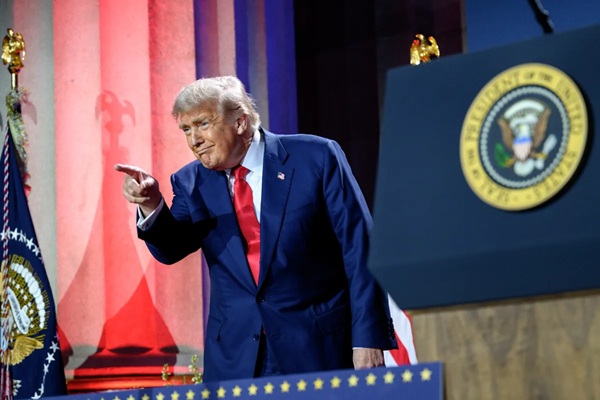
Investor sentiment improved after US President Donald Trump said negotiations with Iran were “proceeding nicely,” reinforcing hopes that both sides may still avoid a broader regional conflict. Markets appeared to interpret the latest US strikes as limited and tactical rather than the start of a full-scale escalation.
The rebound was also supported by expectations that any eventual agreement could stabilise oil supply risks around the Strait of Hormuz and ease pressure on global inflation. However, underlying caution persisted as Washington warned it could resume offensive action if talks fail, highlighting the fragile nature of the ceasefire and keeping volatility risks elevated across energy and financial markets.
THE BIG STORY
US Secretary of State Marco Rubio said negotiations could still produce an agreement within days, although the more difficult issues — including Iran’s nuclear programme — would likely require longer-term discussions. Under the proposed framework, an initial agreement would halt hostilities and reopen shipping routes before broader negotiations continue over a 60-day period.
Meanwhile, regional tensions intensified further as Benjamin Netanyahu said Israel was expanding military operations in Lebanon. Israeli forces reportedly launched more than 120 air strikes across southern and eastern Lebanon in one of the heaviest bombardments in weeks, adding pressure to an already fragile ceasefire with Hezbollah. Lebanese authorities reported dozens of casualties following the strikes.
Separately, Russia approved legislation allowing financial institutions and the central bank to operate defensive systems and arm personnel against drone attacks without requiring special forces involvement. The move reflected growing security concerns as Ukraine continued intensifying drone attacks targeting Russian infrastructure. The simultaneous escalation across West Asia and Eastern Europe reinforced concerns over widening geopolitical instability, ongoing energy supply risks and prolonged global inflation pressures.
Data Spotlight
US housing market data continued to show signs of moderation, with the S&P Cotality Case-Shiller 20-City Home Price Index rising just 0.8% year-on-year in March 2026, below expectations and marking the weakest annual increase since July 2023. Inflation continued to outpace home price growth for a tenth consecutive month, reducing inflation-adjusted housing wealth. Regional divergence remained significant, with Midwest and Northeast cities outperforming while several Sun Belt and Western markets recorded price declines. Chicago led annual gains with home prices rising 6.1%, while cities including Seattle, Denver and Phoenix saw notable declines.
Broader economic activity showed some improvement, with the Chicago Fed National Activity Index rising to +0.14 in April from -0.15 previously, its strongest reading in over a year. The rebound was largely driven by stronger production activity and improvements in sales, orders and inventories, although employment and housing-related indicators remained soft. Separate housing data also showed that US single-family home prices backed by Fannie Mae and Freddie Mac increased 0.1% in March and rose 1.7% year-on-year, with price appreciation still uneven across states.
Takeaway:
WHAT HAPPENED OVERNIGHT
- US stocks reached record highs as AI optimism outweighed geopolitical concerns
- S&P 500 and Nasdaq closed at fresh record highs despite continued uncertainty surrounding Iran negotiations and recent US military strikes.
- S&P 500 gained 0.61%, while Nasdaq advanced 1.19%; Dow Jones declined 0.23%.
- Semiconductor and AI-related stocks led gains as investors continued rotating into technology growth themes.
- Micron Technology surged 19% and crossed a $1 trillion market valuation after UBS sharply raised its price target.
- Continued optimism around AI spending and strong corporate earnings supported broader market sentiment.
- Investors also focused on potential IPO activity from major private AI companies including SpaceX.
- Qualcomm rose nearly 4.5% following reports of a chip supply agreement with ByteDance.
- Marvell Technology gained 6% amid continued strength across semiconductor shares.
- S&P 500 and Nasdaq closed at fresh record highs despite continued uncertainty surrounding Iran negotiations and recent US military strikes.
- US Treasury yields declined as investors balanced diplomacy hopes and inflation risks
- The US 10-year Treasury yield fell around 6 basis points to 4.5%.
- Investors remained cautiously optimistic that the US and Iran could still reach a near-term agreement despite recent military strikes.
- Markets continued to assess mixed diplomatic and geopolitical signals from both Washington and Tehran.
- Attention remained focused on the Federal Reserve’s policy outlook as elevated oil prices continued fuelling inflation concerns.
- Traders significantly revised interest rate expectations, now pricing in an 80% probability of a Fed rate hike by December.
- The shift marked a sharp reversal from earlier expectations of two 25-basis-point rate cuts before the escalation in the Iran conflict.
- The US 10-year Treasury yield fell around 6 basis points to 4.5%.
- US Dollar steadied as geopolitical tensions and inflation risks remained in focus
- The US dollar index held above 99 after facing pressure earlier in the week.
- Investors remained cautious following renewed US military operations in southern Iran.
- Reports indicated the US targeted vessels suspected of deploying mines and missile launch sites viewed as threats to American forces.
- Donald Trump said negotiations with Tehran were progressing but warned that additional military action remained possible if talks failed.
- Reports from Pakistani mediators suggested a potential agreement between the US and Iran could be approaching.
- The dollar remained supported by expectations that persistent inflation could force the Federal Reserve to tighten policy further.
- Markets continued to fully price in at least one Fed rate hike before year-end.
- The US dollar index held above 99 after facing pressure earlier in the week.
- Oil prices surged after us strikes on Iran escalated geopolitical tensions
- Brent crude rose 3.6% to settle at $99.58 per barrel.
- WTI crude declined 2.8% to close at $93.89 per barrel as US markets adjusted to the previous session’s sharp selloff in Brent.
- Oil markets reacted to renewed geopolitical escalation after the US military carried out strikes in Iran.
- The attacks weakened hopes that Washington and Tehran were close to reaching a peace agreement.
- Investors feared that renewed conflict could further delay the reopening of shipping through the Strait of Hormuz.
- Concerns over prolonged disruption to global oil flows continued to support volatility across energy markets.
- Brent crude rose 3.6% to settle at $99.58 per barrel.
Day’s Ledger*
Economic Data
- US Weekly ADP Employment Data
Corporate Actions
- Earnings: Cambridge Technology Enterprises, Panacea Biotec, Confidence Petroleum India, and Arcotech
Tickers to Watch
- ASTRAZENECA PHARMA INDIA: Q4 revenue rose 20.4% YoY to ₹5.8 billion, while net profit fell 23% to ₹0.4 billion and EBITDA declined 29.4%; board recommended final dividend of ₹36 per share.
- CLEAN MAX ENVIRO raised about $575 million for renewable expansion and commissioned 351.4 MWp at Bikaner Solar Park.
- COAL INDIA said government plans to sell up to 1% stake via OFS at a floor price of ₹412 per share, with a greenshoe option for another 1%.
- FINO PAYMENTS BANK informed that RBI extended Interim CEO Ketan Merchant’s tenure by three months effective May 27.
- GPT INFRAPROJECTS bagged a ₹0.7 billion order from Eastern Railway.
- HG INFRA reported that REC Power declared the company a qualified bidder for a transmission service provider contract worth ₹500 million annually over 35 years.
- KEC INTERNATIONAL secured fresh orders worth ₹13 billion across business segments.
- RESTAURANT BRANDS ASIA informed that Lenexis, Aayush Trust and Inspira launched an open offer to acquire 26% stake at ₹70 per share for operational control.
- SAATVIK GREEN secured a ₹1.7 billion order for the supply of solar PV modules.
- SAI PARENTALS targets completion of Adelaide manufacturing facility by Q4 FY27 with 67 product dossiers in pipeline.
- YES BANK informed that NSE imposed ₹100,000 penalty on Yes Securities and barred onboarding of new clients for three months.
- ZEE ENTERTAINMENT announced launch of four sports channels under the ‘Unite8 Sports’ brand.
Must Read
- The Rupee Cannot Be Defended by RBI Alone
- How SpaceX Is Moving Capital Markets from Submissive to Permissive Regime
- The Bay Of Bengal And The Return Of Civilisational Connectivity
- India’s $700 Billion Forex Reserve Cushion Masks Weakening Intervention Firepower
- The RBI’s Newest Rupee May Not Behave Like the Old One
- Central Banking 101: Origins, Ideas and Institutions
- The Trishanku Bonds: Suspended Between Debt and Equity
- Swiggy’s Boardroom Defeat Signals a New Era for Startups
- ITC's Conglomerate Structure Hides Its Peer-Beating Digital Build
- West Asia Shock Forces Banks Into a New Credit Risk Reality
See you tomorrow with another edition of The Morning Edge.
Have a great trading day
Masters of the Universe: How Bull Market Prophets Turned Bear Market Lobbyists
For years, India’s market voices argued that foreign investors no longer mattered. Domestic investors, SIP flows and retail enthusiasm were supposedly enough to keep the market moving. If FIIs sold, the answer was simple: “If not India, where else will they go?”
Vivek Kaul writes, now that the rally has faded, the same voices want capital gains tax cuts to lure foreign investors back.
But is tax really the problem?
(*Compiled from various media sources)
More From BasisPoint