.png)

Asian Markets Turn Risk-Off as Iran Tensions Push Oil Above $110
Here’s your quick read to start the day: a chatty, no-fuss look at overnight moves, the big story, what’s on the docket, and the tickers you need to watch.
May 18, 2026 at 1:38 AM IST
GLOBAL MOOD: Strong Risk Off
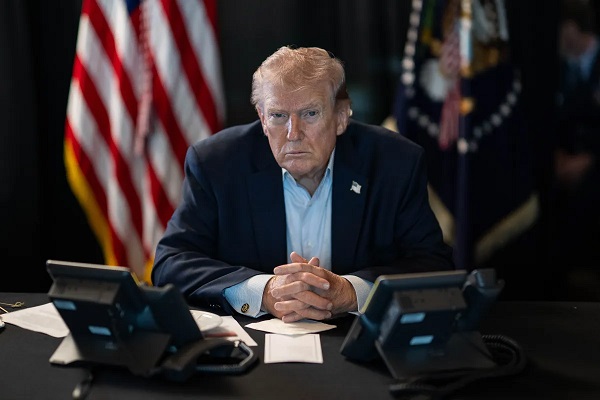
Asian markets opened in a clear risk-off mood on Monday as renewed geopolitical tensions in West Asia pushed investors toward defensive positioning, lifted oil prices and triggered concerns over inflation and global growth. Sentiment weakened after US President Donald Trump issued a fresh warning to Iran, raising fears of a wider conflict that could disrupt crude supplies and shipping flows through the Strait of Hormuz. Brent crude climbed above $110 a barrel, while US crude crossed $107, intensifying worries over higher energy costs and prolonged inflation pressures.
Equity markets across the region traded lower, led by declines in South Korea and Australia, while rising bond yields reflected expectations that central banks may keep interest rates elevated for longer. Investor anxiety also increased after a drone strike near the UAE’s Barakah nuclear facility highlighted the risk of attacks spreading beyond shipping routes to critical energy infrastructure. Broader geopolitical tensions, including escalating Russia-Ukraine hostilities, further added to market caution.
TODAY’S WATCHLIST
- China April Industrial Production Data
- Earnings: Indian Oil Corporation
A drone strike triggered a fire near the Barakah Nuclear Power Plant in the United Arab Emirates, sharply escalating concerns over the expanding risks from the ongoing US–Israeli conflict with Iran. Emirati authorities said the strike hit an electrical generator outside the plant’s inner perimeter, while confirming that radiation safety levels remained unaffected and no injuries were reported.
The UAE said it reserved the right to respond to what it described as “terrorist attacks,” amid growing accusations that Iran-backed actions were increasingly targeting Gulf energy infrastructure. The International Atomic Energy Agency called for “maximum military restraint” around nuclear facilities, warning about the broader risks of escalation near sensitive energy infrastructure.
The incident intensified fears that the conflict could spread further across West Asia and threaten critical global energy assets beyond the Strait of Hormuz. Separately, geopolitical tensions also intensified in Eastern Europe after Ukraine launched one of its largest drone attacks on Moscow in over a year, underscoring the increasingly unstable global security backdrop.
In the US, the Federal Reserve announced that Jerome Powell would serve as chair pro tempore until Kevin Warsh formally assumes leadership of the central bank, keeping attention focused on the future direction of US monetary policy amid persistent inflation pressures.
Data Spotlight
US industrial production rose 0.7% month-on-month in April, the strongest increase in more than a year and well above expectations, signalling continued resilience in manufacturing and broader economic activity despite rising geopolitical and inflation risks. Manufacturing output increased 0.6%, supported by a strong rebound in motor vehicle production and gains across several durable goods categories.
Utilities output also rose sharply due to increased electricity and natural gas demand, while mining activity edged slightly lower. Although overall capacity utilisation improved, it remained below long-term historical averages, suggesting some remaining spare capacity within the industrial sector.
Meanwhile, the New York Empire State Manufacturing Index surged to 19.6, its strongest reading in over four years, highlighting accelerating factory activity, stronger orders and improving business optimism. However, the report also showed mounting inflationary pressure, with sharp increases in both input and selling prices alongside worsening supply availability and longer delivery times.
Takeaway:
WHAT HAPPENED OVERNIGHT
- US stocks fell sharply as oil surge reignited inflation fears
- All three major US indices declined more than 1% as rising oil prices pressured risk sentiment.
- S&P 500 fell 1.24%, Nasdaq dropped 1.54% and Dow Jones lost 1.07%.
- Higher Treasury yields reduced appetite for high-valuation growth and technology stocks.
- Rising crude prices intensified fears of persistent global inflation and tighter monetary policy.
- AI-linked semiconductor stocks led declines, with Nvidia, AMD and Intel posting sharp losses.
- Microsoft gained after Pershing Square disclosed a new stake.
- Dexcom advanced after governance changes linked to activist investor involvement.
- Ford retreated sharply after a strong multi-session rally tied to its energy storage business.
- All three major US indices declined more than 1% as rising oil prices pressured risk sentiment.
- US Treasury yields surged as markets priced in prolonged inflation and tighter policy
- The US 10-year Treasury yield jumped 10 bps to 4.6%, reaching a fresh one-year high.
- Rising oil prices and continued Strait of Hormuz disruptions intensified inflation concerns.
- Donald Trump described Iran’s latest proposal as “unacceptable,” signalling continued diplomatic deadlock.
- Investors saw little progress from the Trump–Xi summit toward resolving the West Asia conflict.
- Recent CPI and PPI data reinforced fears that the energy shock was spreading through the US economy.
- The US 10-year Treasury yield jumped 10 bps to 4.6%, reaching a fresh one-year high.
- US Dollar climbed as inflation fears and geopolitical tensions boosted demand
- The US dollar index approached 99.3, reaching its strongest level in around one month.
- Rising oil prices and continued Strait of Hormuz disruptions reinforced inflation concerns.
- Donald Trump rejected parts of Iran’s latest proposal, signalling ongoing diplomatic tensions.
- Limited progress from the Trump–Xi summit reduced hopes for broader geopolitical support.
- Stronger CPI and PPI data reinforced expectations of prolonged restrictive Federal Reserve policy.
- Markets are fully priced in a Fed rate hike by March next year, with rising expectations for additional tightening later in 2026.
- The US dollar index approached 99.3, reaching its strongest level in around one month.
- Oil surged as Hormuz disruption kept global supply fears elevated
- Brent crude rose above $109 per barrel and gained 8.1% for the week.
- WTI climbed near $106 per barrel, recording an 11% weekly advance.
- Continued closure of the Strait of Hormuz kept global energy supply concerns elevated.
- Diplomatic efforts to end the conflict remained stalled, prolonging uncertainty across oil markets.
- Donald Trump delivered mixed signals on reopening Hormuz shipping routes during discussions with Xi Jinping.
- International Energy Agency warned the oil market could remain severely undersupplied even if hostilities ease next month.
- Tightening inventories and limited tanker movement through the Gulf reinforced bullish supply dynamics.
- Brent crude rose above $109 per barrel and gained 8.1% for the week.
Day’s Ledger*
Economic Data
- China April Unemployment Data
- China April Industrial Production Data
Corporate Actions
- VIP Clothing board to consider fund raising
- Zee Media Corporation board to consider fund raising
- Earnings: 63 moons technologies, Astral, Electrosteel Castings, Gujarat Narmada Valley Fertilizers and Chemicals, HLE Glascoat, IG Petrochemicals, Indian Oil Corporation, Indraprastha Gas, JK Paper, JSW Cement, K.M.Sugar Mills, OnMobile Global, Puravankara, Rama Phosphates, Rishabh Instruments, Strides Pharma Science, Subros, Sun Pharma Advanced Research Company, Timken India, VLS Finance, and Zydus Wellness,
POLICY
- BoE MPC Member Mann Speaks
Tickers to Watch
- COAL INDIA says DIPAM approves listing of Mahanadi Coalfields through IPO and OFS; company may dilute up to 25% stake.
- EMCURE PHARMA receives seven procedural observations from US FDA following cGMP inspection at Sanand formulations facility.
- HINDUSTAN COPPER Jan-Mar net profit jumps to ₹4.4 billion from ₹1.9 billion YoY; revenue rises 58% to ₹11.6 billion.
- LATENT VIEW ANALYTICS Jan-Mar net profit declines 1% YoY to ₹0.5 billion; revenue rises 24% to ₹2.9 billion.
- PACE DIGITEK secures ₹7.1 billion BESS contract from NLC India Renewables for Tamil Nadu projects.
- RBL BANK receives government approval for Emirates NBD to raise stake up to 74% and merge India operations into the bank, subject to conditions.
- SAIL Jan-Mar net profit rises 46.7% YoY to ₹18.4 billion, beating estimates.
- TATA STEEL Jan-Mar net profit comes in at ₹29.7 billion, above estimates; board approves acquisition of additional 23% stake in TM International Logistics for ₹3.4 billion.
- VODAFONE IDEA reports Jan-Mar net profit of ₹519.7 billion versus ₹52.9 billion loss QoQ, aided by one-time AGR-related accounting gain; board approves ₹47.3 billion preferential warrant issue to Aditya Birla Group entity.
Must Read
- India’s Stagflation Narrative Is Finally Catching Up With Reality
- Goldilocks to Locking in Gold: Misread Signals, Austerity and Market Reactions
- India-UAE Embrace is a Security Handshake
- Gold, the Rupee and India’s External Sector Déjà Vu
- Water Water Everywhere, Not a Drop to Drink
- India Just Made Gold More Valuable at a Pawnshop Than a Jewellery Store
- Fuel Price Revision Triggers Reassessment of FY27 CPI Trajectory: Economists
- Why Taiwan Is the Most Volatile Issue Between the US and China
See you tomorrow with another edition of The Morning Edge.
Have a great trading day
India’s Sugar Export Ban May No Longer Be Just About Sugar
India just suspended all sugar exports until September 2026 — reversing decisions made just months ago.
G Chandrasekhar writes, this isn't just about sugar availability. It's about ethanol targets, inflation fears, and production data that may not reflect ground reality.
When consumption nearly matches production and inventory sits at uncomfortable levels, the policy math gets tricky.
But the real question is sharper: how many times can India flip-flop on sugar exports before overseas buyers stop treating it as a reliable supplier?
(*Compiled from various media sources)
More From BasisPoint