.png)

Asian Markets Turn Cautious Ahead of Fed as Geopolitical Risks Ease
Here’s your quick read to start the day: a chatty, no-fuss look at overnight moves, the big story, what’s on the docket, and the tickers you need to watch.
June 17, 2026 at 2:14 AM IST
GLOBAL MOOD: Cautious Risk On
Drivers: US–Iran interim ceasefire extension, Strait of Hormuz reopening, Focus on Warsh’s Fed debut
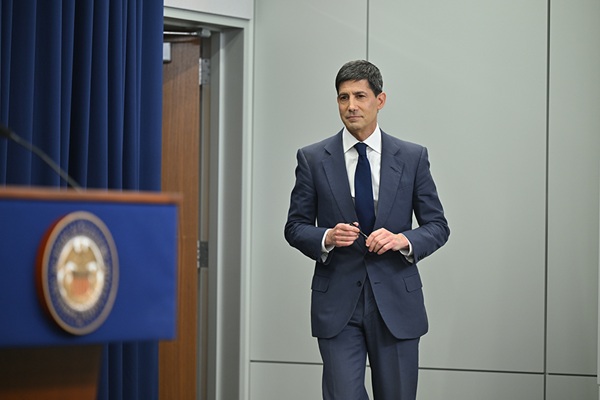
Asian markets traded with a mild risk-off bias on Wednesday as investors locked in gains and shifted focus to the Federal Reserve's policy decision, despite further progress in efforts to de-escalate tensions in West Asia. South Korea's Kospi led regional declines, while other major Asian indices also traded lower as traders adopted a cautious stance ahead of new Fed Chair Kevin Warsh's first policy meeting.
Geopolitical concerns continued to ease after additional details emerged on the interim US-Iran agreement, which extends the ceasefire by 60 days and includes steps toward reopening the Strait of Hormuz and restoring Iranian oil exports. The prospect of improved energy flows has reduced immediate supply risks and helped stabilise oil markets, removing a key source of inflation concern for global investors.
However, attention has now shifted firmly to monetary policy. Markets widely expect the Fed to keep interest rates unchanged, but investors are closely watching Warsh's guidance on future rate moves and balance-sheet policy. The combination of easing geopolitical risks and Fed uncertainty kept overall market sentiment cautious rather than decisively risk-on.
THE BIG STORY
Separately, Trump struck a more constructive tone on Ukraine after meeting President Volodymyr Zelenskiy, raising cautious optimism among G7 leaders that momentum toward a peace framework may be building. Meanwhile, attention also turned to the Federal Reserve, where new Chair Kevin Warsh is presiding over his first FOMC meeting. Markets expect rates to remain unchanged, though investors are closely watching whether Warsh signals plans to reduce the Fed’s balance sheet more aggressively in coming months.
Data Spotlight
At the same time, inflation pressures in trade flows remained elevated. US export prices rose 1.3% in May, marking a sixth straight monthly increase, led by gains in industrial supplies, capital goods and agricultural products. Import prices climbed a stronger-than-expected 1.9%, driven by a 12.5% surge in fuel and lubricant costs linked to supply disruptions in West Asia. On an annual basis, export prices jumped 11.2%, while import prices rose 6.7%, the highest in over three years.
Takeaway:
WHAT HAPPENED OVERNIGHT
- US stocks mixed as tech retreats and investors digest gains ahead of Fed meeting
- The Dow rose 0.64% to a second straight record close, while the S&P 500 fell 0.57% and the Nasdaq dropped 1.15% as tech stocks gave back recent gains.
- The Philadelphia Semiconductor Index fell 5.7% after surging in the prior three sessions, while the S&P 500 tech sector dropped 2.3%.
- Financials gained 1.5% and industrials rose 0.7% as investors rotated out of richly valued technology stocks.
- SpaceX rallied 4.8% to $201.80, briefly surpassing Microsoft's market value and ending the session above Amazon's.
- Oil futures settled down 5.8% as details of the US-Iran interim deal emerged, including a 60-day ceasefire extension, Hormuz reopening, and Iran being allowed to sell oil upon signing.
- Traders price a 43% chance of a 25bps Fed hike in December, with rates widely expected to be held at 3.50%-3.75% on Wednesday.
- Olin sank 5.9% after announcing an all-stock acquisition of Huntsman for $2.43 billion; Huntsman tumbled 17% as the offer came at a discount.
- Yum Brands rose 1.9% after announcing the sale of its Pizza Hut chain for $2.7 billion.
- The Dow rose 0.64% to a second straight record close, while the S&P 500 fell 0.57% and the Nasdaq dropped 1.15% as tech stocks gave back recent gains.
- US Treasury yields fall to a three-week low as Iran deal eases inflation fears
- The 10-year Treasury yield dropped to 4.44%, its lowest in nearly three weeks, as declining oil prices boosted demand for government bonds.
- The provisional US-Iran peace deal supported sentiment, raising hopes of moderating energy costs and reducing pressure for aggressive monetary tightening.
- Traders scaled back Fed rate hike bets, with markets now pricing a 56% probability of a hike by December.
- The two-day FOMC meeting kicks off today, with rates widely expected to be held at 3.50% - 3.75%.
- Investors will closely watch Chair Kevin Warsh's first meeting for updated economic projections and forward guidance on the path of monetary policy.
- The 10-year Treasury yield dropped to 4.44%, its lowest in nearly three weeks, as declining oil prices boosted demand for government bonds.
- US Dollar steadies as focus shifts from Iran deal to Fed meeting
- The dollar index held near 99.6 after Monday's decline, as investors pivoted attention to the Fed's upcoming policy decision.
- The Fed is widely expected to hold rates at Chair Kevin Warsh's first meeting, though hotter-than-expected inflation data complicates the backdrop.
- The dollar came under pressure on Monday after Trump announced a US-Iran peace deal to restore Strait of Hormuz access, with the formal signing due in Switzerland on Friday.
- Investors also look ahead to policy decisions from the BoJ, RBA, BoE, and other major central banks later this week.
- The dollar index held near 99.6 after Monday's decline, as investors pivoted attention to the Fed's upcoming policy decision.
- Oil falls 5% for a second straight day to a three-month low on Iran deal details
- Brent settled at $78.96/barrel, lower by 5.1%, and WTI at $76.05, down 5.8%, the lowest closest for both since early March.
- The interim deal would extend April's ceasefire by 60 days, reopen the Strait of Hormuz, and allow Iran to sell oil upon signing.
- Doubts lingered as experts warned shipping and energy exports could take weeks to recover, while Hezbollah said Iran won't sign a final nuclear deal unless Israel withdraws from Lebanon.
- Goldman Sachs, Morgan Stanley, and Citi all cut their oil price forecasts following the preliminary agreement.
- China's crude throughput fell 9.1% year-on-year in May to its lowest in nearly four years, adding further demand-side pressure.
- Trump's call for Russia to make peace with Ukraine raised prospects of sanctions relief for Moscow, which could add more oil supply to markets.
- The BoJ raised interest rates to a 31-year high on Tuesday, adding to global tightening concerns that could weigh on oil demand.
- Analysts estimate US crude stocks fell 4.6 million barrels last week, which would mark eight consecutive weeks of draws for the first time since January 2025.
- Brent settled at $78.96/barrel, lower by 5.1%, and WTI at $76.05, down 5.8%, the lowest closest for both since early March.
Day’s Ledger*
Economic Data
- Eurozone May Core CPI Data
- US May Retail Sales Data
- US May Pending Home Sales Data
Corporate Actions
- Ansal Properties & Infrastructure board to consider results
- Capacit'e Infraprojects board to consider fund raising
- Tata Capital board to consider fund raising
Policy
- US FOMC Policy Decision
- ECB President Lagarde Speaks
Tickers to Watch
- BHARAT FORGE showcased the Simha 4x4 next-generation light armoured multi-purpose vehicle through subsidiary Kalyani Strategic Systems at the Eurosatory 2026 defence exhibition in Paris.
- DEVYANI INTERNATIONAL will be in focus after Yum! Brands agreed to sell the Pizza Hut chain in a $2.7 billion deal as part of a broader portfolio review.
- DOMS INDUSTRIES is likely to remain in focus after promoter-group entity FILA proposed selling up to a 7% stake through a block deal worth around ₹8.92 billion, with a floor price of ₹2,100 per share.
- GENERAL INSURANCE CORPORATION OF INDIA (GIC RE) saw strong demand for its OFS, which was subscribed 3.72 times on the first day, prompting full exercise of the greenshoe option and raising total divestment proceeds to about ₹30.88 billion.
- KRISHNA INSTITUTE OF MEDICAL SCIENCES (KIMS) has launched a QIP to raise up to ₹15 billion, with an indicative issue price of ₹755 per share and expected equity dilution of 4.73%.
- PRIME FOCUS gained attention after SEBI disposed of adjudication proceedings against the company and its promoters, concluding that allegations related to accounting treatment of certain business transfer transactions were not established.
- TATA MOTORS PV is in focus ahead of JLR’s Investor Day on June 17, with Chairman N Chandrasekaran expecting industry-leading growth in FY27, supported by new launches, multi-powertrain offerings and continued collaboration between TMPV and JLR.
- WIPRO has launched an Applied AI Centre of Excellence for Anthropic Claude in Bengaluru, targeting enterprise AI adoption, certification of 10,000 employees and broader deployment across client and internal operations.
Must Read
- US holds off blacklisting China's DeepSeek, more than 100 firms deemed security risks, sources say
- The Warsh Reset and Four Ways the Fed Could Change
India's Diagnostics Boom Is Becoming a Consumer Subscription Story - India’s Balance of Payments: Time for a New Paradigm
- When States Compete, Can Economics Trump Politics?
- Gold Imports Remain Strong Despite Sharp Duty Hike: GTRI
- Iran deal includes $300 billion fund, more than half of which already committed, source says
See you tomorrow with another edition of The Morning Edge.
Have a great trading day
Corporate India Rushes to Lock in Lower Borrowing Costs
Corporate India is no longer borrowing just to survive volatility. It is borrowing to lock in opportunity.
Yields across commercial papers, certificates of deposit, swaps and high-rated corporate bonds have fallen sharply from recent peaks. That has opened a window for financial institutions, NBFCs and large corporates to raise money before conditions change again.
Venkatakrishnan Srinivasan writes, the shift is clear: borrowers are moving from defensive short-term funding to more opportunistic bond issuance. Some are locking in fixed-rate funding, while others are extending maturities into five-year and 10-year segments.
But this is not pure confidence. It is also risk management.
Crude oil, the rupee, inflation, monsoon risks and West Asia remain uncertain. Issuers appear to be saying: borrow now, before the window narrows.
Corporate India is using lower yields to buy funding certainty today against the possibility of market volatility tomorrow.
(*Compiled from various media sources)
More From BasisPoint