.png)

Asian Markets Rally as De-Escalation Hopes Trigger Risk-On Mood
Here’s your quick read to start the day: a chatty, no-fuss look at overnight moves, the big story, what’s on the docket, and the tickers you need to watch.
March 24, 2026 at 1:51 AM IST
GLOBAL MOOD: Cautiously Risk-On
Drivers: Iran War De-escalation, EU–Australia trade deal, Oil below $100
Asian markets surged on Tuesday, reflecting a clear risk-on shift after signs of possible de-escalation in the Middle East conflict eased energy worries. Investor sentiment improved after the US delayed planned strikes on Iran’s energy facilities, triggering a sharp fall in oil prices and supporting regional equities.
Broader Asia-Pacific markets rose as traders priced in a reduced risk of supply disruptions. However, caution persists after Iran denied any talks with Washington, suggesting the improvement in sentiment may remain fragile.
TODAY’S WATCHLIST
THE BIG STORY
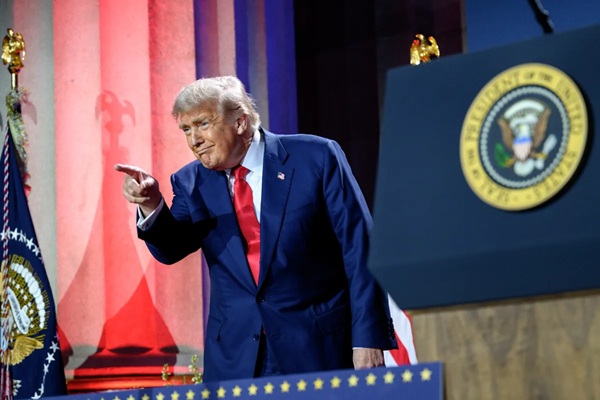
Iran denied on Monday that it had engaged in any negotiations with the United States, directly contradicting President Trump's claim of "very good and productive" conversations that led him to postpone his threat to strike Iran's power grid for five days. A European official clarified that while no direct talks had taken place, Egypt, Pakistan, and Gulf states were actively relaying messages between the two sides.
A Pakistani official told Reuters that direct talks on ending the war could be held in Islamabad as soon as this week, the most concrete ceasefire location signal yet. Trump's special envoy Steve Witkoff and son-in-law Jared Kushner, who had negotiated with Iran before the war began, reportedly held discussions with a top Iranian official late Sunday and continued on Monday. The contradiction between Washington's optimism and Tehran's public denial reflects a deliberate Iranian strategy of maintaining domestic hardline optics while quietly exploring off-ramps through intermediaries.
On the trade front, Australia and the EU signed a landmark trade deal on Tuesday, the culmination of negotiations that began in 2018 and gained momentum amid rising US tariff pressure and Europe's drive to reduce dependency on China. The agreement removes over 99% of tariffs on EU goods exports to Australia, saving European companies an estimated one billion euros annually, and lowers tariffs on critical mineral imports. The deal follows EU trade accords with Indonesia in September and India in January, reflecting a deliberate European strategy of deepening Indo-Pacific engagement as Washington's trade policy remains unpredictable. The signing offers a rare constructive signal for global trade at a moment when the West Asia conflict and US tariff uncertainty are dominating the economic outlook.
Data Spotlight
US construction spending fell an unexpected 0.3% in January after December's upwardly revised 0.8% surge, as private construction dropped 0.6% and residential investment declined 0.8%, with new single-family housing down 0.2% as higher mortgage rates continue to constrain activity. The Chicago Fed National Activity Index slipped to -0.11 in February from +0.20 in January, with employment indicators turning negative and production-related contributions falling sharply, suggesting US economic growth moderated meaningfully through the month.
Japan's annual inflation eased to 1.3% in February, its lowest since March 2022 and below the Bank of Japan's 2% target as core inflation slipped to 1.6% from 2.0%, driven by steeper falls in electricity and gas prices reflecting subsidy effects, alongside slowing food and transport inflation.
Takeaway:
US data signals a loss of momentum ahead of the West Asia energy shock, with construction, activity, and employment indicators weakening. Japan’s sub-2% inflation reflects subsidy distortions rather than true price stability and could reverse sharply as rising global energy costs feed through.
WHAT HAPPENED OVERNIGHT
- US stocks surges as Trump's Iran strike pause sparks broad relief rally
- The S&P 500 gained 1.2%, Nasdaq rose 1.5%, and the Dow climbed 1.2% as Trump's five-day strike suspension triggered a broad return to risk assets.
- Oil's 11% collapse was the primary catalyst, easing stagflation fears that had dominated markets for four consecutive weeks.
- United Airlines surged 4.5% as collapsing fuel costs provided an immediate and direct earnings tailwind for the airline sector.
- Nvidia gained 1.6% and Apple rose 1.5%, giving tech a much-needed respite after weeks of pressure from rising yields and inflation fears.
- Caterpillar climbed 3.1% and Morgan Stanley gained 1.9%, with cyclical and financial stocks leading the broader recovery.
- Markets responded to Washington's clear intent to stabilise global trade routes despite Iran's state media denying direct communications.
- The rally is encouraging but built on a fragile five-day window, any breakdown in talks could rapidly reverse the day's gains.
- The S&P 500 gained 1.2%, Nasdaq rose 1.5%, and the Dow climbed 1.2% as Trump's five-day strike suspension triggered a broad return to risk assets.
- US Treasury swings wildly between 4.33% and 4.39% as Iran talk contradictions whipsaw markets
- The 10-year yield grew sharply, reaching 4.39%. it’s highest since July last year before settling back to 4.33% as conflicting Iran signals drove volatile trading.
- Yields initially fell on Trump's announcement of "productive" US-Iran talks and a five-day strike pause, then reversed sharply after Iran's Fars News Agency denied any communication with Washington directly or via intermediaries.
- The contradiction between Trump's "productive talks" claim and Tehran's flat denial left bond markets with no reliable signal to price.
- Persistent inflation concerns driven by oil above $100 continue to pressure traders to scale back Fed rate-cut expectations for 2026.
- The intraday yield range reflects a market in genuine two-way uncertainty, ceasefire optimism and inflation fear pulling in opposite directions within the same session.
- The 10-year yield grew sharply, reaching 4.39%. it’s highest since July last year before settling back to 4.33% as conflicting Iran signals drove volatile trading.
- US Dollar slips to 99.08 as Trump's Iran strike delay eases safe-haven demand
- The US dollar index fell 0.4% to 99.08 as Trump's five-day postponement of Iran energy strikes reduced near-term conflict risk.
- The euro rose 0.4% to $1.1616, touching its highest level since March 11 as risk appetite partially recovered.
- Trump's instruction to the Pentagon to postpone "any and all" strikes on Iranian power plants and infrastructure was the direct catalyst for the dollar's broad retreat.
- "Productive talks" between the US and Iran provided a modest but meaningful boost to risk assets, draining safe haven flows from the greenback.
- The dollar's 0.4% decline is measured rather than dramatic measures. Markets are treating the five-day window as a pause rather than a resolution, keeping safe-haven demand partially intact.
- With the Strait of Hormuz still not fully open and no formal ceasefire framework in place, the dollar's floor remains well-supported should talks break down.
- The US dollar index fell 0.4% to 99.08 as Trump's five-day postponement of Iran energy strikes reduced near-term conflict risk.
- Crude oil crashes 11% as Trump postpones Iran power plant strikes and flags ceasefire talks
- Brent crude plunged $12.25 or 10.9% to $99.94/barrel, breaking back below $100 for the first time in days.
- WTI dropped $10.10 or 10.3% to $88.13/barrel in one of the sharpest single-session declines of the conflict.
- Trump announced a five-day postponement of military strikes on Iranian power plants, hours before his own 48-hour ultimatum expired.
- The president cited constructive talks aimed at resolving hostilities as the reason for the delay.
- The relief is significant but fragile, a five-day window is not a ceasefire, and the underlying supply disruptions remain largely intact.
- Brent crude plunged $12.25 or 10.9% to $99.94/barrel, breaking back below $100 for the first time in days.
Day’s Ledger*
Economic Data
- Japan Inflation Rate
- Japan flash Manufacturing, Composite, Services PMI
- India flash Manufacturing, Composite, Services PMI
- Eurozone flash Manufacturing, Composite, Services PMI
- US flash Manufacturing, Composite, Services PMI
- India States Market Borrowing
- Aptus Pharma board to consider bonus share issue
- Natco Pharma board to consider scheme of arrangement
- Viji Finance board to consider fund raising
- ECB Machado Speech
- ECB Cipollone Speech
- BoE Pill Speech
- ECB Lane Speech
Tickers to Watch
- IndiGo appoints ex-Air India Express MD Aloke Singh as strategy chief
- Anil Ambani approaches SC seeking Sandesara-like debt settlement framework
- HDFC Bank sell-off wipes out ₹500 billion crore from mutual fund assets
- HDFC Bank: Sebi chief says independent directors must act responsibly
- ICICI Bank to prioritise stable liability base to support growth: Report
- HZL, Tata Steel tie up to boost low-carbon zinc use in steel manufacturing
Must Read
- US halts strikes on Iran's power plants; retreated after warning, says Iran
- India's LPG supply shortage shows no sign of easing as new route opens
- West Asia war, fresh US trade probes fuel market volatility: RBI bulletin
- RBI bought $2.5 billion in January on a net basis, shows bulletin
- SEBI approves tighter conflict-of-interest and disclosure framework
- No proposal for complete farm loan waiver under consideration: Sitharaman
See you tomorrow with another edition of The Morning Edge.
Have a great trading day
𝐈𝐧𝐝𝐢𝐚’𝐬 𝐂𝐥𝐢𝐦𝐚𝐭𝐞 𝐏𝐫𝐨𝐛𝐥𝐞𝐦 𝐈𝐬 𝐍𝐨𝐭 𝐂𝐚𝐩𝐚𝐜𝐢𝐭𝐲, 𝐈𝐭 𝐈𝐬 𝐈𝐧𝐜𝐞𝐧𝐭𝐢𝐯𝐞𝐬
India’s climate debate often defaults to a familiar explanation: weak capacity, fragmented institutions, poor execution. It sounds right. It is also incomplete.
The deeper issue is incentives. Across sectors, institutions are doing exactly what they are designed to do. The problem is that these actions do not add up. Subsidised power, procurement policies and irrigation support are individually rational, but together they drive groundwater stress. Urban planning, transport and land use operate in silos, producing congestion and climate risk despite strong administrative capability.
Former finance secretary Arvind Mayaram writes, India does not lack capacity. It lacks alignment. Until incentives across sectors, finance and governance are reworked, climate outcomes will remain fragmented, even when policy intent is sound.
(*Compiled from various media sources)
More From BasisPoint