.png)

Asia Mixed as West Asia Conflict, Higher Oil Prices Cloud Sentiment
Here’s your quick read to start the day: a chatty, no-fuss look at overnight moves, the big story, what’s on the docket, and the tickers you need to watch.
July 21, 2026 at 2:26 AM IST
Global Mood: Cautiously Risk-off
Drivers: Houthi Saudi Blockade, US Casualties Mount, Diplomacy Stirs, ASEAN in Shadow of War
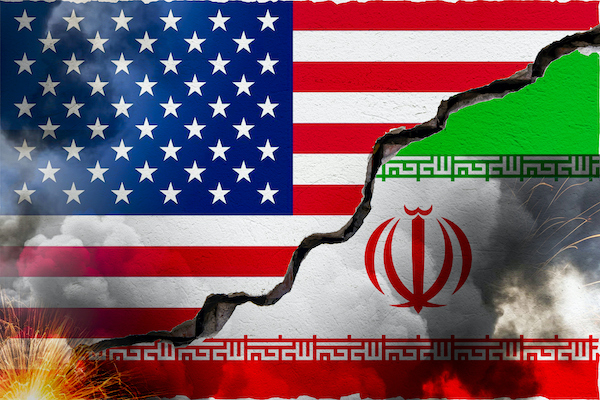
Asia-Pacific markets traded mixed on Tuesday as investors maintained a cautious, risk-off stance amid escalating tensions in West Asia, rising oil prices and fresh US tariff measures, while awaiting a busy week of corporate earnings led by technology companies. Investors remained focused on AI-related spending guidance from major firms, but geopolitical developments continued to dominate sentiment. Crude oil extended gains after US President Donald Trump vowed retaliation against Iran following the deaths of US service members, raising fears of prolonged disruptions to global energy supplies and renewed inflationary pressures.
The conflict intensified after Yemen's Houthis announced a naval blockade targeting Saudi Arabia through the Bab al-Mandeb Strait, opening a potential second energy chokepoint alongside the Strait of Hormuz. The US continued strikes on Iranian targets, while reports of attacks on tankers and critical infrastructure underscored mounting regional risks. Although back-channel diplomatic efforts remain underway, investors continue to favour defensive positioning as uncertainty over energy security, inflation and global growth clouds the near-term market outlook.
THE BIG STORY
Amid the escalation, faint diplomatic signals emerged as Iran's Foreign Ministry confirmed mediators had presented proposals to Tehran, suggesting back-channel contacts remain active despite the public hostilities. The developments will weigh heavily on ASEAN foreign ministers gathering in Manila this week — with Rubio and China's Wang Yi both attending and a bilateral meeting anticipated — as Southeast Asian nations already navigating South China Sea tensions and Myanmar's civil war now face the additional pressure of energy supply disruption, inflation risk, and global growth uncertainty flowing from the Gulf conflict.
Data Spotlight
Eurozone construction output rose 1.2% year-on-year in May, a seven-month high, driven by a sharp acceleration in specialised construction activities, up 2.9%, and solid civil engineering growth of 3.5%. Building construction remained a drag, falling 6.6%, while Germany, Austria and Poland led regional gains.
German producer prices rose 1.8% year-on-year in June, a third consecutive month of gains but easing from May's 2.2%, as intermediate goods surged 5.1% on higher metals costs. Energy prices rose modestly despite West Asia tensions, while non-durable consumer goods fell 2.2% on cheaper food. Month-on-month, prices fell 0.3%, the first monthly decline since February.
Takeaway: Improving youth employment in China and accelerating Eurozone construction output point to tentative labour and investment-side recovery, while easing German producer price inflation adds to the broader global disinflationary trend, offering some relief to policymakers navigating persistent cost pressures.
WHAT HAPPENED OVERNIGHT
US stocks edge lower as markets await tech earnings and watch for West Asia de-escalation
- The Dow fell 0.59%, S&P 500 lost 0.19%, and Nasdaq slipped just 0.05%, as investors sat on their hands ahead of results from Alphabet, Tesla, and Intel later this week.
- The Philadelphia Semiconductor Index pared earlier gains of ~4% to close up just 0.6%, remaining in bear market territory after last week's steep losses.
- Yemen's Houthis announced a naval blockade on Saudi Arabia, opening a new front in the West Asia conflict and widening the threat to global energy supplies beyond the Gulf.
- A senior Iranian official told Reuters that mediators have passed Iran a proposal for a 10-day ceasefire to find ways to revive last month's interim deal, offering a rare diplomatic signal.
- Apple fell 2% to lead S&P 500 decliners, while Microsoft was the index's biggest positive contributor and Alphabet rose 1.5% on reports Google is developing a Gemini-integrated server chip.
- Global Payments jumped 5.8% after Morgan Stanley upgraded it to overweight and raised its price target to $100 from $65.
- April-June S&P 500 earnings growth expectations have risen to 26% year-on-year, up from 23.7% earlier, with tech, energy, and consumer results due to broaden the picture this week.
US Treasury yields rise as West Asia tensions and oil price surge revive inflation concerns
- The 10-year yield rose to 4.60%, reversing part of last week's 7bps decline, as weekend US-Iran escalation sent oil to six-week highs.
- Oil pared gains after Iran signalled negotiations could resume, but the surge raised concerns the disinflation trend could stall.
- Last week's softer CPI and PPI offered some relief, though the renewed oil price surge keeps the inflation outlook uncertain.
- Markets price one Fed hike this year with September odds above 60%, ahead of next week's widely expected hold.
Dollar holds around 101 as West Asia diplomacy signals temper safe-haven demand
- Oil pulled back from six-week highs after Iran signalled negotiations could resume, easing the dollar's safe-haven bid.
- Renewed oil surge keeps the disinflation narrative fragile.
- Markets price one Fed hike this year with September odds above 60%, though next week's FOMC meeting is widely expected to result in a hold.
- Fed officials have entered the blackout period, limiting fresh policy signals ahead of the meeting.
- The dollar held broadly steady against major peers as conflicting inflation and geopolitical signals kept directional conviction low.
Oil settles over 1% higher as ceasefire hopes offset escalating Houthi threat
- Brent settled at $89.22/bbl, up 1.3%, and WTI at $83.23, up 0.9%, after earlier touching their highest levels since June 11 and June 12, respectively.
- Mediators passed Iran a proposal for a 10-day ceasefire to revive last month's interim deal, easing immediate concerns over further Hormuz supply disruptions.
- Yemen's Houthis announced a naval blockade on Saudi Arabia, putting ~2.5 million bpd of Saudi oil at risk and raising the threat to global energy supplies beyond the Gulf.
- Strait of Hormuz transit volumes have fallen to single digits, with only four vessels making the crossing on Sunday, down from eight the prior day, as the supply recovery effectively stalls.
- Iran's Revolutionary Guards said two oil tankers were immobilised after taking an "unsafe southern route" through the strait, while Greek shipper Dynacom reported two of its vessels hit by projectiles off Oman.
- A record ~1.35 billion barrels of crude oil on water could limit the next leg of price increases, according to Kpler analysts.
- Gulf countries boosted crude and condensate exports in the first half of July to their highest since before the war, though Hormuz flows are slowing as fighting escalates.
Day’s Ledger*
Economic Data
- UK May Unemployment Rate
- German July ZEW Economic Sentiment
Corporate Actions
- Earnings: Aavas Financiers, Aditya Birla Sun Life AMC, Adani Energy Solutions, Adani Total Gas, Bajaj Auto, Canara Robeco Asset Management Company, Crisil Limited, , Mahindra & Mahindra Financial Services, Trident Limited, TVS Motor Company, TVS Holdings.
Policy
- German Buba President Nagel Speaks
Tickers to Watch
- CANARA HSBC LIFE reported April-June net profit rose 20.3% YoY to ₹0.28 billion, while net premium earned increased 23.8% to ₹20.48 billion.
- EMCURE PHARMACEUTICALS received CDSCO approval for co-marketed brand Poviztra to treat non-cirrhotic MASH in adults with moderate-to-advanced liver fibrosis.
- INTERGLOBE AVIATION signed an MoU with CFM International to acquire over 1,000 LEAP-1A engines for 510 Airbus A320neo family aircraft, marking CFM's largest-ever engine order.
- SAMMAAN CAPITAL approved a cash tender offer to repurchase up to $18 million of its outstanding $350 million 9.70% senior secured social bonds due 2027.
- SML MAHINDRA reported April-June net profit fell 5.1% YoY to ₹0.64 billion, while revenue rose 13.2% to ₹9.57 billion and EBITDA declined to ₹1.00 billion.
- SOBHA reported April-June net profit rose to ₹0.51 billion from ₹0.14 billion, with revenue up 50% to ₹12.78 billion and EBITDA increasing to ₹0.78 billion.
- TECHNOCRAFT INDUSTRIES discontinued operations at its Murbad fabric division due to sustained losses and acquired a 100% stake in Technosoft Integrated Solutions K.K. in Japan through its subsidiary.
Must Read
- Rupee’s Real Fault Line Lies Beyond Domestic Policy
- Tata Capital Buys Kerala Gold Lender as Household Leverage Climbs
- The Rupee’s Weakness May Be the RBI’s Game Plan
- The West Asian Conflict and The Changing Face of The Principles of War
- Dollar Lifeline, Future Bill: The RBI’s Funding Trade-off
(*Compiled from various media sources)
See you tomorrow with another edition of The Morning Edge.
Have a great trading day
Rupee’s Real Fault Line Lies Beyond Domestic Policy
The weak rupee raises two questions - where is the real balance-of-payments fault line, and why have strong policy measures failed to contain depreciation pressure?
The challenge confronting the rupee is not a lack of policy action or a deterioration in India’s macro fundamentals. It is a world in which dollar funding has become more expensive, risk tolerance has declined, geopolitics is turbulent and global investors have more attractive alternatives. This leaves the rupee unusually exposed to external shocks. Renewed oil-price volatility, Fed tightening, or another bout of risk aversion can quickly revive depreciation pressure, even if domestic conditions remain sound.
The uncomfortable conclusion is that India’s balance-of-payments challenge is no longer primarily about attracting capital. It is about attracting capital in a world where the price of money has risen sharply.
Read the full essay by Dhiraj Nim: Rupee’s Real Fault Line Lies Beyond Domestic Policy on BasisPoint Insight.
More From BasisPoint