.png)

Asia Markets Mixed as Iran Deal Eases Risk Premium but Investors Await Details
Here’s your quick read to start the day: a chatty, no-fuss look at overnight moves, the big story, what’s on the docket, and the tickers you need to watch.
June 16, 2026 at 1:33 AM IST
GLOBAL MOOD: Cautious Risk On
Drivers: Preliminary US–Iran truce deal, Strait of Hormuz reopening, Diplomatic pivot to Ukraine/Lebanon
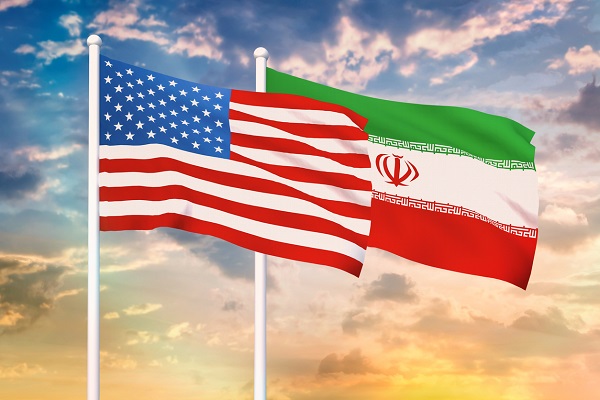
Asia-Pacific markets traded with a mixed tone on Tuesday as investors assessed the implications of a preliminary US-Iran agreement that could end months of conflict in West Asia. While the deal helped sustain a broadly risk-on backdrop by reducing geopolitical uncertainty, gains were tempered by caution over whether a permanent settlement would ultimately materialise.
Investor sentiment was supported by reports that Washington and Tehran had agreed to extend the ceasefire and reopen the Strait of Hormuz, a key route for global oil shipments. The prospect of uninterrupted energy flows pushed crude prices sharply lower, reducing concerns about supply disruptions, inflationary pressures and the need for tighter monetary policy.
However, the muted market reaction suggested investors remain wary of unresolved issues, particularly negotiations over Iran's nuclear programme and the durability of the ceasefire. While lower oil prices improved the outlook for global growth, traders largely adopted a wait-and-watch approach until the agreement is formally signed and further details on implementation emerge.
US President Donald Trump said Washington and Tehran have signed a preliminary agreement aimed at ending the Gulf conflict, marking the most significant diplomatic breakthrough since fighting escalated earlier this year. While details remain unclear and both sides stressed that a permanent settlement is still under negotiation, the agreement would reportedly extend the existing ceasefire by another 60 days and reopen the Strait of Hormuz, a critical artery for global energy trade that Iran had effectively blocked since February.
Iranian President Masoud Pezeshkian described the memorandum of understanding as an “important step” toward halting hostilities, though he cautioned that a lasting truce has yet to be finalised. The next phase of negotiations is expected to focus on more contentious issues, including the future of Iran’s nuclear programme.
Markets reacted swiftly, with oil prices falling to their lowest since March as traders priced in reduced disruption risk to global crude supplies and the reopening of Hormuz shipping lanes. Speaking at the G7 summit in France, Trump said commercial vessels were already moving through the strait “toll-free” and signalled he would now shift diplomatic focus toward Ukraine and Lebanon.
Data Spotlight
US industrial production rose just 0.1% in May, missing the expected 0.3% gain, after an upwardly revised 0.9% increase in April. Manufacturing output, which accounts for 78% of total industrial production, was flat in May, while mining output gained 1.3% and utilities output fell 0.4%. Capacity utilisation edged up to 76.2%, still 3.2 percentage points below its long-run average.
The NAHB Housing Market Index slipped to 35 in June from 37 in May, missing expectations of 36. Buyer traffic remained weak at 25, while current sales conditions fell two points to 38. Price cuts were reported by 35% of builders, up from 32% in May, with the average reduction holding at 6%. Sales incentives rose to 62%, marking the 15th consecutive month above the 60% threshold, as builders continued competing aggressively for a limited pool of buyers. Six-month sales expectations held steady at 45, suggesting builders see limited near-term recovery.
Takeaway:
WHAT HAPPENED OVERNIGHT
- Wall Street rallies as US-Iran deal slashes oil prices and eases inflation fears
- The Dow rose 0.92% to a record close, S&P 500 gained 1.65%, and Nasdaq jumped 3.07% in its biggest one-day gain since March 31.
- The US-Iran preliminary deal, set to be formally signed in Switzerland on Friday, drove US crude down 4.9% to its lowest since March.
- The Philadelphia Semiconductor Index surged 5.5% to a record close, recovering after dropping more than 12% from its recent peak over the prior week.
- Nvidia rose 3.5% and Micron soared 10.5% after at least two brokerages sharply raised their price targets.
- SpaceX rallied another 19.6%, closing at $192.46 versus its $135 IPO price, pushing its valuation above $2 trillion in just its second day of trading.
- Airlines and cruise stocks gained on cheaper fuel hopes, with United Airlines up 3.9%, Norwegian Cruise up 3.7%, and Carnival up 3.2%.
- Fox tumbled 16.8% after announcing a $22 billion deal to acquire Roku, whose shares also fell 1.9%.
- The VIX fell for a third straight session, while traders now price a 42% chance of a Fed hike by year-end ahead of Wednesday's policy update
- The Dow rose 0.92% to a record close, S&P 500 gained 1.65%, and Nasdaq jumped 3.07% in its biggest one-day gain since March 31.
- US Treasury yields hold lower as Iran deal eases inflationary pressures
- The 10-year Treasury yield held at 4.46% as the US and Iran agreed on concessions for a memorandum of understanding to be signed Friday.
- Reports indicated energy exports through the Strait of Hormuz will be restored, pulling oil and fuel prices lower and reducing pro-inflationary risks.
- The Fed is set to hold rates unchanged on Wednesday at the first FOMC meeting under Chair Kevin Warsh, with markets looking for signals on potential monetary framework changes.
- Rate traders continue to favour one Fed hike this year despite the easing inflation outlook.
- The BoJ is expected to raise rates this week, following the ECB's hike earlier this month, while the BoE, SNB, Riksbank, and RBA are all set to hold.
- The 10-year Treasury yield held at 4.46% as the US and Iran agreed on concessions for a memorandum of understanding to be signed Friday.
- Dollar slips to one-week low as US-Iran peace deal curbs safe-haven demand
- The dollar index fell to 99.5, its lowest in over a week, after the US and Iran struck a peace agreement to restore the Strait of Hormuz access.
- The deal pushed oil prices to a two-month low, easing inflation fears and reducing pressure for tighter monetary policy.
- The agreement is set to be signed in Switzerland on June 19 and reportedly includes lifting blockades, easing sanctions, and dismantling Iran's nuclear program.
- Investors now focus on the Fed's first policy meeting under Chair Kevin Warsh, with rates widely expected to remain on hold.
- The RBA and BoE are also seen holding steady this week, while the BoJ is expected to raise rates to support its currency.
- The dollar index fell to 99.5, its lowest in over a week, after the US and Iran struck a peace agreement to restore the Strait of Hormuz access.
- Oil settles 5% lower at three-month low as US-Iran MOU signals Hormuz reopening
- Brent settled at $83.17/barrel, lower by 4.76%, and WTI at $80.75, down 4.87%, erasing a chunk of the war-risk premium built up over recent months.
- Trump, Vance, and Iranian parliament Speaker Qalibaf signed the MOU, with a formal ceremony due Friday in Geneva.
- The draft deal calls for reopening the Strait of Hormuz within 30 days under Iranian arrangements.
- Citi cut its Brent forecasts to $75/barrel for Q3 and $70/barrel for Q4 2026, citing expectations of normalising Hormuz trade flows.
- More than 14 million bpd of oil output, 14% of world demand, remains shut, with a full return to pre-war production levels likely to take weeks, months, or years.
- US Strategic Petroleum Reserve stocks fell to 340.3 million barrels, the lowest since 1983, after an 8.9-million-barrel draw, the third-steepest on record.
- Iran cut its official selling price for light crude to Asian buyers to $7.15/bbl above the Oman/Dubai average for July, down sharply from $13/bbl the prior month.
- E4 nations — the UK, France, Germany, and Italy — said they are prepared to lift sanctions on Iran in response to steps on its nuclear program.
- Brent settled at $83.17/barrel, lower by 4.76%, and WTI at $80.75, down 4.87%, erasing a chunk of the war-risk premium built up over recent months.
Day’s Ledger*
Economic Data
- German June ZEW Economic Sentiment Index
- US Weekly ADP Employment Data
- US May Housing Starts Data
Corporate Actions
- Ganga Forging board to consider fund raising
- Vertoz board to consider fund raising
- Tembo Global Industries board to consider stock split
Policy
- Bank of Japan Interest Rate Decision
- Reserve Bank of Australia Interest Rate Decision
- ECB's Lane Speaks
Tickers to Watch
- ADANI ENTERPRISES and US-based Jabil plan to form a strategic alliance to build a vertically integrated AI and data centre infrastructure manufacturing platform in India.
- BANDHAN BANK has approved the sale of identified housing finance NPAs to asset reconstruction companies.
- CRAFTSMAN AUTOMATION has approved the launch of a QIP to raise up to ₹20 billion.
- DEVYANI INTERNATIONAL and SAPPHIRE FOODS INDIA have received NSE and BSE observation letters, enabling them to proceed with their proposed merger.
- GENERAL INSURANCE CORPORATION OF INDIA (GIC RE) is in focus after the government launched an OFS to divest up to a 5% stake in the state-owned reinsurer.
- GMR AIRPORTS reported strong passenger traffic growth across its airport portfolio in May, led by robust volumes at Delhi Airport.
- HCL TECHNOLOGIES will invest ₹14.27 billion (about $150 million) in Sarvam AI through Axonwise Pvt Ltd, acquiring a 10.46% stake via an all-cash transaction.
- MAHINDRA & MAHINDRA FINANCIAL SERVICES has approved the issuance of up to ₹10 billion in secured, rated, listed non-convertible debentures through private placement.
- OIL INDIA has signed an MoU with CSIR to collaborate on energy-sector research, including oil and gas operations, enhanced oil recovery, renewable energy and critical minerals.
- PATEL ENGINEERING said its joint venture received a Letter of Award for the Tasgaon Lift Irrigation Scheme in Maharashtra, with a contract value of ₹1.26 billion.
- YES BANK has partnered with Northern Arc Capital to expand credit access, scale digital lending and offer debt investment opportunities.
Must Read
- India’s Balance of Payments: Time for a New Paradigm
- Why This Rupee Episode Is Different
- Central Banking 101: The Rise and Fall of Monetary Policy Regimes
- State Bonds Start Pricing Fiscal Discipline
- India’s PLI Push Needs an Exit Test
- Netanyahu Wanted This War; He’s Getting Trump’s Peace
- RBI’s FCNR Swap Faces a Basel Reality Check
- RBI Bars Mis-selling by Banks, Trains Gun on Dark Patterns
Vedanta’s 4-Way Demerger Lists, Unlocking ₹490 billion in Value - India Trade Deficit Stays Elevated in May as Oil, Gold Outpace Export Gains
- Sebi may reintroduce open market buyback window in June 19 board meeting
See you tomorrow with another edition of The Morning Edge.
Have a great trading day
Will Better District-Level Data Help Address Regional Inequalities?
Prime Minister Narendra Modi recently urged state chief ministers to undertake estimation of GDP at the district level, a move that is expected to help uncover lagging districts across the country, and encourage better policy formulation to overcome developmental gaps.
Sharmila Kantha writes, the move is nothing new - the US, EU and UK, and even China, Brazil and Mexico, all calculate granular data. In India too, NITI Aayog tracked 112 districts for special measures under the Aspirational Districts Programme in 2018, keeping track on a monthly basis for their progress on 49 key performance indicators relating to healthcare, education, agriculture, financial inclusion and infrastructure.
What remains to now be seen is how the central and state governments collaborate and invest in data collection systems and facilities.
(*Compiled from various media sources)
More From BasisPoint