.png)

Asia Equities Fall Amid Blockade and Oil Price Spike
Here’s your quick read to start the day: a chatty, no-fuss look at overnight moves, the big story, what’s on the docket, and the tickers you need to watch.
Richard is an independent financial journalist who tracks financial markets and macroeconomic developments
April 13, 2026 at 1:33 AM IST
GLOBAL MOOD: Risk-Off
Drivers: Blockade Escalation, US Inflation Concerns
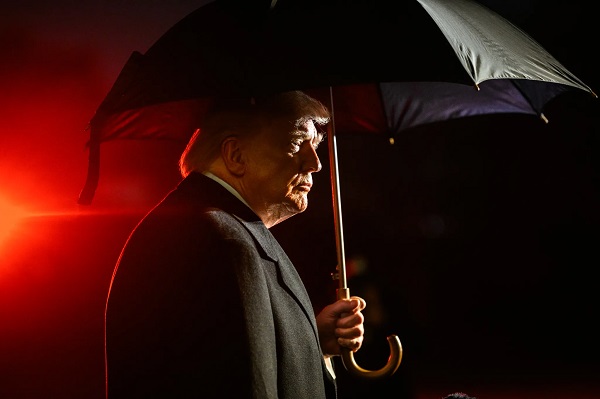
Oil prices surged sharply, with WTI Crude and Brent Crude jumping over 8%, reflecting fears of tighter supply and renewed inflation pressures. The blockade of Iranian ports by US forces, coupled with signals from Donald Trump on potential resumption of airstrikes, added to geopolitical uncertainty.
With the Strait of Hormuz again at the centre of disruption risks, markets are pricing in higher volatility and downside risks, as elevated oil prices and prolonged conflict threaten global growth and policy stability.
TODAY’S WATCHLIST
THE BIG STORY
The escalation raises the risk of direct confrontation at sea, with Washington warning of strong retaliation against any Iranian aggression. The Strait of Hormuz, which handles roughly 20% of global energy flows, now faces heightened disruption risks, with implications for oil supply, shipping security and global trade. While the US has indicated that NATO allies may support the operation, there has been no formal confirmation, pointing to potential divergence among Western partners.
For markets, the shift marks a clear deterioration in the geopolitical backdrop, with the risk of sustained supply disruption and a renewed spike in energy prices. The collapse of ceasefire dynamics suggests that volatility across commodities, inflation expectations and global risk assets is likely to intensify in the near term.
Data Spotlight
At the same time, fiscal pressures remain elevated, with the US posting a $164.1 billion budget deficit in March, higher than expectations, as spending rose to $549 billion. Consumers are increasingly cautious, citing rising prices and weaker financial conditions, while durable goods purchasing conditions have deteriorated.
Takeaway:
WHAT HAPPENED OVERNIGHT
- US stocks end mixed as inflation and geopolitics keep sentiment cautious
- Dow Jones declined 0.56%, while S&P 500 slipped 0.11% and Nasdaq gained 0.35%.
- Markets remained range bound as investors tracked West Asia peace negotiations into the weekend.
- Inflation data showed expected acceleration, driven by war-related price pressures.
- Tech stocks outperformed, lifting Nasdaq, with chipmakers hitting record highs.
- Broadcom rose 4.7% and Nvidia gained 2.6% on continued AI momentum.
- CoreWeave surged 10.9% after securing a multi-year deal with Anthropic
- Broader sentiment is cautious despite sector-specific strength.
- Dow Jones declined 0.56%, while S&P 500 slipped 0.11% and Nasdaq gained 0.35%.
- US Treasury yield edge higher as inflation data offsets de-escalation hopes
- The 10-year yield rose to 4.31%, moving away from recent three-week lows.
- Yields were supported by stronger inflation data, with CPI rising 0.9% month-on-month and 3.3% year-on-year.
- Core inflation remains relatively contained at 2.6%, indicating mixed price pressures.
- Markets balance inflation concerns with improving geopolitical outlook ahead of US–Iran talks.
- Consumer sentiment drops to record low, while inflation expectations move higher.
- Rate outlook remains uncertain amid conflicting signals from inflation and growth.
- The 10-year yield rose to 4.31%, moving away from recent three-week lows.
- US Dollar held below 99 as geopolitics and inflation offset direction
- The US dollar index remained below 99 as markets assess West Asia developments.
- US–Iran talks and Israel–Lebanon dialogue support de-escalation hopes.
- Strait of Hormuz largely closed, keeping energy and inflation risks elevated.
- Recent CPI data reflects war-driven price pressures, limiting downside in the dollar.
- Currency remains range-bound amid opposing forces of risk sentiment and inflation.
- The US dollar index remained below 99 as markets assess West Asia developments.
- Oil declined but held risk premium amid ongoing negotiations
- Brent crude traded near $96 per barrel on Friday, while WTI fell 2.35% to around $95.5.
- Prices remained volatile, swinging between gains and losses during the session.
- Cautious optimism around potential end to West Asia conflict weighed on prices.
- Ongoing US–Iran talks keep de-escalation hopes alive.
- Strait of Hormuz disruption risks continue to support underlying risk premium.
- Markets balancing easing immediate supply fears with longer-term uncertainty.
- Brent crude traded near $96 per barrel on Friday, while WTI fell 2.35% to around $95.5.
Day’s Ledger*
Economic Data
- India March CPI Inflation Data
- OPEC Monthly Report
- US Existing Home Sales Data
Corporate Actions
- Jan-Mar Earnings: ICICI AMC, Just Dial
- LIC board to consider bonus share issue
Policy
- BoJ Governor Ueda Speech
- ECB Guindos Speech
Tickers to Watch
- Ather plans to cut aluminium use to boost margins on new platform
- Signature Global cuts net debt by 77% to ₹200 cr on better cash flow
- Coal India absorbing input costs surge to shield consumers from price spike
- Reliance seeks govt nod to buy Iranian crude ahead of US waiver deadline
- Godrej Properties logs record bookings, business development in FY26
Must Read
- Trump says US to start blockading the Strait of Hormuz immediately
- Wars prompt India to change crude price basket formula, fix 3-yr inaccuracy
- Shell steps up LNG supplies to India, wins major fertiliser tenders
- Bankers see merit in RBI's one-hour e-payment lag despite cost concerns
- Gold, Silver Brace For Turbulent Week As US-Iran Talks Collapse
- RBI Criticizes Banks' Rupee Arbitrage Trades
See you tomorrow with another edition of The Morning Edge.
Have a great trading day
𝐖𝐡𝐲 𝐖𝐚𝐬𝐭𝐞 𝐚 𝐆𝐨𝐨𝐝 𝐂𝐫𝐢𝐬𝐢𝐬: 𝐁𝐫𝐞𝐚𝐤𝐢𝐧𝐠 𝐭𝐡𝐞 𝐋𝐨𝐠𝐣𝐚𝐦
Sharmila Chavaly writes, India’s renewable story is no longer constrained by technology or capital—it is being held back by contracts. With 45–55 GW of awarded capacity stuck without signed PPAs, the bottleneck is institutional, not infrastructural. The traditional PPA model, once the backbone of energy finance, is struggling under the weight of weak discom balance sheets, falling tariffs, and rising uncertainty.
(*Compiled from various media sources)
More From BasisPoint