.png)

Seoul Opens the Tightening Cycle
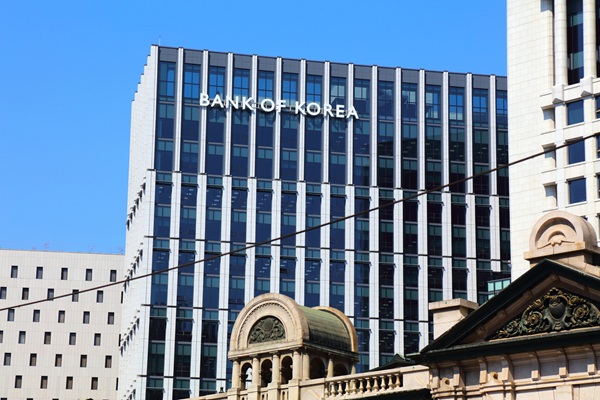
The Bank of Korea’s unanimous 25-basis-point increase to 2.75%—accompanied by an explicit bias toward further hikes—turns Monday’s inflation warnings into policy action.

July 16, 2026 at 3:39 AM IST
The Big Picture
South Korea has delivered the week’s clearest central-bank signal.
The Bank of Korea raised its Base Rate by 25 basis points to 2.75%, its first increase since January 2023. All seven Monetary Policy Board members supported the decision. More important than the size of the move was the accompanying guidance: the Board said policy would need to remain positioned for further increases, with the timing and pace determined by inflation, growth and financial-stability conditions.
This was not simply an insurance move against higher oil prices. The BoK identified a rare alignment across its policy considerations. Export and investment growth remain strong, led by semiconductors; consumption is improving; inflation is above target; the won has been volatile; household borrowing has accelerated; and housing-price increases in Seoul and surrounding areas have gathered pace. Korea therefore had both the inflationary reason and the economic capacity to tighten.
Monday’s developments now read as the prelude. India reported a renewed acceleration in consumer and food inflation, while Federal Reserve Governor Christopher Waller warned that central banks could not indefinitely look through higher core inflation. Korea has gone one step further: it has concluded that the interaction of cost pressure, domestic demand, leverage and asset prices already warrants action.
The wider lesson is not that every central bank must follow Seoul. The Bank of Canada held rates on Wednesday, while softer US inflation data reduced the immediate force of Waller’s warning. The message is that supply shocks produce different policy outcomes depending on what lies beneath them.
Seoul: The Hike Is Only Half the Story
The BoK’s decision was widely anticipated. Its reaction function was more consequential.
The central bank said South Korea’s economy had strengthened further as semiconductor-led exports and investment continued to expand and consumption remained favourable. It now expects 2026 growth to considerably exceed the 2.6% forecast published in May. That removes one of the usual arguments for delaying monetary restraint: concern that tighter policy could interrupt a fragile recovery.
Inflation supplied the second part of the case. Consumer inflation reached 3.2% in June, while core inflation remained at 2.5%. Public inflation expectations were still in the upper-2% range. The BoK expects headline inflation to remain elevated for a considerable period as earlier cost increases and the exchange rate continue to feed through, while improving incomes generate additional demand-side pressure.
Financial stability completed the argument. Household loans increased substantially, including both housing-related and other borrowing, while house-price growth accelerated in Seoul and surrounding areas. The BoK also highlighted persistent exchange-rate volatility. Higher interest rates therefore serve three objectives simultaneously: restraining inflation, limiting leveraged housing demand and reducing the risk that won depreciation amplifies imported costs.
Desk assessment: July should be interpreted as the beginning of a measured tightening sequence rather than a one-off adjustment. The statement does not commit the Board to back-to-back moves, but its explicit preparation for additional hikes makes a “one and done” interpretation difficult to sustain. A pause at the next meeting remains possible if the won stabilises and inflation moderates, but the burden of proof now rests with the case for pausing—not with the case for tightening.
India Makes Patience More Conditional
India’s June inflation report provided Monday’s first warning.
Headline CPI inflation accelerated to 4.38% from 3.93% in May, while food inflation rose to 5.32% from 4.78%. Rural inflation reached 4.74%, compared with 3.92% in urban India. Transport inflation stood at 4.31%, with the underlying detail showing particularly strong increases in the operation of personal transport equipment and the transportation of goods.
For the Reserve Bank of India, this does not mechanically require an immediate rate increase. It does make continued patience more conditional.
The key issue is whether higher food and transport costs remain concentrated or begin to affect wages, services prices, freight charges and household expectations. One higher inflation report can still be treated as a shock. A succession of broadening reports would become evidence of persistence.
The contrast with Korea is instructive. India has stronger food-driven pressure but less evidence, at present, that inflation, domestic demand, currency risk, housing leverage and underlying inflation are all pointing in the same direction. The RBI can therefore still wait for confirmation. The BoK concluded that it already had enough.
Washington: Waller’s Trigger Was Not Pulled
Waller’s Monday speech set out an unusually asymmetric policy test.
He said 12-month core PCE inflation had increased from 3.0% in December to 3.4% in May, with price pressure broadening across goods and services. He would need to see several months of lower core readings before concluding that inflation was moving decisively in the right direction. By contrast, one more elevated core report could require the FOMC to consider tighter policy in the near term.
Tuesday’s CPI report did not provide that confirming hot print. US headline CPI declined 0.4% in June and increased 3.5% over 12 months. Core CPI was unchanged during the month and slowed to 2.6% year on year from 2.9% in May. By Waller’s own framework, the report reduced the urgency of an immediate increase, although one favourable month does not satisfy his requirement for a sustained sequence of improvement.
Wednesday’s Beige Book added to the mixed picture. Economic activity expanded at a slight-to-moderate pace in 11 of the Fed’s 12 districts. Prices increased moderately overall, with businesses reporting higher energy, transport, raw-material and tariff-related costs. Some firms were unable to raise selling prices as quickly as input costs, compressing margins rather than transferring the entire shock to consumers.
The Federal Reserve therefore remains in a different position from the BoK. US activity is resilient and cost pressure remains visible, but the latest consumer-inflation data did not confirm renewed core acceleration. The July FOMC meeting is consequently more likely to revolve around preserving the option to tighten later than demonstrating that an immediate increase is already required.
Policy Themes
Forward guidance now matters as much as the current move. Korea’s 25-basis-point increase was expected. Its preparation for further tightening was the stronger signal. Markets must now assess the interval between moves rather than debate whether July was the final adjustment.
Financial stability can accelerate conventional monetary tightening. Housing and household debt were not secondary considerations in Seoul. They strengthened the case already being made by inflation and growth.
Looking through a supply shock requires evidence. Canada presently has that evidence in underlying inflation and economic slack. Korea does not. India remains between the two: headline pressure has increased, but the extent of second-round transmission has not yet been established.
The global cycle is diverging. Korea is tightening, Canada is holding, and the Federal Reserve has received a cooler inflation report even as several officials remain concerned about underlying pressure. A single global policy narrative is becoming less useful than country-specific analysis of pass-through, demand and balance-sheet risk.
Policy Calendar | July 16–31
The Signal
The Bank of Korea’s decision is the clearest evidence this week that central banks are becoming less willing to grant supply shocks automatic safe passage through the policy process.
Higher oil prices alone did not cause the Korean increase. The decisive factor was that the shock arrived alongside stronger growth, above-target core inflation, currency volatility, rising household borrowing and accelerating housing prices. Every major element of the reaction function pointed in the same direction.
Monday supplied the warning signs. India showed how quickly headline and food inflation can reaccelerate. Waller explained why several favourable readings may be required to restore confidence, while one adverse report could reopen the tightening debate.
Korea supplied the action.
Canada shows that looking through a shock remains possible where underlying inflation is close to target and economic slack remains. Seoul shows the other side of that rule: once inflation, demand and financial stability reinforce one another, patience ceases to be prudence.
Sources: Bank of Korea; Bank of Canada; Federal Reserve Board; US Bureau of Labor Statistics; Ministry of Statistics and Programme Implementation; Bank Indonesia; European Central Bank; Bank of England; Bank of Japan; China Foreign Exchange Trade System.
More From BasisPoint