.png)


Vivek Kaul is a writer and an economic commentator.
May 7, 2026 at 3:43 AM IST
Like all people who believe in the system, he wants answers – Paul Beatty, The Sellout
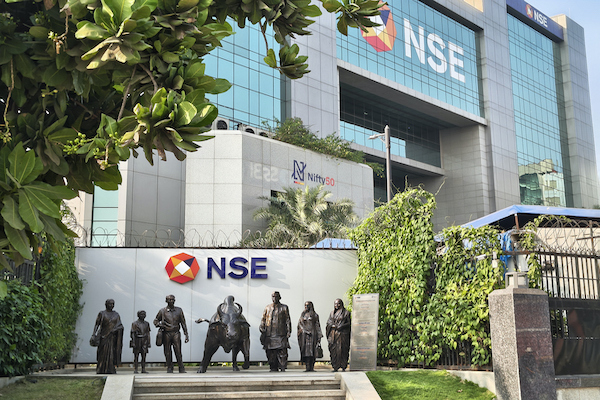
The Chief Economic Advisor V Anantha Nageswaran recently said that post the pandemic, the profits of BSE 500 or NSE 500 companies have grown at more than 30% per year. But despite this increase, the overall capital formation rates from the private sector have been disappointing, with the top corporates having chosen “to accumulate… cash profits… than investing in real assets on the ground”.
Over the years, India has been sold as a massive consumption story. All pitch decks made by those in the business of managing other people’s money have been saying this for more than two decades now: There is a huge number of Indians who will buy what the entrepreneurs produce. And everyone will live happily ever after.
But that story hasn’t quite lived up to its marketing genius. And this has been clearly visible in non-theoretical economic indicators.
Domestic two-wheeler sales have been sluggish for years. They managed to cross the pre-pandemic peak of 2018-19 only in 2025-26. The sales of small cars were also in a slump and have seen some revival post the goods and services tax (GST) cut in September 2025.
Further, the non-suburban passenger traffic on Indian Railways peaked in 2012–13 and hasn’t crossed that level since. The mobile phone teledensity peaked in 2017-18 and so on.
As economist and former chief economic advisor Arvind Subramanian recently tweeted, the net GST collections peaked at 6% of the GDP in 2023-24 and fell to 5.7% in 2025-26. The collections have consistently been lower than the pre-GST average of 6.1% of the GDP. GST is ultimately a tax on consumption.
In fact, even the government has admitted that the private consumption expenditure number in the overall GDP number was being overstated. In late February 2026, the government rolled out a new GDP series with 2022–23 as the base year, replacing the earlier 2011–12 series.
For 2025–26, private consumption expenditure under the new series is estimated at ₹195.8 trillion in nominal terms. Under the old GDP series, the same number was ₹219.6 trillion. That makes the new estimate about 10.9% lower.
The new series currently has data for four years – from 2022–23 to 2025–26. Take 2024–25: private consumption is pegged at ₹179.7 trillion under the new series, versus ₹203 trillion earlier – a gap of 11.5%. For 2022–23 and 2023–24, the downward revisions are about 9.7% each.
In other words, the new GDP series quietly redraws the consumption story. Indeed, private consumption’s share in India’s economy has declined from around 60–61% earlier to about 56–57% now. In simple terms, the market India Inc thought it was serving is smaller than it believed.
So, what does this mean? The money that entrepreneurs expect to make from doing business is a function of the future consumption growth potential that they see. If they see a solid growth potential they tend to invest more, in order to be ready to cash in when the growth arrives. But the current data doesn’t seem to give them that confidence.
In fact, the capacity utilisation rate of India’s manufacturing companies has been in the 74-75% range for quite a few years now. So, even if the consumption growth were to pick up there is enough and more capacity available to produce more.
So, at a very simple level, investments won’t grow at a faster pace unless consumption does, and consumption won’t grow at a faster pace unless investment does.
Only when investment grows, more formal and informal jobs are likely to be created, helping people earn more and hence, consume more. In that sense, we are stuck in what looks like a chicken-and-egg story.
Further, in 2025-26, the size of India’s manufacturing sector as a proportion of the economy was 12.8% (current prices not adjusted for inflation, 2011-12 series). The ratio has been falling continuously over the years. If we calculate the ratio in constant prices (adjusted for inflation) using the 2011-12 series, it has been stagnant in the 15.5-17% range.
The bottleneck isn't money — it's where the money wants to go. Those who control capital in this country are, by instinct or origin, financiers: even the ones in manufacturing industry tend to think like bankers.
And bankers don't wait. They want returns that are large and fast. Manufacturing — which demands patience, tolerates ambiguity and pays out slowly if at all — is exactly the wrong pitch. So the capital flows elsewhere, and manufacturing remains just a talking point.
More From BasisPoint