.png)


Phynix is a seasoned journalist who revels in playful, unconventional narration, blending quirky storytelling with measured, precise editing. Her work embodies a dual mastery of creative flair and steadfast rigor.
March 23, 2026 at 2:32 AM IST
Dear Insighter,
I’ve been thinking about 1Q84 again. I read it in junior college, far too young to fully understand what Murakami was doing, but completely unable to stop. Three volumes, a thousand pages, and somewhere in the middle of it, a second moon just… appears. Nobody explains it or pauses. The world looks the same. It just isn’t.
And it’s not just that. There’s a cult that may or may not be real, characters who seem to slip between timelines, and this constant sense that you’re only seeing part of what’s actually happening.
What I’d forgotten is how much of the book is really about belief. About the kinds of worlds people build for themselves, and the kinds of things they choose to follow.
You see versions of that everywhere now. A film franchise like Dhurandhar pulling people into theatres for four hours in a world supposedly addicted to 30-second clips. Entire communities forming around it, arguing over plotlines, rewatching, turning it into something larger than just a film.
Or something like the BTS homecoming in Seoul — people flying in from across the world for a free concert, learning the chants, the lyrics, the rituals. It starts to look less like fandom and more like participation in something shared and constructed. A kind of collective escape that people willingly step into.
And maybe that’s the point. Because outside of these pockets, the world feels like it’s coming apart in slower, harder-to-process ways. The US–Iran conflict was supposed to be over in a matter of hours, if you went by Donald Trump’s rhetoric. It’s now dragging into its fourth week, reshaping energy markets, alliances, and expectations in ways that don’t quite have a clean narrative yet.
And I haven’t really gone back to Murakami since 1Q84. Not because I didn’t like it; more because it left behind a feeling I never quite managed to place. Which is probably why it came back to me this week. Going through everything, there was this odd sense that the world hadn’t changed in any obvious way, and yet something about it felt slightly off.
The most obvious place to see this is in India’s statistical reset. The new GDP and CPI series are being framed as technical revisions, but they function more like a recalibration of reality. As Sameer Narang and D. Tripati Rao point out, nominal GDP for 2022–23 now stands at ₹261 trillion rather than ₹269 trillion, and by 2024–25 the gap widens further to ₹345 trillion versus ₹357 trillion. Growth wasn’t as strong as we thought, and the fiscal math wasn’t as comfortable either. The old CPI had its own blind spots — too much food, too much noise, not enough of how India actually spends now.
G. Chandrashekhar adds, even the current crop estimates may be running ahead of reality. The government is projecting a record harvest, but on-ground signals like rising temperatures across key states, and patchy yields suggest the number could come in meaningfully lower. If that plays out, the consequences show up quickly. Food prices, procurement, buffer stocks, all start to look tighter than the headline suggests.
That reset would have been manageable on its own. It’s landing at a time when the outside world is anything but. As Gaura Sen Gupta writes, this isn’t just an oil price spike, it’s a supply risk sitting right on top of it. Over 80% of Asia’s energy flows through Hormuz. And under the new CPI, energy suddenly matters more. Same shock, bigger impact. The crisis has not necessarily intensified, but the lens through which we view it has sharpened, and that alone changes the policy response.
This is where R. Gurumurthy’s analysis of the Budget becomes more interesting. His argument is not about arithmetic but about signalling. A framework that pairs fiscal consolidation optics with an expanded borrowing programme ends up satisfying neither those looking for growth nor those seeking discipline. In a context where foreign portfolio flows are uncertain, the rupee remains under pressure, and private consumption is uneven, the state finds itself carrying a disproportionate share of the growth burden. His suggestion that India could deploy RBI contingency reserves, ease capital gains taxation, and reduce borrowing is less about stimulus in the conventional sense and more about communicating intent to markets that are trying to gauge how flexible policy can be under stress.
Stepping back further, TK Arun situates this within a broader geopolitical realignment that will outlast any immediate conflict. The reshaping of West Asia, the consolidation of Israel’s position, and the diminishing counterweights in the region all point to a longer-term shift in the global energy and political architecture. India doesn’t have the luxury of treating this as just an inflation problem. The exposure runs deeper. And it sits alongside something we don’t talk about enough — R&D spending at 0.65% of GDP. That number doesn’t just lag peers. It tells you how thin the long-term buffer really is.
In the middle of this, the Reserve Bank of India is attempting to maintain a sense of continuity. Michael Debabrata Patra’s case for building reserves toward the $1 trillion mark is consistent with that approach, emphasising buffers and preparedness in a volatile environment. The rupee’s gradual depreciation is framed not as a failure but as a managed adjustment, with the central bank stepping in to prevent disorder rather than to resist fundamentals. Yet, as Gurumurthy argues in a separate context, the very mechanisms that deliver this stability may also be altering the way markets signal risk. If bond yields are as much designed as discovered, they stop being clean signals. And once that happens, everything priced off them carries a bit of that distortion.
The Yield Scribe piece gets at this in a sarcastic piece without saying it directly. Oil moves up, yields move down. Foreign investors exit, but nothing really breaks. Domestic money just… shows up. The index holds, even when the underlying pieces don’t quite line up. It’s funny when you read it. Slightly less funny when you sit with it. Because a market that absorbs everything smoothly also stops telling you where the stress actually is.
Rajesh Kumar pulls together MPI, SDG and food data and you realise how misleading the aggregate story can be. Bihar at 33.8% multidimensional poverty, Kerala and Goa below 1%. And it’s not really a welfare problem anymore. The transfers exist. What’s missing is the harder, slower stuff: schools that work, healthcare that holds up, local industry that actually compounds. We tend to talk about these states as laggards on the same curve. They’re not.
Akshi Chawla’s examination of the labour market adds another layer to this picture. While headline unemployment has moderated, women’s labour force participation remains significantly below global averages, pointing to a constraint that is both social and economic. For a country that talks endlessly about its demographic dividend, that gap isn’t a footnote.
Corporate India has its own version of this disconnect.
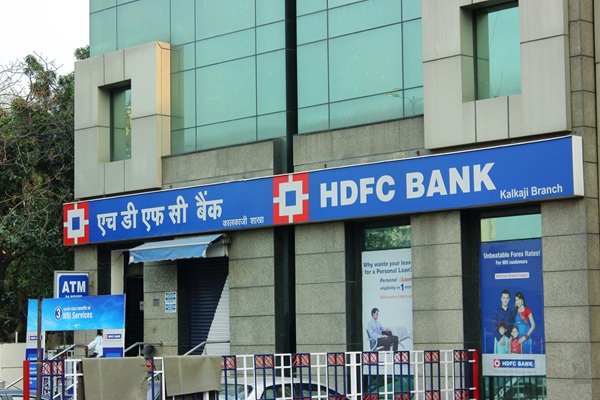
Take the HDFC Bank episode. A resignation letter hints at something, the stock reacts immediately, and even when the claims are walked back within a day, the damage doesn’t quite reverse. The signal travels faster than the correction. And once it’s out there, it tends to stick. As Krishnadevan V notes, reputational damage does not come with a reset button. And yet, the disruption itself never really escalated. As T. Bijoy Idicheriah writes, the episode was contained as quickly as it surfaced — helped in no small part by explicit RBI reassurance and the bank’s underlying operational stability.
Idicheriah observes in his piece on REPCO Bank, Indian finance already has its own version of this gap. An institution that isn’t legally a bank, but still gets to call itself one. A legacy exception that has survived even as regulation around it has tightened.
A different kind of identity question is playing out at Jaguar, writes Krishnadevan. The company’s decision to halt production, reposition itself as an all-electric brand, and target a new customer segment represents a strategic shift of unusual scale. With revenues declining sharply and profitability under pressure, the transition is being attempted from a position of vulnerability rather than strength. Given Jaguar’s significant contribution to Tata Motors’ passenger vehicle business, the stakes extend beyond a single brand and into the broader architecture of the group.
In other sectors, ambition is running up against balance sheet realities. India’s naval expansion plans are substantial, but the financial capacity of domestic shipyards remains limited relative to global peers.
At the same time, something quieter is happening on the capital side. Family offices are no longer a fringe idea. As Srinath Sridharan points out, they’ve moved from being loose pools of capital to something far more structured. The question isn’t whether they matter anymore. It’s how they’re run.
Further afield, Sharmila Chavaly’s analysis of post-war reconstruction offers a sobering counterpoint to the idea that capital can simply flow in to rebuild what conflict destroys. The gap between pledged and actual funding in countries like Syria highlights a deeper issue, where the focus on large, visible infrastructure projects often overlooks the less tangible elements that determine whether people return and rebuild their lives.
Arup Mitra’s examination of West Bengal provides a domestic parallel to this theme. Long stretches of political stability, across very different regimes, and yet the economy never quite found its engine. Not in industry, not in services. The drift isn’t dramatic, which is why it’s easy to miss.
Nothing looks broken in an obvious way. The data still comes out, policy still responds, markets still hold up. But if you spend enough time with it, there’s this faint sense that things aren’t lining up as neatly as they used to. Something about the sky feels different.
Until next time, maybe a fever dream is better than the crude reality.
Also Read:
Are We Facing an AI Nightmare? by Raghuram Rajan: AI-doom scenarios are going viral because there are no easy public-policy responses to the problem of large-scale but not universal technological unemployment.
Pessimistic Winner and Disciplined Hope by Kirti Tarang Pande: Prepare as if the world will break. Lead as if it won't. That single integration separates survivors from builders.
Papa, Don't Preach, Please Just Listen by Kalyani Srinath: Love, logic, and loud silences in today's parent-child equation—somewhere along the way, "I'm just saying this for your good" started sounding a lot like "I don't trust you."
America's Permanent Tariff Uncertainty Will Drive Up Costs by Pinelopi Koujianou G: The US Supreme Court's rejection of the Trump administration's legal justification for tariffs has created a patchwork of temporary measures that will introduce three additional costs.
Is the Private Credit Boom Going Bust? by Brian Judge: Since 2008, private credit has expanded into a $3.5 trillion industry, but as cracks begin to appear, the risks embedded in a system built on opaque valuations are becoming harder to ignore.
More From BasisPoint