.png)


Michael Patra is an economist, a career central banker, and a former RBI Deputy Governor who led monetary policy and helped shape India’s inflation targeting framework.
May 15, 2026 at 6:01 AM IST
The World Economic Forum declared 2026 as the Year of Water. It couldn’t have been timelier. Or, more relevant, as is the desperation in the famous line from Samuel Taylor Coleridge's 1798 poem, The Rime of the Ancient Mariner, from which the title is taken.
Access to safe and affordable drinking water, sanitation and adequate water supply for various other purposes is essential for the fulfilment of the most basic needs of humanity. Water is critical for health, food security, education and sustainable livelihoods.
Yet, water stress is increasing worldwide at an alarming rate.
The Global State of Water Resources
In 2024, for which the latest data are available from the United Nations, while parts of Africa and Europe experienced catastrophic flooding, other areas like the Amazon basin faced severe drought. 26% of the world’s population lacked access to safely managed drinking water services, which is a sustainable development goal (SDG). Around 41% did not use a safely managed sanitation service.
In 2025, global freshwater resources remained perilously stretched, with two-thirds of the world's population estimated to have faced water scarcity.
The harsh reality is that twenty-five countries that are home to a quarter of the world’s population face ‘extremely high’ water stress every year. Approximately 4 billion people, or half the world’s population, experience severe water scarcity for at least part of the year, with 2.4 billion lacking adequate sanitation.
Climate change is increasing seasonal variability in and uncertainty about water availability in most regions of the world.
This erratic hydrological cycle, characterised by intense droughts and floods, is exacerbating global water insecurity. Pollution, land and ecosystem degradation, and natural hazards are compromising the availability of water resources further. The number of people facing water shortage is projected to exceed 5 billion by 2050.
The Dynamics of the Crisis
Worldwide, agriculture accounts for roughly 70% of freshwater withdrawals, followed by industry with just under 20% and domestic or municipal uses at about 12%. In this century so far, global freshwater withdrawals have increased by 14%, or at an average growth rate of 0.7% per year. Most of this increase occurred in cities, countries and regions undergoing rapid economic development. Population growth does not appear to play a highly significant role in increasing demand for water.
According to the United Nations, a tipping point is being crossed when better water management and reduced wastage will no longer bridge the gap between the rate of water loss and the rate of its replacement.
India at the Frontline
Per capita water availability has plunged by about 75% since Independence; it is expected to fall to 1,140 cubic metres by 2050. Total water demand is projected to exceed renewable supply in almost every state by 2030.
Implications
Insufficient water storage and poor reservoir management are already threatening municipal water supply, particularly in periods of drought. Shortages are likely to worsen due to high groundwater abstractions that reduce base river flow, as well as watershed deforestation and degradation.
Lack of municipal wastewater treatment is leading to microbial contamination and reduced dissolved oxygen in many rivers. This is impacting ecosystems and biodiversity, particularly in the Yamuna (Delhi), Cooum (Chennai), and the Mithi Ulhas rivers (Mumbai).
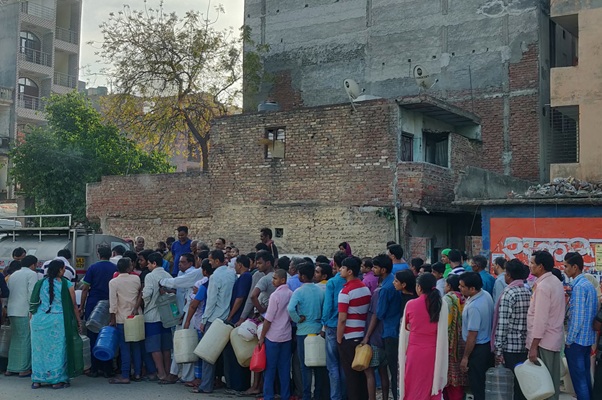
Groundwater use is unsustainable in many cities and agricultural areas; rapidly declining groundwater levels are likely to jeopardise livelihoods in both rural and urban communities. Fluoride and arsenic are now naturally occurring in groundwater.
Furthermore, high salinity is caused by flood irrigation and over-pumping of coastal aquifers. Heavy metal contamination in urban areas derives from industrial and municipal waste. To add to it all, climate change is increasing the frequency and scale of water crisis events. Glacial melt and more intense monsoon precipitation are contributing to landslides and severe flooding.
The Double Whammy: Ground Water and Surface Water
Surface water resources are primarily fed by the monsoon and Himalayan snowmelt, with the mean annual flow in all river basins estimated at 1,869 cubic kilometres. Yet only about 37% can be effectively harnessed. Over 90% of the annual flow of Himalayan rivers occurs during the four monsoon months, limiting capture potential. Moreover, suitable sites for reservoirs and dams are scarce, especially in hilly and flood-prone regions. In addition, surface water in many regions is unevenly distributed, with northern and northeastern states enjoying abundant flow, while western and southern regions experience recurring deficits.
The Time to Act is Now
Let us act before it is too late, before humans prospect for water on Earth as they do on the moon and on Mars.
More From BasisPoint