.png)


February 20, 2026 at 4:55 PM IST
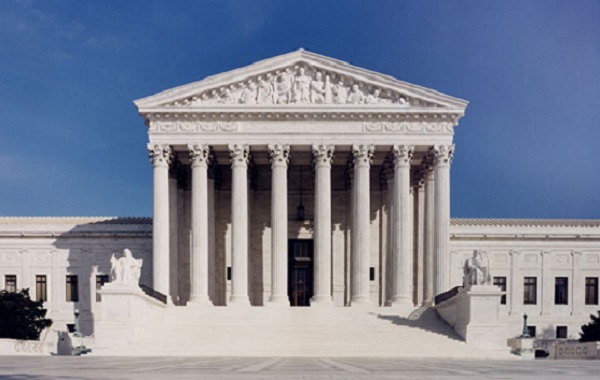
The US Supreme Court’s decision to strike down most of President Donald Trump’s sweeping tariffs could significantly reshape India’s trade outlook with its largest export market. By invalidating the so-called reciprocal tariffs imposed under the International Emergency Economic Powers Act, the ruling removes a major layer of uncertainty that had clouded nearly half of India’s exports to the United States.
In its judgment, the Court held that the 1977 law, intended for genuine national emergencies, does not authorise a president to impose unilateral tariffs. Chief Justice John Roberts made clear that no statute permitted the administration’s expansive use of emergency powers for routine trade measures. The verdict effectively nullifies the country-specific reciprocal tariffs, which ranged from 34% on China to a 10% baseline for others, as well as the 25% duties linked to alleged fentanyl flows.
According to Global Trade Research Initiative founder Ajay Srivastava, for India, the economic implications are immediate and tangible. Roughly 55% of Indian exports to the US were subject to an 18% reciprocal tariff. With the Court’s ruling, these goods will now revert to standard Most Favoured Nation rates, restoring competitiveness in key sectors such as engineering goods, textiles and select electronics components.
The US Supreme Court decision does not dismantle all tariff barriers. Custom duties imposed under Section 232, including 50% on steel and aluminium and 25% on certain auto components, remain intact. Moreover, around 40% of India’s exports to the US, including smartphones, petroleum products and pharmaceuticals, were already exempt from the reciprocal tariffs.
Beyond immediate trade gains, the judgment carries deeper strategic implications. It effectively renders several recent US trade arrangements, including understandings reached with India, the UK, Japan and the EU, legally fragile or one-sided, Srivastava said.
Many of these deals were negotiated in the shadow of threatened tariffs. With that leverage removed, partner countries may reassess concessions made under pressure.
For New Delhi, this creates both an opportunity and a dilemma: whether to reopen discussions to secure more balanced terms or preserve stability in an already delicate bilateral relationship.
The ruling also reasserts Congress’s primacy in trade policy, sharply curbing the executive branch’s ability to deploy tariffs under emergency statutes. While a future administration could attempt to reimpose duties under Section 301 or Section 232, those routes require fresh investigations and public justification. They are slower, more legally vulnerable and cannot serve as blanket enforcement tools. This institutional constraint reduces policy volatility, a key concern for exporters and investors alike, Srivastava said.
For India, the verdict is a welcome reprieve, not a complete reset. It restores predictability to a substantial share of exports and weakens the threat of sudden tariff escalations. Yet it also compels New Delhi to re-examine the architecture of its trade engagement with Washington.
More From BasisPoint