.png)

Trump Announces Killing of Ayatollah Ali Khamenei, Vows Continued Strikes in Iran
Trump claims Iran’s Supreme Leader Ayatollah Ali Khamenei was killed in a US-Israel operation, vowing sustained strikes as Tehran confirms his death and regional tensions threaten to spiral.

March 1, 2026 at 2:41 AM IST
US President Donald Trump on late Saturday declared that Iran’s Supreme Leader, Ayatollah Ali Khamenei, had been killed in a targeted operation conducted with Israeli cooperation, marking a dramatic escalation in the long-running confrontation between Washington and Tehran.
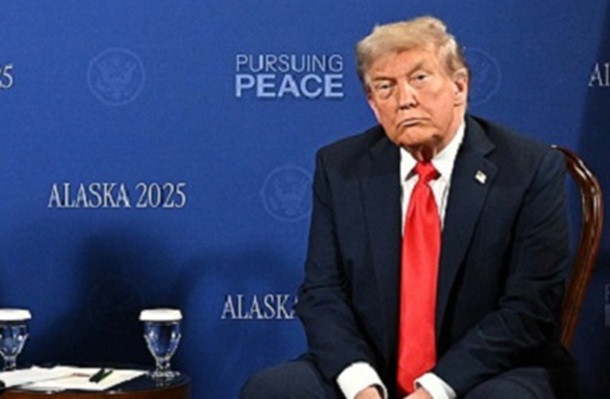
In a post on Truth Social, Trump described Khamenei as “one of the most evil people in history” and said his death represented justice for Americans and others killed in attacks attributed to Iran and its regional proxies. He claimed the operation relied on US intelligence and “highly sophisticated tracking systems” and was carried out in close coordination with Israel.
The BBC reported that a statement from Iran's Supreme National Security Council, several state media outlets in Iran have confirmed Ayatollah Khamenei's death.
According to Trump, other senior Iranian leaders were also killed in the operation. He asserted that elements of Iran’s Islamic Revolutionary Guard Corps, military and security forces were seeking immunity and might be unwilling to continue fighting.
“Now they can have Immunity, later they only get Death!” he wrote, urging Iranian forces to align with what he called “Iranian Patriots” to restore the country.
The US president further warned that heavy and “pinpoint” bombing would continue “uninterrupted throughout the week or, as long as necessary,” framing the campaign as essential to achieving peace in the Middle East and globally.
The announcement represents one of the most consequential developments in the region since the 1979 Iranian Revolution. Khamenei, who had served as Iran’s Supreme Leader since 1989, wielded ultimate authority over the country’s political and military institutions.
Iran has previously vowed severe retaliation for attacks on its senior figures, and regional actors are bracing for possible escalation. Oil markets and global equities, already sensitive to geopolitical risk, could face renewed volatility.
While Trump portrayed the strike as a decisive blow that opens the door to regime change, the coming days will test whether the development ushers in a transition within Iran--or a broader and more dangerous regional conflict.
Earlier, Trump had said the US had begun “major combat operations” against Iran, declaring the objective was to eliminate what he called imminent threats from Tehran’s leadership and to give Iranians what he described as a rare chance to reclaim their country through a people-led revolt.
“A short time ago, the United States military began major combat operations in Iran,” Trump had said in a televised address. “Our objective is to defend the American people by eliminating imminent threats from the Iranian regime.” He had accused Iran’s leadership of decades of sponsoring attacks on US forces and allies and said Washington would no longer tolerate what he termed “mass terror” across the Middle East.
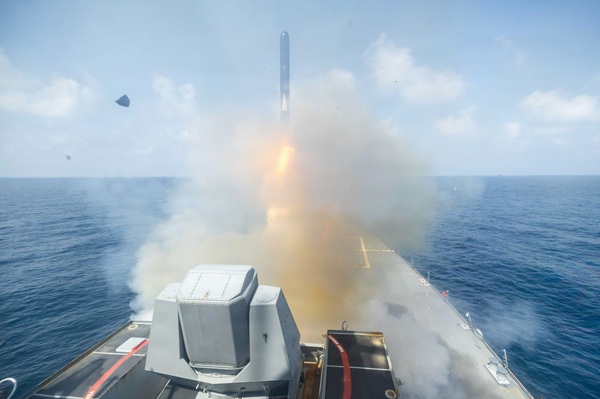
Trump said the campaign would target Iran’s missile systems, naval capabilities and military-industrial infrastructure. “We are going to destroy their missiles and raise their missile industry to the ground,” he said. “We are going to annihilate their navy.” He added that the United States would ensure Iran “does not obtain a nuclear weapon,” repeating that Tehran would “never have a nuclear weapon.”
The president referenced previous US strikes on Iranian nuclear facilities at Fordow, Natanz and Isfahan and said Iran had attempted to rebuild elements of its programme despite warnings from Washington. He said Tehran had rejected repeated opportunities to renounce nuclear ambitions and had continued to develop long-range missile capabilities that could threaten US forces overseas and allies in Europe.
The US and Israel launched coordinated strikes early Saturday, with explosions reported in Tehran and other cities. Israeli officials described the action as pre-emptive and necessary to counter missile and nuclear threats, various news agencies, including Reuters, reported.
Iranian authorities vowed retaliation and reported missile launches in response, raising the prospect of further escalation.
Iran launched ballistic missiles and armed drones toward US military installations and allied targets across the Gulf. Air defence systems were activated in the UAE, Bahrain, Qatar and Kuwait, with residents reporting multiple explosions and interception attempts. In Bahrain, home to the US Navy’s Fifth Fleet, a missile was reported to have landed near a naval logistics facility, underscoring the shift from proxy confrontation to direct state-to-state engagement. Authorities in parts of the Gulf urged citizens to remain indoors as sirens sounded across several capitals, reports said.
Trump acknowledged that US casualties were possible, saying he did not make the decision lightly and that “that often happens in war,” but characterised the mission as necessary to secure future generations against a nuclear-armed Iran. “This is the moment for action,” he said. “Do not let it pass.”
India said it was “deeply concerned at the recent developments in Iran and the Gulf region,” urging all sides to exercise restraint and avoid escalation. In a statement, the government called for dialogue and diplomacy to de-escalate tensions, stressed that sovereignty and territorial integrity must be respected, and said Indian missions in the region were in touch with nationals and had issued advisories asking them to remain vigilant and follow local security guidance.
More From BasisPoint