.png)

Tiger Global and the Conception of Economic Freedom in India
At its core, the case exposes the State’s failure to balance two competing freedoms: the freedom of the State to tax, and the freedom of an investor to structure its investments in reliance on the rule of law.
Meghna Bal is a lawyer with experience in media and emerging technology. She is the Director of the Esya Centre, a New-Delhi based think tank.
February 5, 2026 at 8:29 AM IST
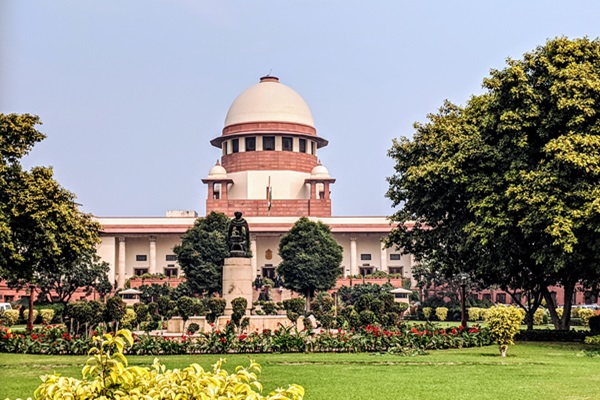
The Supreme Court’s recent decision in the Tiger Global matter offers a useful entry point into how economic freedom is currently conceptualised in India. Beyond the tax treatment of a foreign investor, the case foregrounds the conditions under which economic actors plan their affairs, largely in reliance on State assurances, and reflects a broader institutional tendency to treat economic freedom in an attenuated form.
In India, economic freedom is often invoked as shorthand for deregulation or the streamlining of compliances, or the enablement of environmental degradation. This reduces it to the mere absence of restraint, overlooking its equally important foundations in the ability to plan, rely on institutional commitments, and participate productively within a predictable legal order.
Yet economic freedoms are not absolute. As Rawls reminds us, absolute liberty is conceptually incoherent, as it would inevitably encroach upon the freedoms of others; liberty must therefore be structured by principles that mediate competing claims. Economic freedom is no exception, but in India it is routinely restricted without any clear, principled framework for resolving such conflicts.
The amendment was meant to be prospective, and capitals gains from investments made prior to 2017 were assured protection. Despite this, tax authorities sought to impose tax liability retrospectively when Tiger Global exited its investment and approached them for clarity on whether the transaction was taxable in India. The tax authorities indicated that the entire arrangement was a sham and conceived to evade tax liability – even though it was well within the domain of the prevalent rules at the time of investment. No real principled basis was provided for going back on the promise of prospective application. Rather, the State privileged its own freedom to tax over the investor’s freedom to plan, largely on the plinth of executive discretion.
Where the State fails adequately resolve conflicts between freedoms, responsibility shifts to the courts. Yet judicial conceptions of economic freedom remain narrow. Where the State does not fully articulate how conflicts between competing freedoms are to be resolved, courts are often called upon to perform that balancing function. Yet judicial approaches to economic freedom in India tend to be exacting. Economic liberties are frequently treated as distinct from, and more limited than, civil and political freedoms, which in turn shapes the degree of scrutiny applied to State action.
The High Court, in the Tiger Global case, bucked this trend. It held that the tax authority could only “pierce the corporate veil” in very narrow circumstances, namely tax fraud, sham transactions, and camouflaging illegal activities. Moreover, it noted that the tax authority is held to a strict evidentiary standard, and cannot base its conclusions on suspicions alone.
It also emphasized that treaties are the product of economic arrangements between States, and that courts err when they manufacture grounds for disqualification from treaty benefits beyond those contemplated by the treaties themselves. In recognizing this, the court acknowledged the wider economic ramifications of such arrangements, particularly their role in enabling investors to plan and allocate capital with confidence. In doing so, it privileged the economic freedom to plan over what was, in substance, arbitrary State action. In this vein, it also highlighted how necessary it is for courts to preserve predictability where the State fails to do so.
The Supreme Court’s decision reversed the High Court’s, and reflected a continuation of the judiciary’s deferential approach in matters implicating economic freedom. It hinged the matter on sovereignty, noting that taxation was a sovereign right and all arms of government, the executive, the legislature, and the judiciary, must act with a sense of comity in such matters.
In this spirit of comity, it declared that any dilution of the sovereign power to tax, whether it be through availing the benefits of a tax treaty or otherwise, serves as a direct attack on sovereignty itself, and harms national interest in the long term. In doing so, it placed the arbitrary State action beyond review, essentially permitting economic freedom to be curtailed by inchoate assertions of sovereignty rather than mediated through principled scrutiny, judicial or otherwise.
India’s institutions must realize that overtures to economic freedom are meaningless if these remain continually subject to the whims of the executive. Freedom rests as much in the ability to rely on rules and an established order as it does in the absence of constraint. When the State goes unchecked, certainty gives way to contingency and arbitrariness. Such an arrangement is indistinguishable from having no freedom at all.
* Views are personal.
More From BasisPoint