.png)

Sarci-Sense: The Art of Saying “We’ll See”
By middle age, we stop saying yes or no. We learn something far more useful, and far more polite.

Dr. Srinath Sridharan is a Corporate Advisor & Independent Director on Corporate Boards. He is the author of ‘Family and Dhanda’.
April 25, 2026 at 5:09 AM IST
At some point in middle age, without anyone announcing it, our vocabulary changes.
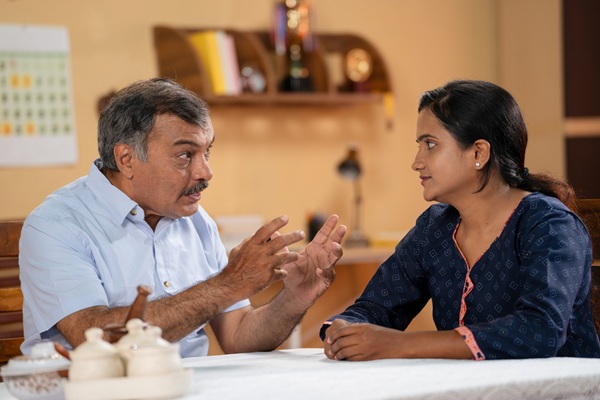
You notice it in small moments. A friend calls and suggests meeting over the weekend. A colleague proposes an idea that sounds interesting but inconvenient. A family member asks if you can attend something that will almost certainly take up more time and energy than you are willing to give. You listen, you nod, you smile in the appropriate places.
And then you say it.
“We’ll see.”
It is said gently, almost reassuringly, as though a decision is still alive somewhere in the future. The other person hears it, nods back, and the conversation moves on. No one is offended. No one is entirely convinced either.
It is a remarkable sentence. Two simple words that can carry hesitation, refusal, politeness, fatigue, uncertainty, and sometimes even mild hope. It can mean no, not now, probably not, or let me think about how to avoid this gracefully. It is not quite the truth, but it is not quite untrue either. It is something in between, and that is precisely why it works.
In younger years, we did not have this skill.
We said yes too easily. Plans were made with enthusiasm and very little thought about consequences. Weekends filled up quickly, evenings stretched longer than they should have, and energy was treated as if it were permanently renewable. Saying no felt rude, almost aggressive. So we avoided it.
Or we went to the other extreme.
We said no too bluntly. Without cushioning, without context, sometimes without even realising the small ripple it might create. Youth has a certain clarity, but it also has a certain carelessness. It assumes that honesty alone is enough.
Middle age quietly corrects both tendencies.
By now, life has become more layered. There are calendars that are already full before the week begins. There are responsibilities that do not announce themselves but always arrive on time. There is an awareness of energy, of how much you can give without feeling depleted, of what matters and what only appears to matter.
Every yes begins to carry weight. Every no begins to carry consequence.
And somewhere between the two, “we’ll see” emerges as a small but effective solution.
It buys time. It creates space. It allows you to step away from an immediate decision without appearing disengaged. It is a sentence that understands life is no longer predictable enough for instant answers.
Sometimes, it is simply a polite no.
An invitation you know you will not accept. A plan you have no intention of following through on. Saying no directly feels unnecessarily harsh, especially when the relationship matters more than the event itself. So “we’ll see” steps in, softens the moment, and allows disappointment to arrive more gradually, almost gently.
At other times, it is completely honest.
You genuinely do not know. The week ahead is unclear. Your mood is uncertain. Your willingness depends on things you cannot yet predict. In such moments, “we’ll see” is not avoidance. It is accuracy.
And then there is its most refined form.
The strategic “we’ll see.”
This is where middle age shows its quiet intelligence. The phrase allows you to stay present in a conversation without committing to its outcome. It keeps doors open without forcing you to walk through them. It signals interest without obligation. In professional life, it can mean not now without sounding dismissive. In family settings, it can mean I understand without agreeing.
It is diplomacy without effort.
What makes this even more fascinating is that everyone understands the code. When someone says “we’ll see,” there is a shared, unspoken awareness that the answer may never arrive. And yet, the ritual continues. The phrase is offered and accepted, not because it is precise, but because it preserves something more valuable than precision.
It preserves ease.
In Indian social life, where relationships are layered and often delicate, this kind of linguistic softness serves an important purpose. Directness can be efficient, but it can also be disruptive. “We’ll see” allows conversations to remain intact. It gives people room to retreat without embarrassment and space to disagree without confrontation.
There is a certain kindness in this.
Of course, like all useful things, it can be overused.
Because what this small phrase really reveals is not indecision, but awareness. By this stage in life, we understand that words carry weight. That every response has an emotional consequence. That saying something exactly as it is may not always be the most useful thing to do.
We are not becoming less honest.
We are becoming more careful.
In the end, “we’ll see” is not just a convenient reply. It is a reflection of a life that has become fuller, more complex, and more aware of its own limits. It is what happens when enthusiasm meets experience, when certainty meets reality, and when relationships begin to matter more than winning a moment.
We no longer rush to answer everything.
We allow life a little room to unfold.
And sometimes, that is the most honest answer we can give.
More From BasisPoint