.png)

Yield Scribe is a bond trader with a macro lens and a habit of writing between trades. He follows cycles, rates, and the long arc of monetary intent.
May 22, 2026 at 5:18 AM IST
For umpteen years, we have heard that India’s demographic is its USP. A domestic demand-driven consumption story will keep all ills at bay and foreign capital will dance to our growth aspirations. Folklore has been written on how India’s young middle class is the world’s fastest growing consumption story which is the panacea to all capital needs of the economy. Since 1991, we have been fed the story that post liberalisation, strong domestic consumer demand will create a Cinderella story where foreign capital will come dressed as Prince Charming and rescue all growth needs.
The story worked well for the first two decades, but the world was changing fast even before the Artificial Intelligence storm took off and the current energy crisis happened. Almost every nation was building its own story of niche and leverage. US always had research and development, China had manufacturing and Southeast Asia had tourism and cheap manufacturing. Then came COVID, subsequently the Russia-Ukraine war and eventually the West Asia conflict. We can’t rule out a China-Taiwan issue some time in future. But in each of the previous three events, global supply chains were disintegrating. Whether it was shipping lines, energy costs or tariffs, each nation was building soon for “leverage”.
While the US ecosystem was building rapidly on AI ambitions, China was building rapidly on energy security via the world’s largest known oil reserves and simultaneously alternate export markets for its cheap products. Europe had figured out in a lazy manner that it too had to look for alternate energy supply routes. Saudi Arabia too planned the East-West pipeline as an alternate to any eventual event risk with Strait of Hormuz.
Great nations build leverage in times of prosperity. That is how they survive when tough times come. While it might look unproductive in the short term, long term these investments pay off. Even now, nations such as UAE are taking short term pain to build long term leverage. The most potent example is Iran, which has weaponised the Strait of Hormuz itself and soon, Indonesia might weaponise the Malacca Strait.
Locally, we have made great strides in digital payment gateways, cleaner bank balance sheets and a well-rounded indirect tax system. But these don’t provide us defence against our vulnerabilities. India imports 80% of its energy needs, and of that 60-70% used to come from West Asia before we found virtue in cheap Russian oil. We also have a special affinity for gold and come what may, India’s import demand for gold is how we measure our inherent self-worth. These two import items are our greatest vulnerability. These two combine to form 30-35% of the totally inelastic part of our import basket.
Now coming to the funding part of the trade deficit, invisibles more or less took care of it, resulting in a small current account deficit. But Balance of Payment stayed positive because of capital inflows. Once these capital inflows vanished, as has been the case in the last two years, we are facing negative BoP for the last two fiscal years and a very large negative expected (around $65 billion-$75 billion) in 2026-27 too.
Foreign capital outflow, especially equity outflow, is a reflection of two facts. One, India does not have a unique proposition in the new world of semiconductors, robotics, and agentic AI. For almost three decades, our IT industry has used free cash flows to give fat dividends and buybacks instead of investing in new technologies. Even Global Capability Centres might get impacted by the dawn of automation and AI automation. Two, our domestic savings pool has funded the foreign capital outflow at obscene valuations.
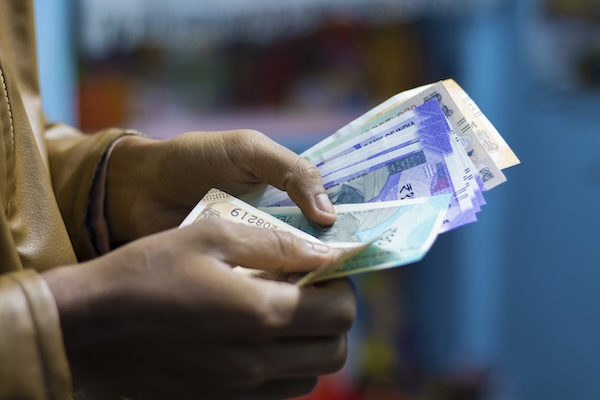
So, on both fronts, the Indian rupee gets impacted. While imports stay elevated, foreign capital outflows continue unabated. This is the core issue with rupee weakness. To resolve this, either the imports need to be brought down, or we need to get back the foreign capital inflows.
The first solution means demand destruction and sacrificing growth for managing the rupee. The second solution means tax reforms for FPIs or dollar fundraising by sovereign/quasi sovereign issuers. The second solution also implies a probable interest rate defence strategy if we can’t get our domestic demand down or raise new capital.
But are the above long-term solutions enough for stability of the currency. Every five years we see the same script played time and again, whether it be 2013, 2018, 2022 or now 2026. Politicians on both sides are fixated on winning elections at the cost of the exchequer via announcement of umpteen social welfare schemes. In a world of data centres, chips and automation, our priorities are social welfare schemes and the size of monthly SIP book.
When priorities are misplaced, growth eventually suffers. 2026 is not any different. There will be rate hikes for real economy after bond market yields have already shot through the roof for both PSU and private borrowers. We can debate the timing and extent of rate hikes but eventually the real economy must also suffer for bad policy choices. And this cycle will repeat again in 2030, mostly because we still would not have learnt that great policy choices are forward looking and involve pain in short term. All is not lost yet.
The telecom template of 1999 is the perfect example of how a course correction works. India was neither first in the cellular industry nor correctly positioned when launched initially in 1992. But 1999 policy changes ensured what we see today. The same needs to be thought for the entire AI ecosystem starting from chips, data centres and power demand. Same also needs to be applied for our energy security policy. Our vulnerabilities are well known and well documented. As long as these are not addressed, we will keep facing FX outflow issues every five years. The rupee depreciation is a mirror of why we need to look beyond old strengths of domestic consumption and into a bold vision of technology capex and energy security.
More From BasisPoint