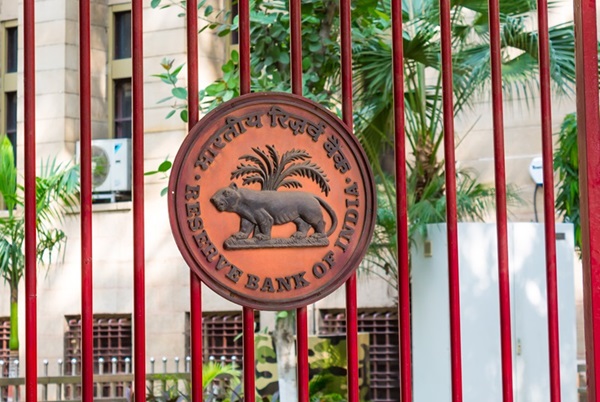
The Reserve Bank of India's latest package of foreign exchange and capital-flow measures reflects an increasingly difficult external environment. The measures span FCNR deposits, external commercial borrowings, government securities, and export proceeds, all aimed at widening channels for foreign-exchange inflows as higher crude oil prices, geopolitical uncertainty and persistent portfolio outflows weigh on balance of payments. The difficulty is that each measure runs into market constraints that regulation alone cannot easily overcome.
Absorbing the hedging cost on fresh three- to five-year FCNR deposits may improve returns at the margin, but the segment being targeted represents only a relatively small portion of the FCNR market. One- to three-year deposits continue to dominate because short-term dollar rates remain attractive, and depositors see little incentive to lock funds away for longer maturities. Most non-resident Indians also value liquidity and flexibility over marginal yield enhancement, leaving the three- to five-year bucket as a relatively small share of outstanding balances.
The leveraged FCNR structures that generated substantial inflows during earlier episodes face a very different environment today. International private banks once aggressively financed such transactions because the economics were attractive and balance-sheet constraints were less binding. Global banks now operate under tighter capital rules, stricter country-risk limits and greater competition for balance-sheet capacity. Allocating scarce credit lines to a three-year FCNR arbitrage linked to India must compete with corporate lending, structured finance and trading activities that often offer superior returns. Credit constraints, global risk aversion and limited appetite for long-duration emerging-market exposure suggest expectations of large FCNR inflows may prove optimistic.
Similar constraints apply to the concessional hedging facility offered for external commercial borrowings by public sector undertakings. Only a limited number of public sector entities are active overseas borrowers, and any increase in issuance is unlikely to materially alter India's external financing position. Since these borrowings are hedged, they improve funding economics for specific borrowers without generating the kind of unencumbered capital inflows that materially strengthen the balance of payments.
The measures relating to government securities face a different challenge. Expanding the Fully Accessible Route to all new issuances of 15-year, 30-year and 40-year government bonds undoubtedly improves market accessibility, while the removal of investment restrictions reduces operational hurdles for foreign investors. Accessibility, however, does not automatically translate into demand.
Global macro funds are currently reducing exposure to long-duration emerging-market debt and preserving flexibility amid elevated geopolitical risks. Committing capital to a 40-year rupee-denominated asset while conflict in West Asia threatens energy markets and the broader global economy is a difficult proposition. The measures may attract incremental inflows over time, perhaps several billion dollars spread across many years, but such amounts are unlikely to materially alter the outlook if external financing requirements expand significantly.
The decision to restore the period for realisation of export proceeds to nine months, similarly, changes the timing of inflows rather than their magnitude. Exporters already earn the foreign exchange and are merely being given additional time to repatriate it. In a depreciating rupee environment, exporters often prefer to delay conversion in anticipation of more favourable exchange rates, making the extension largely an accommodation of existing commercial behaviour rather than a source of fresh foreign exchange.
Taken individually, none of these measures is without merit, and together they may modestly improve market sentiment, widen financing channels and generate incremental inflows. The concern is that they appear calibrated for a financing shortfall measured in billions of dollars when the challenge confronting the external sector may ultimately be measured in tens of billions.
.png)