.png)


Chandrashekhar is an economist, journalist and policy commentator renowned for his expertise in agriculture, commodity markets and economic policy.
April 22, 2026 at 12:55 PM IST
Palm oil markets have been jittery since Indonesia's agriculture minister announced that his country would stop importing low-grade mineral diesel from July. This is in step with the rollout of B50, a fuel blend of equal parts biodiesel and conventional diesel. The statement was interpreted, widely and correctly, as an effort to talk up crude palm oil prices.
Whether it will is another matter entirely.
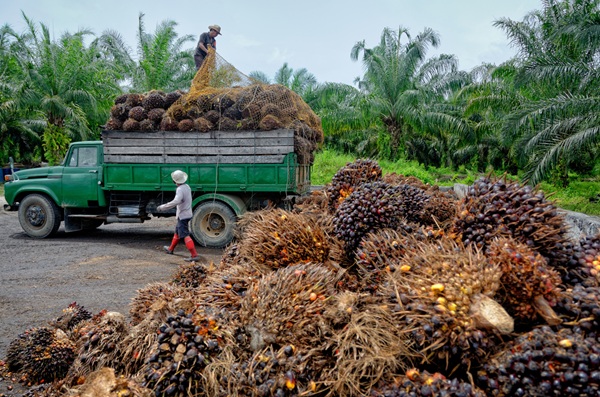
Indonesia produces around 48 million metric tonnes of CPO annually — the world's largest, and by some distance. Over the past decade, Jakarta has quietly recast palm oil as an energy asset, mandating its conversion into biodiesel and pushing the blending ratio higher each time the previous target was declared a success: B20, B35, B40. B50 follows the same logic.
The problem is that Indonesia is still fighting to hit B40, announced only in January 2025, and the fiscal drain of propping up the programme is considerable. Nor has anyone convincingly answered the mechanical question: most engines on Indonesian roads were not built for a 50% biodiesel blend, and retrofitting them is neither cheap nor fast.
Crude Realities
Into this already unsettled market came another crisis. Until February, CPO was a relatively dull story. Prices had been stuck at around RM 4,000–4,200 per tonne, with Brent hovering in the $60–62 range. Then the Persian Gulf flared up.
Supply chains buckled, crude climbed towards $100 a barrel, and palm oil was pulled along for the ride through the biodiesel channel. Palm oil, linked to crude through the biodiesel channel, followed. Prices have since risen roughly 10% to around RM 4,500 per tonne. Malaysia, the world's second-largest producer at approximately 20 MMT, sets the benchmark, and the benchmark has moved.
The broader vegetable oil picture for the second and third quarter of 2026 is less alarming than headline prices suggest. Global production of major vegetable oils is forecast at 236.5 MMT for 2025–26, up from 230.2 MMT the previous year, with both palm and soy oil output expanding. At around 230 MMT, consumption trails production.
There is no shortage. Global supply is ample and rising. What is doing the work on prices is anxiety. The Middle East ceasefire is fragile enough that markets are treating it as temporary, and until crude production fully recovers and supply chains settle, that anxiety will persist. The one moderating factor is that palm oil enters its peak production season from April through October, which should augment supply and limit the steepness of any further price moves.
For India, however, even this managed discomfort carries real costs. As the world's largest vegetable oil importer, bringing in roughly 16 MMT annually at a cost of $18–19 billion, elevated CPO prices translate directly into food inflation. The risk is compounded by the possibility of an El Nino in the coming months, which could suppress the kharif oilseed harvest — soybean and groundnut in particular — and widen the domestic supply gap further.
If palm oil prices continue to climb, India will substitute soybean oil for a portion of its palm oil imports, as it has done before. A reduction in the 10% customs duty on unrefined oil imports is also likely to be on the table if domestic prices deteriorate significantly.
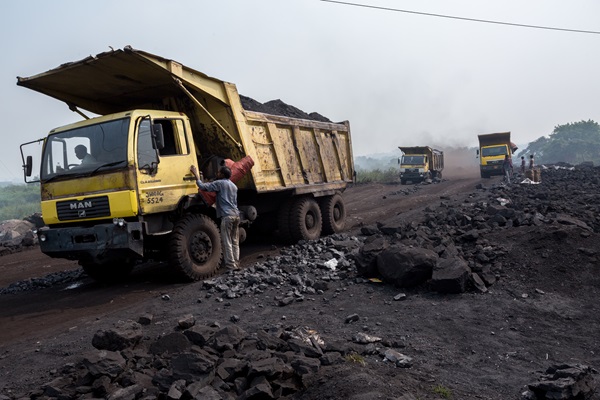
The more consequential lever, though, is diplomatic. India runs a goods trade deficit of $12–13 billion with Indonesia, driven substantially by its imports of palm oil, timber, coal, and nickel.
That import dependence also gives India bargaining power. New Delhi needs to tell Jakarta plainly that palm oil supplies to India must not become a casualty of Indonesia's domestic biofuel politics. Managing import dependency is not simply an economic exercise; at these volumes and prices, it is a matter of food security.
More From BasisPoint