.png)

New Clear Rule, Old Chaos: Trust in a World on Edge
A bunker play about nuclear powers on Friday. A real war by Saturday. From Tehran to Tata Sons, from GDP rebasing to bank frauds, the scarcest currency right now is trust.
Phynix is a seasoned journalist who revels in playful, unconventional narration, blending quirky storytelling with measured, precise editing. Her work embodies a dual mastery of creative flair and steadfast rigor.
March 1, 2026 at 3:51 PM IST
Dear Insighter,
On Friday night, I watched New Clear Rule, a dark political satire staged by the Jeff Goldberg Studio. The premise sounds absurd until it doesn’t. The planet’s core is collapsing under the cumulative weight of nuclear arsenals buried deep within it. The United Nations convenes an emergency summit in a bunker beneath a dying world. The UK, having already hurled its own warheads into deep space with the breezy righteousness of someone who cleaned out the garage first, is now persuading the US, Russia, China, India, Pakistan and Israel to do the same.
The characters feel exaggerated until you realise they aren’t.
The American representative is cocky, convinced rules are for others. The Russian is calm, surgical, KGB-trained and faintly amused. India and Pakistan bicker constantly, trapped in a script older than their current representatives. China calculates evacuation scenarios for 1.4 billion people. Israel barely speaks because Washington does the speaking for it.
They argue about sequencing. About verification. About who blinks first. About whether disarmament is prudence or suicide. The central question is brutally simple: who goes first?
By the next day, it no longer felt like theatre.
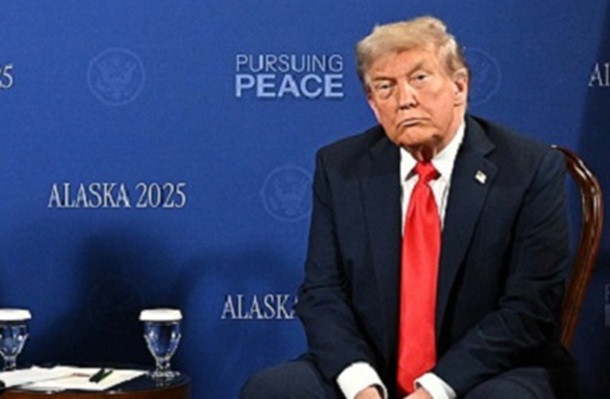
Operation Epic Fury is underway. Ayatollah Ali Khamenei is dead in coordinated US–Israeli strikes. Iranian state media claims ballistic missile retaliation across the region. Washington says its objective is to permanently degrade Iran’s nuclear capability. Tehran has declared forty days of mourning. Oil markets, shipping routes, and diaspora remittance corridors are recalculating risk in real time.
The play’s bunker dilemma is a reality. Trust is not an abstraction; it is the operating system of peace. That theme runs quietly through all the pieces this week.
Start with India’s GDP rebasing. The base year has shifted from 2011–12 to 2022–23. Real GDP growth for 2025–26 is revised up to 7.6%. Manufacturing growth is marked sharply higher. The headline reads reassuringly.
But as Dhananjay Sinha writes, the absolute size of the economy has been scaled down by roughly 3.9% across comparable years. We have polished the growth rate and shrunk the canvas. In conversation with Rajesh Mahapatra, former Chief Statistician Pronab Sen asks whether the methodological reset resolves earlier concerns or merely rearranges them. A prior IMF assessment had graded India’s national accounts a C. Rebasing was meant to restore confidence.
The fiscal arithmetic shifts with the base. As BasisPoint’s Groupthink column noted before the data dropped, debt-to-GDP edges differently, deficit metrics tighten, and policy space narrows even as demands expand.
Michael Debabrata Patra adds the currency layer in his continuing series on exchange-rate regimes. Floating currencies were designed to absorb shocks. In emerging markets, they often amplify them. He traces crises from the 1970s to the post-Ukraine era and notes how AI-driven portfolio rotation toward East Asia tugged at the rupee. His forward-looking view is cautious: 2026 could see a stronger rupee, unless AI proves to be a broader bubble that deflates across markets.
Trust deficits are not confined to statistics.
Anupam Sonal examines the ₹5.9-billion insider fraud at IDFC First Bank. The frameworks existed. The dashboards functioned. The fraud surfaced only after a routine government query triggered scrutiny. Internal safeguards were silent. Sonal’s earlier warning about AI-driven operational risks becoming systemic reads, in hindsight, less like theory and more like foreshadowing.
At NSDL, a technical glitch in February disrupted settlements and doubled securities shortfalls requiring auction from 348 symbols to 725. Indra Chourasia points out that the depository’s explanation remains sparse. Markets can process bad news, but struggle with opaque news.
R. Gurumurthy takes a broader look at Indian banking valuations. Balance sheets are cleaner than a decade ago and credit growth is decent. But equity multiples imply a frictionless future. Urban wage growth has softened. Consumption is uneven. Mid-tier IT faces automation pressure. Finance can outrun the real economy for a while. It cannot detach from it indefinitely.
There is, however, one place where conviction looks abundant. Chandrika Soyantar argues that India is quietly becoming the world’s valuation magnet. Hyundai Motor India listed at 26 times earnings while its parent traded at four. LG Electronics India crossed $13 billion in market value, exceeding its parent. The pricing hierarchy has inverted. Capital now follows valuation gravity more than geography.
That detachment shows up elsewhere in mis-selling. Srinath Sridharan, in conversation with Krishnadevan V, explains how banks bundled loans with insurance and sold protection as investment. In a companion column, he argues that reform will not come from sharper circulars alone. Incentives, supervision, and institutional culture must align.
Governance tensions surface at the Tata Group. Krishnadevan V reports that N. Chandrasekaran’s third term as chairman of Tata Sons is no longer a routine renewal. The Tata Trusts, which own roughly two-thirds of the holding company, appear to be re-examining the boundaries of professional authority. In a parallel analysis, Gurumurthy frames the deeper structural debate: whether Tata Sons should remain unlisted and how its ownership model intersects with the RBI’s scale-based NBFC framework that places it in the “Upper Layer.” For over a century, the Tata name has signified institutional steadiness. How this moment is navigated will shape the template for large Indian conglomerates.
Fino Payments Bank faces its own credibility test. T. Bijoy Idicheriah writes that just months after receiving in-principle approval to transition into a small finance bank, its MD and CEO was arrested in connection with a GST investigation involving a business partner. Transition requires capital and compliance, but it also requires continuity.
BL Chandak turns to working capital finance and argues that appraisal systems still rely on financial statements that are months old. Receivables are booked, not verified in behavioural terms. India has strengthened prudential norms and digital rails, but invoice intelligence and payment behaviour are not yet fully integrated into credit assessment. Without that integration, risk assessment remains partially blind.
Trade policy underscores external vulnerability. Ajay Srivastava reports that the US has imposed a preliminary 126% countervailing duty on Indian solar exports, citing subsidised Chinese components. India exported $1.2 billion of solar panels to the US in 2025, already down from the previous year.
Arvind Mayaram widens the lens to South Asia. The region’s seven principal economies account for 1.9 billion people and over $5 trillion in GDP. Yet intra-regional trade hovers around 5%, compared with roughly 25% within ASEAN. Tariff escalation, restrictive transit regimes and security-first borders have left the region underintegrated.
On internal security, Rajesh Ramachandran writes that the surrender of Thippiri Tirupati marks the near-complete decimation of the Maoist underground hierarchy. The armed movement has receded. The structural grievances that once animated it have not entirely vanished. The sustainability of peace will depend less on relief at silence and more on roads, schools, healthcare and livelihoods in forest districts.
Politics in Tamil Nadu is entering a structural phase. Amitabh Tiwari argues that actor Vijay’s Tamilaga Vettri Kazhagam has disrupted the long-running DMK–AIADMK duopoly. Survey data still shows the DMK narrowly ahead, but opposition vote splits could scramble arithmetic. Screen charisma must translate into booth-level organisation to alter outcomes.
Technology complicates law. Amit Singh notes that more than 465,000 AI-related patent applications were filed globally last year. When systems generate inventions under human supervision, who qualifies as the inventor? Patent regimes still insist on accountable persons. The machine can assist. It cannot yet own.
João Santos, architect of Europe’s Centres of Vocational Excellence, tells Kirti Tarang Pande that psychological well-being is core economic infrastructure. AI is shortening skill shelf-life. The global loss from mental health-related absenteeism is estimated at $1 trillion annually. Skills policy without mental health is incomplete.
The commercial vehicle cycle offers a more prosaic example of surface recovery masking structural limits. Krishnadevan V writes that rising truck volumes largely reflect fleet replacement rather than network expansion. Ageing pre-BS VI vehicles support dispatch numbers. Freight rates and input costs will determine whether margins follow volumes.
Municipal finance carries similar caution. Sharmila Chavaly, author of the 2017 municipal bond guidance framework, warns that new budget incentives may encourage issuance without strengthening foundations. Climate risk disclosure, revenue volatility classification and cumulative debt-service transparency are not embellishments. They are safeguards.
Across war zones, balance sheets, boardrooms and courtrooms, the question remains consistent: who trusts first?
West Asia is recalculating deterrence. India is recalculating growth. Banks are recalculating controls. Courts are recalculating ownership. Corporates are recalculating authority. Regions are recalculating integration.
Until next time, navigating a world rewriting its own rules.
Also Read:
- The Performance of Truth by Kalyani Srinath: On the $3.5-billion AI breakthrough that turned out to be a Chinese machine in a bright room, and why confidence is so easily mistaken for proof.
- Christians vs. America's Taliban by Michael R. Strain: Why traditional conservatives must argue against the Holocaust-denying, Hitler-admiring "Catholic Taliban" rising in MAGA circles.
- What Will the Fed's "Warsh Era" Bring? by Mohamed A. El-Erian: Why focusing on rate cuts misses the forest for the trees.
- When Kashmir Dreamed in Whites: It Was a Cricketing Spring in a Season of Turmoil by Lt Gen Syed Ata Hasnain: A decade after a grassroots cricket initiative, J&K's Ranji final berth shows how structured sport can reshape aspiration in conflict-scarred regions.
- Stablecoins Are Raising New Risks for Emerging Markets by Eduardo Levy Yeyati: While the US debates whether stablecoins will displace bank deposits, emerging markets are already building parallel financial infrastructure around them.
More From BasisPoint