.png)


Chandrashekhar is an economist, journalist and policy commentator renowned for his expertise in agriculture, commodity markets and economic policy.
May 6, 2026 at 12:16 PM IST
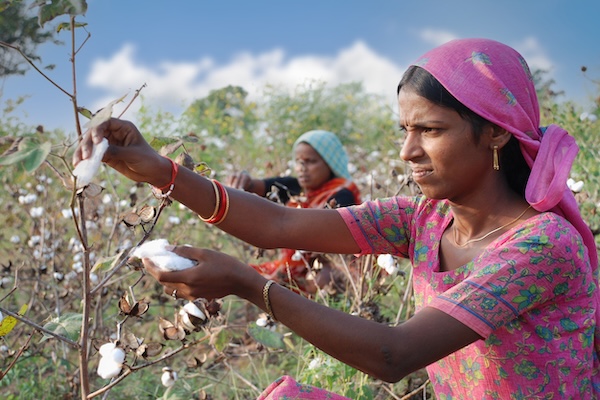
Known as ‘white gold’, Indian cotton is a major cash crop that supports 6 million farmers and 40–50 million people in the downstream processing and trade. Among the world’s top three producers, processors, consumers and exporters of the natural fibre, India stands at number two. Crucial to India's textiles sector, the cotton value chain contributes significantly to GDP and rural livelihood.
Sadly, over the last four years, India has gradually lost its edge in the world market as cultivated area declined by 1.8 million hectares to 11.5 million hectares in 2024-25, production fell by 5.5 million bales to 29.7 million bales, yields remained low at 440 kg per hectare, and raw cotton exports weakened. From being the world’s largest producer and exporter, the country has now turned into a net importer of cotton, with imports rising fourfold over the last four years to 4.1 million bales, even as the warning signs were visible well before the current crisis emerged.
Now, the Union Cabinet has approved the “Mission for Cotton Productivity” with a significant outlay of ₹56.59 billion, spanning the 2026–27 to 2030–31 period, with the aim of achieving cotton self-sufficiency over the next five years while enhancing India’s competitiveness in the global textile market. The mission also aligns with the government’s “5F” vision of Farm to Fibre to Factory to Fashion to Foreign.
Some of the key objectives and strategies include raising productivity from the current 440 kg per hectare to 755 kg per hectare in order to achieve the production target of 49.8 million bales of 170 kg each, advancing technology through the development of high-yielding, climate-resilient and pest-resistant seeds, and improving quality and branding through the modernisation of 2,000 ginning factories.
About 3.2 million farmers across 140 districts are likely to benefit from the digital integration of market yards, or mandis, and more transparent price discovery, while the plan also seeks to advance sustainability through the recycling of cotton waste.
The comprehensive mission, to be implemented jointly by the Ministries of Agriculture and Textiles, marks a strategic shift towards a sustainable, technology-driven and self-reliant cotton ecosystem, according to an official release.
Ground Realities
Without doubt, the idea is progressive and the objectives laudable, but ground realities continue to pose a formidable challenge as cotton cultivation remains characterised by rain-fed farming, the use of marginal lands, low levels of input application, antiquated agronomic practices and vulnerability to pest attacks.
When these structural weaknesses are combined with land constraints, water shortages and climate change, the envisaged mission to transform the cotton ecosystem will demand far deeper and more sustained intervention.
As the area under cotton cultivation is stagnating and possibly nearing saturation, the only realistic way to boost production is through vertical growth by raising yields, which in turn requires intervention at multiple levels.
Technological Intervention
Bt cottonseed is facing technology fatigue, with Pink Bollworm having acquired resistance as evidenced by the rising incidence of pest attacks, while sucking pests are also taking a growing toll on yields. India, therefore, needs a far more conducive policy environment to support technology-led seeds, especially as new-generation seeds with stacked genes are already available, and Indian seed companies should be encouraged to adopt them.
Technology seeds by themselves may not automatically raise yields, but they can significantly prevent or reduce yield losses because, in agriculture, a crop saved is often a crop produced. Industry must also work closely with agricultural universities and Krishi Vigyan Kendras to educate growers on agronomy, input management and scientific cultivation practices.
Genetic Research to Fight Climate Change
Climate-smart agriculture supported by climate-resilient seeds is clearly the way forward, but achieving that objective will require a stable and conducive long-term policy framework that encourages firms to invest consistently in research and development. Currently, many private seed companies have pared down research expenditures due to uncertain or non-supportive policies, even though seed research is inherently a long-term endeavour with long gestation periods.
A sustained decline in R&D spending in such a critical area is not in the country’s long-term interest and must therefore be reversed through policy clarity and regulatory support
Replication
While all-India cotton yield averages around 450 kg/ha, several districts enjoy twice the yield. There is something for stakeholders to learn from the experience of high-yield areas - input management, agronomy and so on. It is important to replicate these practices in low-yielding areas.
Contract Farming
Last but not least, large user industries should increasingly seek to produce the raw material they require through contract farming arrangements, with farmer-producer organisations emerging as effective partners in the process. Such a model can create a genuine win-win framework for both growers and industrial users, especially as scientific and transparent methodologies already exist for pricing output in advance and reducing uncertainty for all stakeholders.
Finally, sustained political will to remain committed to the mission and ensure timely implementation will be critical, particularly as the immediate challenge is the looming El Niño risk and the possibility of a below-normal monsoon during the upcoming 2026 planting season. The true test of the mission will lie not in the ambition of its targets, but in its ability to withstand climatic stress, policy uncertainty and execution challenges over the next five years.
More From BasisPoint