.png)

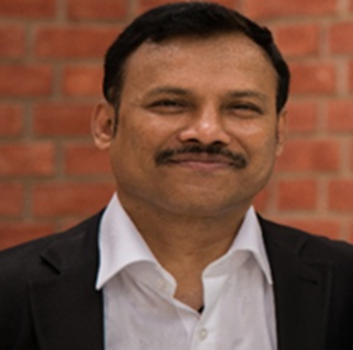
D. Tripati Rao is a Senior Professor of Economics and Business Environment at IIM Lucknow.
Rishu Kumar is a research associate at IIM-Lucknow. He specialises in Economics and Business Environment.
July 22, 2026 at 5:49 AM IST
India's healthcare system operates on a perilous illusion: that expanding insurance coverage protects households from financial ruin. The numbers suggest otherwise. According to recent data from the Household Social Consumption Health Survey 2025, whilst 46.4% of the population carries some form of health insurance, only 4.3% of hospitalised individuals actually receive reimbursement. Disturbing to note that, non-reimbursed insurance predominantly comprises individuals covered by central and state government insurance schemes.
For India's poorest families, the true economic damage from hospitalisation arrives not in invoice form but in forgone wages. On average, hospitalisation costs ₹36,920 to an individual household. Yet families lose ₹2,532 in household income from the same event. This distinction becomes brutally apparent at the margins. Households in the bottom decile spend merely ₹506 on medical treatment but lose ₹1,271 in wages. Their backs are broken not by what they must pay but by what they cannot earn.
Figure 1: Medical Expenses Breakdown

Source: Author’s calculation based on HSC Health Survey 2025, MOSPI, Government of India
This traps families in a vicious spiral. A working member falls ill; the household forgoes their wages to seek treatment or to care for an incapacitated dependent. Medical costs strain household savings. But the income loss proves far more crippling. Faced with such binary pressure, the poorest households make a rational choice that appears irrational to policymakers: they avoid hospitals altogether or seek cheaper, often inferior services. They cannot afford to lose wages, even to save their lives.
Figure 2: Medical Expenses by Decile and their Corresponding Household Income Loss (Rs.)

Source: Author’s calculation based on HSC Health Survey 2025, MOSPI, Government of India
Location is one of the strongest drivers of cost. Treatment within the same district averages ₹12,620 in rural areas and ₹32,291 in urban centres. The bill climbs to ₹58,550 when patients must travel to another district for treatment in an urban hospital and rises further to ₹79,514 when care requires crossing state borders. For many families, the nearest hospital equipped to handle a serious illness is often hundreds of kilometres away, making geography itself a hidden healthcare tax.
Figure 3: Average Medical Expenses by place of Hospitalisation and type of hospital

Source: Author’s calculation based on HSC Health Survey 2025, MOSPI, Government of India
Private hospitals in rural areas charge ₹83,614 for treatment—nine times the ₹2,940 average at government facilities in the same district. Yet the government hospitals suffer from such severe quality deficits that 42% of hospitalised patients cite unavailable services, poor quality, or absent doctors as reasons for choosing private care. Another 37.3% simply prefer a trusted private provider.
Protection Gap
The nature of illness also determines the financial shock households face. Childbirth complications account for the largest share of hospital admissions at 30.2%, followed by infectious diseases, injuries and cardiovascular conditions. Yet the most common reasons for admission are not necessarily the most expensive.
Cancer is by far the costliest, with average hospital expenditure touching ₹89,358. Musculoskeletal disorders follow at more than ₹64,000. By comparison, infectious diseases, childbirth and eye ailments involve average treatment costs of roughly ₹20,000 or less. This uneven burden illustrates why a single diagnosis can transform a middle class household into one struggling to stay afloat.
Figure 4: Average Medical Expenses and Share by Nature of Ailment

Source: Author’s calculation based on HSC Health Survey 2025, MOSPI, Government of India
Then there’s the reimbursement data that exposes the gaps between insurance design and reality. Among those covered under Ayushman Bharat-Pradhan Mantri Jan Arogya Yojana, the flagship scheme, merely 0.72% received reimbursement when hospitalised. State health insurance schemes fared only marginally better at 1.1%. Conversely, formal-sector workers with employer-linked schemes saw reimbursement rates of 44% to 57.5%.
Figure 5: Share of Health Insurance in India (Per cent)

Source: Author’s calculation based on HSC Health Survey 2025, MOSPI, Government of India
Figure 6: Health Insurance Reimbursement Rate (in %)

Source: Author’s calculation based on HSC Health Survey 2025, MOSPI, Government of India
This reflects a deeper truth about Indian healthcare finance. Of the out-of-pocket spending on hospitalisation, households fund 81% from existing income or savings, 12.8% through borrowing, and the remainder through asset sales or contributions from relatives. Insurance, ostensibly designed to shield households, functions for most as mere paperwork. The poor must still find money from somewhere. When it is unavailable, they deplete assets, accumulate debt, or forgo treatment altogether.
Figure 7: Source of Financing Medical Expenses

Source: Author’s calculation based on HSC Health Survey 2025, MOSPI, Government of India
Government data reveals that only 4.3% of the 95.7% of uninsured hospitalised patients who financed treatment themselves avoided financial distress through reimbursement. This suggests that amongst those actually hospitalised, insurance—even when held—barely functions. The system has achieved the paradox of widespread coverage coupled with minimal actual protection.
Quality Crisis
The policy response has consistently pursued the wrong target. Governments have focused on expanding coverage, believing that more cardholders mean more protection. The evidence contradicts this neatly. What matters is whether the system pays out when claims arise, whether treatments are available when needed, and whether providers maintain standards. India's scheme fails on all three counts.
The government must pursue urgent reforms. First, it must enforce accountability within public health systems through rigorous audits, transparent performance metrics, and consequences for persistent failure. The 42% of patients who abandon government hospitals cite missing services and absent doctors. Third-party audits, merit-based incentives for providers, and public scorecards would begin restoring institutional credibility.
Second, the government must acknowledge that insurance schemes designed exclusively for the informal sector consistently underperform. If schemes administered to a formal-sector base achieve 44% to 57.5% reimbursement rates, the difference lies not in theory but in capacity, monitoring, and enforcement infrastructure. Extending such protections to millions without corresponding investment in back-office systems, fraud detection, and claims processing only widens the gap between promise and delivery.
Until policymakers confront the income loss dimension, coverage expansion will remain performative. A household cannot choose to be insured when avoiding hospitalisation costs more in lost wages than medical care itself.
The healthcare conversation in India has focused on the wrong metric. It is not coverage that protects, but the money reaching households when a crisis arrives. Until that changes, expanding insurance will be mistaken for solving the crisis.
More From BasisPoint