.png)


Rajesh Mahapatra, ex-Editor of PTI, has deep experience in political and economic journalism, shaping media coverage of key events.
March 23, 2026 at 2:49 PM IST
India’s economic vulnerability has often been framed in terms of fiscal limits, inflation risks, or external balances. The events unfolding around the Strait of Hormuz suggest a different, more structural constraint is now coming into focus, one that sits outside the traditional toolkit of macroeconomic management.
Energy access, not just energy prices, is emerging as the defining variable.
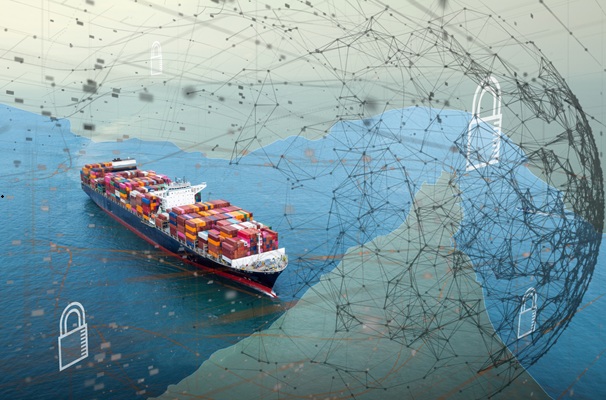
The ongoing conflict in the Gulf has not merely pushed crude prices higher. It has altered the conditions under which energy moves. The Strait of Hormuz, through which a substantial share of India’s oil, LPG, and LNG imports transit, is no longer functioning as a neutral passage governed by market forces.
Access is increasingly shaped by political considerations, logistical constraints, and security assurances. For an economy that imports more than 85% of its oil requirements, this shift carries consequences that go well beyond near-term price volatility.
Market reactions have already offered a preview.
Episodes of sharp corrections in equity indices, followed by partial recoveries, point to a pattern of uncertainty rather than a one-off adjustment. Financial markets are attempting to price a moving target, where supply risks are not easily quantifiable and where traditional correlations offer limited guidance. Yet the more durable effects are likely to be felt in the real economy.
Energy-intensive sectors are the first to register the strain. Higher and more uncertain fuel availability disrupts production planning, raises input costs, and compresses margins. The transmission, however, does not stop there. As upstream pressures move through petrochemicals and logistics, they begin to affect a wider set of industries, including consumer goods and agriculture.
Fertiliser production, dependent on gas feedstock, faces capacity constraints, while imported inputs such as phosphatic fertilisers remain exposed to global supply conditions. The result is a gradual but broad-based increase in costs, with implications for both core and food inflation.
Different Sort of Shock
This is where the current episode marks a departure from earlier oil shocks.
The issue is not simply that prices are rising, but that access itself is becoming contingent. In such an environment, the question for an importing economy is not only how much it pays, but whether it can reliably procure what it needs, when it needs it, and through which channels.
India enters this phase with both vulnerabilities and options. On the one hand, dependence on a single critical corridor exposes the economy to concentrated risk. On the other, the country has, over time, built a degree of flexibility in sourcing, refining, and managing energy flows. Strategic petroleum reserves provide a buffer, albeit limited in duration. A diversified set of suppliers, including Russia, the Middle East, and the US, offers some room to manoeuvre. Domestic refining capacity, among the largest globally, allows for optimisation across crude grades.
Explicit Framework
Bilateral arrangements, long-term contracts with embedded security assurances, and closer coordination between diplomatic and commercial channels can help reduce uncertainty around supply.
At the same time, investments in logistics, storage, and alternative routes acquire greater urgency. Expanding strategic reserves, strengthening shipping capabilities, and exploring overland or multi-route supply chains can mitigate the risks associated with any single chokepoint.
Over the medium term, accelerating the transition towards renewable energy and electrification will also play a role in reducing exposure, though these are gradual processes and cannot substitute for immediate measures.
The positive dimension in this otherwise challenging situation lies in the clarity it provides. Constraints that were previously abstract are now visible and measurable. This creates the conditions for policy to respond with greater precision.
India has, in the past, demonstrated an ability to adapt its external sector strategy in response to changing global dynamics, whether through diversification of trade partners or recalibration of capital flows. Energy security can follow a similar trajectory.
Ultimately, the Strait of Hormuz is a reminder that economic resilience is not built solely through domestic reforms. It also depends on how effectively a country navigates external dependencies. As global supply chains become more fragmented and politically influenced, the boundary between economics and geopolitics becomes less distinct.
For India, the task ahead is to integrate these dimensions more deliberately.
Ensuring reliable access to energy will require not just efficient markets, but also active engagement, strategic foresight, and a willingness to deploy statecraft alongside policy. The challenge is significant, but so too is the opportunity to build a more resilient and adaptable economic framework in the process.
(With input from Kalyan Ram)
More From BasisPoint