.png)


Dr Arvind Mayaram is a former Finance Secretary to the Government of India, a senior policy advisor, and teaches public policy. He is also Chairman of the Institute of Development Studies, Jaipur.
May 14, 2026 at 2:58 PM IST
India appears to be entering another phase of external sector stress. The signs are becoming increasingly difficult to ignore. The rupee has slipped to historic lows against the dollar; crude oil prices have surged sharply following the Iran conflict; commodity prices are hardening globally; fertiliser imports are becoming more expensive; and inflation transmitted through imports is once again beginning to permeate the economy. The government’s decision to raise import duty on gold and silver from 6% to 15%, coupled with Prime Minister Narendra Modi’s public appeal to Indians to refrain from buying gold for a year, reflects growing concern within policymaking circles that the current account deficit could once again emerge as India’s principal macroeconomic vulnerability.
The comparison with 2012–14 is unavoidable. Then too, India was confronted with a widening CAD, rapid depreciation of the rupee, rising oil imports, capital outflows triggered by the US Federal Reserve’s taper tantrum, and fears of a sovereign downgrade. In August 2013, the rupee collapsed to an unprecedented 68.85 to the dollar. Today, the rupee has breached the 95 mark against the dollar and has become among the weakest-performing Asian currencies this year.
Oil, the Rupee and the Inflation Chain
The weakening rupee amplifies these pressures because every dollar-denominated import becomes more expensive in domestic currency terms. A depreciating rupee increases the import bill, widens the CAD, weakens investor confidence and accelerates capital outflows, which in turn exert further downward pressure on the currency.
This is precisely the dynamic India experienced during the taper tantrum period of 2013. There are worrying signs that elements of that cycle are beginning to reappear. Foreign portfolio investors have once again turned aggressive sellers in Indian markets. Market estimates suggest that FPI outflows during the first few months of 2026 may already have crossed ₹1.8–2 trillion. Rapid depreciation of the rupee directly erodes dollar-denominated returns for foreign investors, making persistent currency weakness itself a reason to reduce exposure to India.
More concerning is the weakening of net FDI inflows even as invisible forex outflows — overseas education, outbound tourism, freight, insurance and debt servicing — continue to rise. Unlike 2013, today’s balance-of-payments pressures arise not merely from merchandise imports but also from a much larger ecosystem of external payments linked to India’s deeper integration with the global economy.
Why Gold Becomes the Policy Target
This is why gold invariably becomes the policy target.
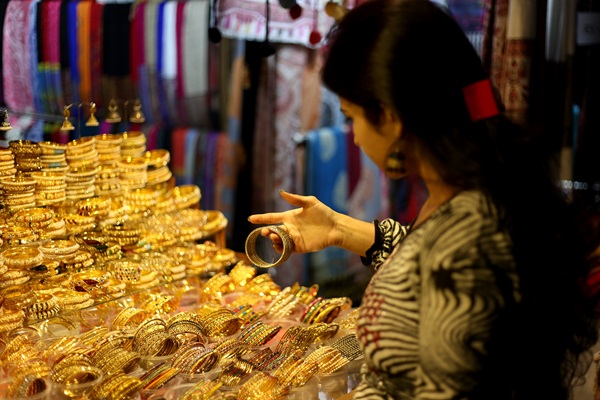
Gold imports consume enormous quantities of foreign exchange while adding relatively little to productive capital formation. Yet gold simultaneously functions as a deeply embedded savings instrument for Indian households, particularly during periods of inflation, uncertainty and currency instability. Periods of macroeconomic stress themselves tend to increase the attractiveness of gold, making demand suppression inherently difficult.
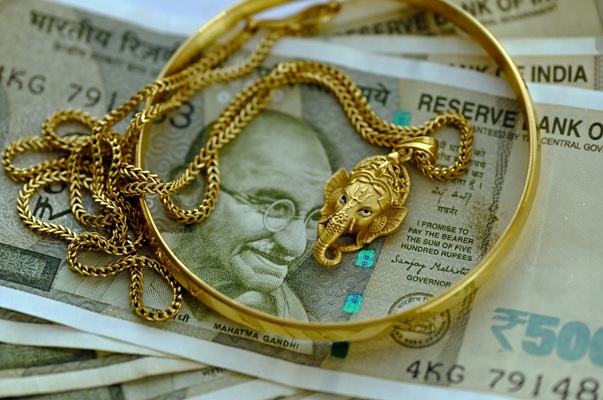
India imported nearly $72 billion worth of gold in 2025-26, up from approximately $58 billion in the previous year, despite lower import volumes because of soaring international prices. Gold has once again become the country’s second-largest import item after crude oil.
The situation bears striking resemblance to 2012–14. Gold imports had risen from $28 billion in 2009-10 to $56 billion in 2011-12. Gold constituted over 11% of total imports and accounted for nearly a quarter of India’s trade deficit in 2012-13, while the current account deficit rose to an unsustainable 6.7% of GDP.
Gold becomes the adjustment variable not because it is economically insignificant, but because it appears administratively compressible. Crude oil imports are indispensable for energy security. Fertiliser imports affect food security. Electronic imports are deeply integrated into industrial supply chains. Gold alone appears politically manageable.
The 80:20 Scheme and Its Consequences
Under the scheme, only a limited number of nominated agencies were permitted to import gold, and 20% of imported gold had to be linked to value-added exports before fresh imports were permitted. The 80:20 scheme was not fundamentally a trade policy instrument. It was an exchange-rate stabilisation instrument designed during an acute external-sector crisis.
In purely macroeconomic terms, the scheme worked. Gold imports declined sharply. The current account deficit narrowed dramatically from $18.1 billion in the fourth quarter of 2012-13 to $1.2 billion in the fourth quarter of 2013-14. Pressure on the rupee eased substantially. From the historic low of ₹68.85 to the dollar in August 2013, the rupee recovered sharply to nearly ₹59 by March 2014 — an extraordinary turnaround under extremely adverse global conditions. The recovery restored investor confidence and blunted speculative attacks on the rupee in offshore forward markets.
The controversy that later emerged around the 80:20 scheme obscured a more important policy lesson. There are no free lunches in the public policy space. The scheme simultaneously succeeded and failed — depending on the metric used to evaluate it. It succeeded as an emergency macroeconomic stabilisation instrument, but failed as a sustainable, distortion-free long-term mechanism, something it was not intended to be anyway.
The complexity of the gold question, however, extends beyond macroeconomic management.
The Employment Economy Behind Gold
Abrupt suppression of gold consumption, therefore, carries employment and export consequences far beyond the macroeconomic numbers. Thousands of small workshops, hereditary artisans, polishers, engravers, casters and traders depend upon the gold value chain for their livelihoods.
Lessons from 2013
India today is certainly better positioned than it was in 2013. Yet the economy remains heavily dependent on imported energy, fertilisers and critical commodities. Under such conditions, governments inevitably gravitate toward measures to compress imports and protect the balance of payments.
However, the experience of 2013–14 also demonstrates that the design of such interventions matters enormously. Abrupt and indiscriminate suppression of gold imports can generate cascading distortions across the broader gold ecosystem.
If compression of gold imports becomes unavoidable under conditions of acute external-sector stress, the instruments used must therefore be carefully calibrated. The logic underlying the 80:20 scheme — linking imports to export performance while permitting controlled flows into the domestic market — was precisely an attempt to reconcile macroeconomic stabilisation with the need to mitigate collateral damage to employment and the jewellery ecosystem.
Gold is simultaneously a macroeconomic burden and a social-financial stabiliser. That is the paradox policymakers must confront.
Dr Arvind Mayaram was India’s Finance Secretary during 2012-14.
More From BasisPoint