.png)

Fed’s Warsh Says Play the Ball, Markets Call Foul
Warsh wants investors to trade the data rather than the Fed. The post-meeting yield curve exposed the cost of asking markets to price policy without a visible reaction function.

Kalyan Ram, a financial journalist, co-founded Cogencis and now leads BasisPoint Insight.
July 30, 2026 at 3:19 AM IST
The Federal Reserve’s July hold was defensible. Its failure to explain the hold was not.
The Federal Open Market Committee retained the federal funds target range at 3.50%–3.75%, but three of its 12 voting members wanted a 25-basis-point increase. That 9–3 split captured an institution uncomfortable with its own decision: inflation remains above target, activity is solid, and the labour market is stable, yet the majority still preferred to wait.
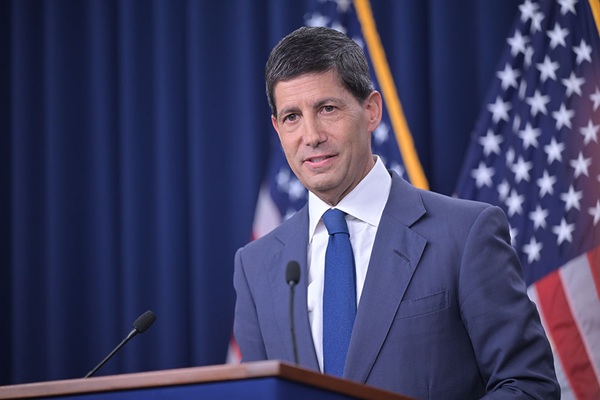
Chair Kevin Warsh tried to turn that ambiguity into a virtue. Markets, he said, should “play the ball, not the referee”. His argument is attractive. Excessive forward guidance can create false precision, encourage investors to trade central-bank language rather than economic fundamentals and leave policymakers trapped by projections that the next data release may invalidate.
But the downside became evident within minutes.
The policy-sensitive two-year US Treasury yield fell as traders reduced the probability of near-term action. Longer yields rose, with the 30-year yield crossing 5.20% for the first time since 2007. The curve steepened because markets priced less immediate restraint and demanded greater compensation for long-term inflation and policy uncertainty. The probability assigned to a September increase fell to about 57%.
That was not the clean price discovery Warsh appeared to welcome. It was a market struggling to identify the Fed’s reaction function.
Economic data do not interpret themselves. A higher oil price can be a temporary relative-price shock or the beginning of a broader inflation process. Strong investment can expand productive capacity or overstimulate demand before that capacity arrives. One softer inflation report can mark a turning point or merely interrupt a persistent trend.
Markets need to know how the Fed distinguishes among these possibilities. They need not be given a rate forecast. They do need to understand which evidence matters, how it will be weighted and what would cause the Committee to act.
Chair Kevin Warsh’s strongest defence was that bond markets had already tightened for the Fed. Treasury yields had risen materially since the June meeting, lifting mortgage, corporate and other longer-term borrowing costs. “Even while at some level we haven’t done much in 42 days, the markets have done quite a bit,” he said.
The key is the source of tightening.
Higher yields driven by confidence that the Fed will act reinforce monetary transmission. Higher yields driven by a larger term premium, fiscal risk or doubt about the Fed’s resolve amount to a credibility charge. They tighten financial conditions for the wrong reason.
Warsh’s approach risks confusing flexibility with opacity. Less guidance may reduce the Fed’s dominance over daily trading, but too little guidance can increase the term premium, amplify volatility and impair monetary transmission. The central bank may then discover that the market has tightened long-term financial conditions for reasons that have little to do with the policy stance it intended.
The three dissents consequently provided more useful guidance than the Chair’s press conference. They showed that a substantial bloc believes the threshold for action has already been crossed. The majority did not explain why it disagreed, beyond wanting more data.
A hold followed by clear conditionality could have reassured markets. The Fed could have identified persistent core inflation, broader wage and services pressure, rising expectations or sustained energy pass-through as triggers for September. Instead, it asserted resolve while withholding the framework through which that resolve would become action.
The Fed is not merely the referee. It writes the rules, sets the price of money and changes the conditions under which the ball moves.
Markets were not unconvinced because rates remained unchanged. They were unconvinced because the Fed asked them to play without showing where the lines were drawn.
More From BasisPoint