.png)


Chandrashekhar is an economist, journalist and policy commentator renowned for his expertise in agriculture, commodity markets and economic policy.
April 29, 2026 at 9:00 AM IST
“India is just one bad monsoon away from a farm disaster.”
A statement heard often in the past may be about to be tested again. That’s what makes the current forecast so dispiriting.
The India Meteorological Department has placed the 2026 southwest monsoon at 92% of the long-period average of 870 millimetres, below normal in the IMD's own classification. The proximate cause is El Nino, a Pacific weather pattern that has a long record of squeezing South Asian rainfall into something less than what farmers need and more than policymakers can comfortably ignore.
However, what determines whether a Kharif harvest survives a difficult monsoon is not the total rainfall logged by September but when and where it falls. A well-timed onset that turns patchy through August can do more damage to standing crops than a modest seasonal deficit distributed evenly. Farmers planting rice or pulses in June are not making decisions based on the season-end average; they are making them based on what the sky is doing that week, and a capricious monsoon punishes those decisions repeatedly.
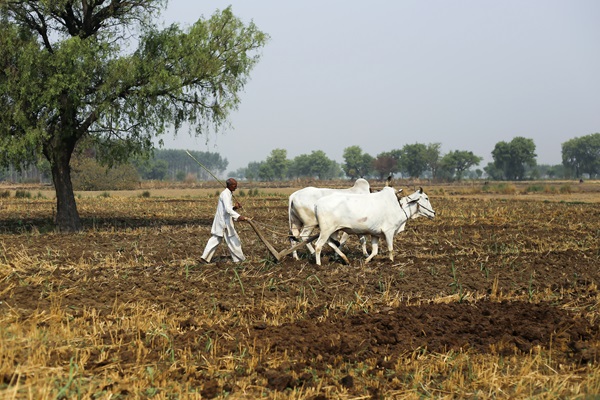
Kharif is where the exposure is concentrated. Rice, coarse cereals, pulses, oilseeds, cotton — all of which ride on the southwest monsoon, and sugarcane is not exempt either. The crop calendar allows very little room. A late onset delays sowing; an early withdrawal shortens the growing season; a long dry spell in between can cut yields even where planted area holds up.
Supply Pressures
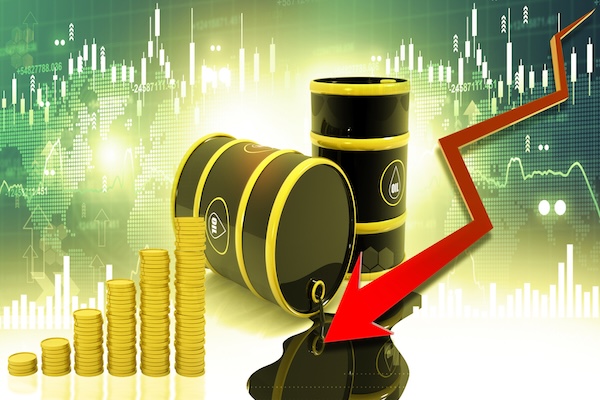
Fertiliser supply was already under strain before the monsoon forecast arrived. Conflict in the Persian Gulf has disrupted natural gas flows, and since natural gas is the feedstock for synthetic nitrogen, that disruption runs straight through to urea and other nitrogenous fertilisers that Indian farmers depend on. Add rising electricity demand from a hotter pre-monsoon and elevated crude prices that have been climbing since March, and the input cost picture for the 2026–27 Kharif season looks uncomfortable.
The crops that carry the most import risk are pulses, oilseeds and cotton, where domestic buffers are thin. India's import bills for pulses, vegetable oils and cotton were already large going into this year: 6 million tonnes, 16 million tonnes and 5 million bales respectively in 2025-26. A weak Kharif harvest would push each of those figures higher, quite possibly by 10% or more.
Grain stocks offer some relief: 38.6 million tonnes of rice and 21.8 million tonnes of wheat as of early April, with Rabi procurement still adding to the pile. But the vulnerability lies in pulses and oilseeds , which a bad monsoon tends to affect the most, and there are no comparable buffers to fall back on.
One partial consolation is that El Nino does not hurt everyone equally. When South Asia gets less rain, the North American growing season tends to run well, and global supplies of grains and vegetable oils stay reasonably healthy as a result. That limits how far import costs can run, even if domestic harvests disappoint.
The southwest monsoon affects not just harvests but also people, policies and politics. That makes risk management critical. The government has several instruments of policy response — fiscal, monetary, trade, tariff and administrative. Judicious use of these policy instruments can help mitigate the adverse consequences to some extent.
The question is whether they are mobilised early enough and with adequate coordination between the Centre and the states. A contingency plan is needed now, and it must be granular: district-wise, crop-wise. Short-duration, moisture-stress-tolerant seed varieties must reach farmers before sowing windows close. Agricultural universities and Krishi Vigyan Kendras should be pressed into service immediately as a serious extension effort.
India has been through this before and has rarely used the experience well. ‘Drought-proofing the Indian economy’ is a phrase that reappears with every difficult monsoon forecast and fades when the season proves manageable. The underlying structural vulnerabilities, in seed systems, irrigation coverage, fertiliser supply chains and rural credit access, tend to persist regardless.
A combination of food inflation and energy inflation would fall hardest on the rural poor, who account for a disproportionate share of India's hundreds of millions living in poverty. That is the real stake of a below-normal monsoon: a direct hit on household incomes and food access among those with the least margin to absorb it.
More From BasisPoint