.png)

Asia Stocks Mixed as US-Iran Tensions Keep Oil Elevated
Here’s your quick read to start the day: a chatty, no-fuss look at overnight moves, the big story, what’s on the docket, and the tickers you need to watch.

Nandinee Keluskar is an independent financial journalist.
August 25, 2026 at 3:04 AM IST
Global Mood: Cautiously Risk-off
Drivers: US Economic D-Day Sanctions, Iran Vows Retaliation
Asian stock markets traded mixed on Tuesday as concerns over West Asia and elevated oil prices kept investors cautious. South Korea’s Kospi fell 2.96%, the biggest decline among major regional indices, while Japan’s Nikkei 225 slipped 0.87%. Australia’s ASX 200 bucked the trend, rising 0.40%.
The cautious mood followed increased US economic pressure on Iran and its trading partners, with Washington giving countries a timeframe to cut economic ties with Tehran, or face unilateral action. Brent crude remained near $92 a barrel, despite falling more than 2% on Monday, keeping inflation risks in focus. The mixed Asian session followed an uneven Wall Street close, with investors also awaiting Nvidia’s earnings and key US inflation data later this week.
THE BIG STORY
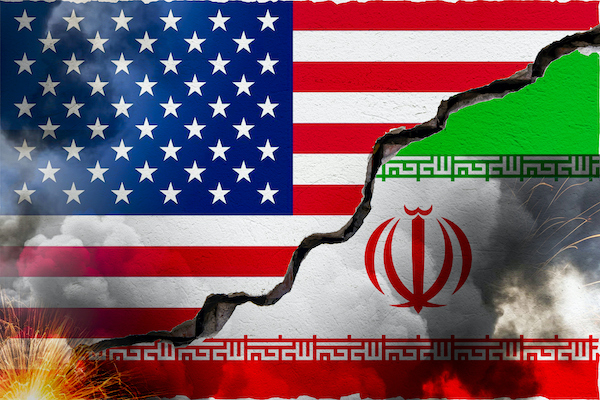
The US unveiled its promised "economic D-Day" against Iran on Monday but stopped short of its most punishing options, warning countries to cut ties with Tehran or risk being expelled from the dollar-based financial system while declining to name targets or timelines. The Treasury sanctioned 60 individuals, entities and vessels — notably excluding the Chinese financial institutions at the heart of Iran's oil trade — and expanded secondary sanctions to five sectors: digital assets, gold, technology, aviation and shipping.
Bessent said a "major announcement" targeting a financial institution was coming by the end of the week, keeping pressure on markets. Iran's economy minister vowed retaliation, saying "enemies should wait for an attack," and the IRGC threatened heavy blows to US vital interests and energy chokepoints.
China said sanctions do not help and vowed to protect its interests, and Iran's economy minister said neither China nor Russia had "accepted" the measures. The deliberate pace of implementation, giving countries a "cure period" to comply before penalties activate, reflects Washington's awareness that moving too aggressively against Chinese banks could torpedo the Trump-Xi summit scheduled for late September and trigger retaliation on critical mineral flows.
Oil fell more than $2 on Monday as markets read the measures as less severe than billed, though investors remained braced for further supply disruption. Nearly six months into a war that has killed thousands, degraded Iran's conventional military, and brought Hormuz shipping to a near standstill, Washington has yet to achieve its core objectives of dismantling Iran's nuclear programme or toppling its clerical rulers, and the state of Iran's nuclear capability remains unknown with UN inspectors shut out since 2025.
Data Spotlight
The Chicago Fed National Activity Index edged down to -0.08 in July from 0.06 in June, with personal consumption and housing contributing a sharp -0.09 points after adding 0.04 points the prior month. The three-month moving average slipped to -0.04 from +0.01, pointing to a modest but broadening softening in US economic activity.
South Korea's Composite Consumer Sentiment Index fell 2.3 points to 104.5 in August, with current domestic economic conditions dropping five points to 79 and future conditions declining three points to 89. Year-ahead inflation expectations held at 2.7%, while three- and five-year expectations were both 2.6%.
German 10-year Bund yields remained above 3.2%, near their highest since March 2011, as investors positioned for an ECB rate hike in September following June's tightening. Oil prices above $90 per barrel and low gas inventories are sustaining inflation pressures, with markets now pricing a 60% chance of the ECB deposit rate reaching 3% by September 2027.
Takeaway: Softening US activity, cooling South Korean consumer sentiment and surging Bund yields point to a global economy navigating persistent inflation and tightening financial conditions. With the ECB widely expected to hike in September and oil prices elevated above $90, West Asia supply disruptions continue to set the tone for monetary policy across major economies.
WHAT HAPPENED OVERNIGHT
US stocks mixed as tech selloff, Iran sanctions threat, and AI data centre backlash weigh on sentiment
- The Dow rose 0.26%, while the S&P 500 lost 0.28% and Nasdaq dropped 0.76%, as chip stocks and tech led declines ahead of a pivotal week for markets.
- Nvidia fell 2.9%, Micron dropped 5.8%, and Broadcom slid 2.6%, dragging the Philadelphia Semiconductor Index lower as AI data center political opposition added to sector headwinds.
- The Trump administration announced a possible expansion of secondary sanctions on Iran as part of an "economic D-Day" but stopped short of actually imposing penalties.
- Nvidia earnings and Warsh's Jackson Hole speech on Friday are the twin catalysts for the week, alongside Wednesday's PCE inflation report, with markets pricing one 25bps hike by year-end.
US Treasury yields ease slightly but hold near 20-month highs as fiscal and geopolitical pressures persist
- The 10-year yield dipped to 4.70%, staying close to last week's 4.75% peak, as lower crude prices offered modest relief while fiscal deficit concerns and heavy corporate debt issuance kept upward pressure on the long end.
- CNBC reported Bessent could tap the Treasury's $1 trillion General Account to fund buybacks rather than issue short-term bills, raising concerns over further dollar weakness.
- The US expanded secondary sanctions targeting entities doing business with Iran, with Bessent warning a major financial institution could face sanctions this week and suggesting China would not be exempt.
Dollar edges up to 99.0 but holds near three-month lows
- The greenback remained under pressure following reports Bessent could tap the Treasury's $1 trillion General Account to fund long-dated buybacks, raising further dollar weakness concerns.
- Trade tensions with Canada escalated as Washington imposed 50% tariffs on Canadian goods, with Ottawa pledging dollar-for-dollar retaliation and Trump flagging 50% tariffs on autos, auto parts, and steel from January 2027.
- The US expanded secondary Iran sanctions, with Bessent warning a major financial institution could be targeted this week, suggesting China would not be exempt and adding to geopolitical uncertainty.
Oil falls over 2% as markets shrug off new Iran sanctions and book profits after two weekly gains
- Brent settled at $92.17/bbl, down 2.35%, and WTI at $85.01, down 2.35%, as investors took profits following last week's 5%-plus gains, with Bessent's sanctions announcement seen as largely telegraphed.
- Bessent expanded secondary sanctions on entities and countries maintaining business ties with Iran, though analysts questioned the incremental impact unless China materially reduces Iranian crude purchases.
- Iran's President Pezeshkian called for a diplomatic solution as Pakistan's army chief visited Tehran for mediation talks, offering a rare diplomatic signal ahead of the sanctions announcement.
- Fewer than 20 commodity vessels transited Hormuz over the weekend as Iranian and US blockades continued to restrict traffic through the critical chokepoint.
- TotalEnergies said it is profitably moving oil through Hormuz, with transport costs more than offset by steep producer discounts.
- SEB noted Brent at $93/bbl rather than $120-150 suggests enough oil is flowing, with a full Iranian closure the key potential turning point.
- Morgan Stanley raised its Brent forecast, projecting a peak of $100/bbl in October-December, while the IEA said it is not currently discussing a second strategic reserve release.
Day’s Ledger*
Economic Data
- Japan Core CPI Data
- Germany April-June GDP Data
- US August CB Consumer Confidence Index
- US July New Home Sales Data
Corporate Actions
- Earnings: Ardee Industries, MV Electrosystems, State Trading Corporation of India
- Fedbank Financial Services to consider fund raising
Policy
- US FOMC Member Barkin Speaks
Tickers to Watch
- TATA CONSULTANCY SERVICES to acquire Porsche AG's IT consulting subsidiary MHP for €320 million, as part of a five-year TCS-Porsche partnership on AI and software-led mobility.
- SUZLON ENERGY announces plans to develop 1,325 MW of new wind projects in Andhra Pradesh's Rayadurg constituency, Anantapur district.
- HINDUSTAN COPPER informed that the Government to sell 3% stake via OFS, with option for additional 3% via green-shoe; floor price at 514 rupees/share, a 9.5% discount to Monday's closing price of 567.90 rupees.
- COAL INDIA incorporates Singapore-based wholly owned subsidiary CIL Global to explore overseas critical mineral asset acquisitions.
- AFCONS INFRASTRUCTURE wins arbitration award of 3.355 billion rupees against UPEIDA; payment contingent on UPEIDA not challenging the award within the legal timeframe.
- UCO BANK board approves raising up to $1 billion in foreign currency funds via debt instruments under an MTN Programme, in one or more tranches.
- ICICI BANK prices $1 billion of five-year senior unsecured fixed-rate notes via its IFSC Banking Unit; S&P Global Ratings assigns 'BBB' rating.
Must Read
- The Japanification of AI
- Corporate Rescue Has a Clock
- Longer Trading Hours Can Open Indian Markets to the World
- AI in Banking Promises Better Risk Control but New Systemic Faultlines
- The War Above Us: Why Space Can No Longer Remain a Specialist Subject
- Govt appoints ex-diplomat Akbaruddin, two others to RBI central board
- From trades to balance sheets, Sebi widens its AI-powered surveillance net
- Trump administration moves to impose more than $100,000 fee for H-1B worker visas
- India's Iran exports set to fall further due to Dubai halt, U.S. sanctions
- India's TCS to buy Porsche's IT unit, bags 5-year deal worth $1.46 billion
(*Compiled from various media sources)
See you tomorrow with another edition of The Morning Edge.
Have a great trading day
More From BasisPoint