The remarkable resilience of the US economy has puzzled economists. A large part of the answer lies not in monetary policy or consumer spending, but in artificial intelligence—which has rapidly become one of the biggest investment stories in modern economic history, reshaping growth, capital flows and currency markets.
In macroeconomics classrooms, one classic relationship taught is the inverse correlation between the US dollar and precious metals. For India, which imports over 90% of its gold, silver and copper, this matters greatly. Weaker commodity prices offset a stronger dollar's impact on the current account deficit.
Through 2026, this pattern has held. The US dollar appreciated roughly ₹6 against the Indian rupee, rising from ₹89.9 to ₹95.7. Yet gold and silver prices eased despite the stronger currency. Silver in the Mumbai spot market fell to ₹216,541 per kg from ₹236,070 in January; gold declined around 5% from its January peak. The obvious question: why does the dollar strengthen amid wars, trade disputes and political uncertainty?
The answer lies in investment. Over three years, the US has embarked on one of its largest infrastructure spending cycles. Not on highways or railways, but on artificial intelligence.
Capital Surge
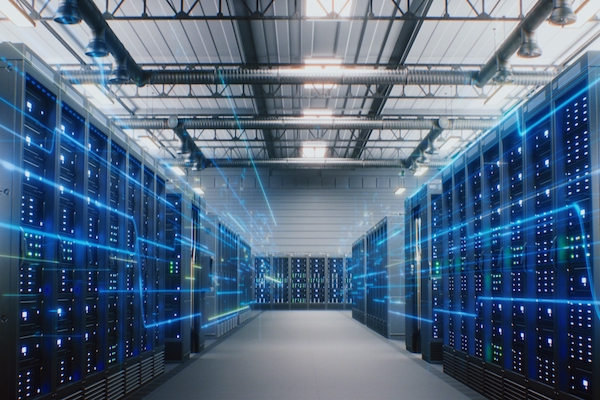
Until recently, computing infrastructure investment drew little attention. Between 2015 and 2022, spending on data centres, servers and networking equipment barely reached 0.5% of US GDP. Generative AI changed that. By 2026, computing infrastructure spending had climbed to almost 1.6% of GDP, with AI investment representing about 1.4%. Few investment cycles have expanded this quickly.
The US will spend close to 2% of GDP on AI and data centre infrastructure this year—comparable to defence or education spending. It will account for over 80% of the world's estimated $800 billion AI infrastructure spending in 2026. This rivals the railway expansion of the nineteenth century and the telecommunications boom of the late 1990s.
The impact is visible in national income statistics. Data from the US Bureau of Economic Analysis show that investment in information processing equipment has become one of the strongest contributors to GDP growth. The Federal Reserve Bank of St Louis estimates that such equipment alone added 0.9 percentage points to US real GDP growth in Q1 2025.
By the first half of 2025, AI investment had become the biggest engine of American growth. Capital expenditure linked to AI added around 1.1 percentage points to GDP growth, overtaking consumer spending as the largest driver—an unusual shift in an economy where household consumption traditionally carries the load. The broader technology ecosystem contributed 2.28 percentage points to growth, four times its contribution a year earlier.
Most remarkably, data centre investments accounted for almost 80% of the increase in final private domestic demand during H1 2025. Without this surge, US GDP growth would have been closer to 1% rather than 2%.
India's Opportunity
AI infrastructure requires enormous upfront investment. Hyperscale technology companies including Amazon, Microsoft, Alphabet, Meta and Oracle are together expected to spend over $700 billion on capital expenditure in 2026—mostly on graphics processors, servers, specialised chips, data centres and supporting power infrastructure.
These investments immediately add to GDP through construction, equipment purchases and engineering. Productivity gains from deploying AI will emerge over time. In other words, today's capital spending boosts growth before AI has fully transformed productivity.
India cannot match American investment overnight, but it can emulate the strategy. At $4 trillion, India's economy is barely one-eighth the size of the US. Yet its digital infrastructure story already attracts global capital.
According to UNCTAD, data centre projects drove a 44% increase in foreign direct investment, reaching $39 billion annually. Alphabet's proposed $15 billion AI hub and one gigawatt data centre in Visakhapatnam illustrates the scale—equivalent to nearly 6% of Andhra Pradesh's GDP.
None of this happens unless India gets the basics right. AI infrastructure runs on electricity. Reliable, affordable power is essential; data centres consume enormous amounts. Beyond that, investors need speed and certainty: land acquisition should not take years, approvals should move quickly through single channels, and digital connectivity must keep pace through stronger fibre networks and submarine cable landing stations. Building a skilled workforce and robust cybersecurity will complete the ecosystem global AI investors expect.
Countries combining capital, infrastructure and policy certainty will attract investment. Those that cannot risk becoming consumers of AI rather than its economic gains. India has the opportunity to capture that momentum, provided it treats AI infrastructure not as another technology sector, but as the foundation of its next investment cycle.
.png)