.png)


Phynix is a seasoned journalist who revels in playful, unconventional narration, blending quirky storytelling with measured, precise editing. Her work embodies a dual mastery of creative flair and steadfast rigor.
March 9, 2026 at 7:27 AM IST
Dear Insighter,
I should clarify something upfront. I’m not a cricket fan.
I don’t know the difference between a googly and a yorker. And until recently I assumed “silly point” was either sarcasm or a commentary on life choices. But I ended up at a screening watching India beat New Zealand by 96 runs to win the T20 World Cup.
India, from what I could gather, had an excellent day. Sanju Samson, Abhishek Sharma and Ishan Kishan seemed to be hitting everything. Bumrah and Axar Patel then made sure New Zealand didn’t get very far. By the end of it India had its third T20 World Cup and had defended the title.
But the cricket wasn’t the interesting part. The theatre was.
Most people there clearly hadn’t come together, yet they behaved like they had. High-fives were happening freely. At some point the guy in a row above started offering commentary loud enough for the Indian team to hear if they’d been nearby.
Someone was giving running tactical advice through the screen. And no one seemed to mind. For about four hours, everyone in that room agreed on something. Which… is unusual.
This is a country that can fight about language, religion, politics, cinema, traffic rules, food, and occasionally the correct way to make chai. Yet put eleven people in blue on a cricket field and suddenly everyone finds common ground.
Outside the theatre, unfortunately, clarity is harder to find.
The geopolitical atmosphere has thickened considerably. The US–Iran confrontation continues to escalate and the death of Ali Khamenei removes a powerful figure without dismantling the system he represented. As Yield Scribe notes, Iranian authority rests within institutional networks that have survived decades of sanctions and internal pressure. Removing a leader rarely produces orderly transitions in the region.
Oil markets, meanwhile, are watching the Strait of Hormuz nervously. As R. Gurumurthy notes, it doesn’t take much disruption in that narrow corridor for crude prices to start moving. For India, every dollar increase in Brent crude raises diesel prices by roughly ₹0.52 per litre if prices were fully market-linked.
Madhavi Arora adds that sustained oil above earlier assumptions complicates fiscal calculations. The government is unlikely to cut excise duties because even a ₹1 reduction implies about ₹150 billion in annual revenue loss. Someone eventually absorbs the cost. Usually, everyone does.
And it’s not just oil. As Ajay Srivastava points out, India exported about $11.8 billion worth of agricultural goods to West Asia last year. For some products like sheep and goat meat, bananas and a few spices, more than 70% of shipments go there. If instability persists around Hormuz, the consequences will show up in farm incomes across several Indian states.
Drawing on psychiatrist Peter Whybrow’s American Mania, R. Gurumurthy argues that the United States has developed a culture that constantly rewards expansion and excess. In geopolitics, that instinct can blur the line between leadership and overreach.
Meanwhile, the financial architecture at home is also being quietly reshaped.
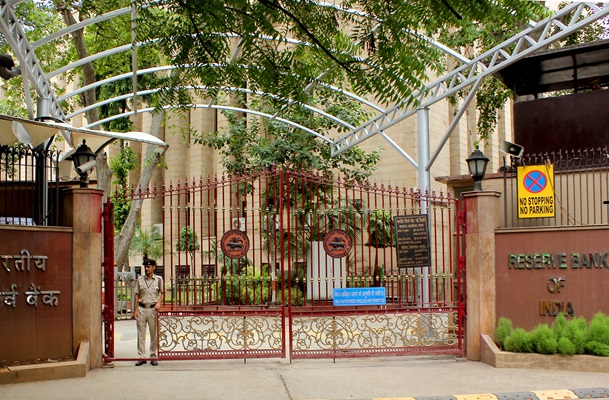
Abhishek Dey observes that the RBI’s supervisory approach has shifted away from simply inspecting individual institutions toward designing the governance framework of the financial system itself. The regulator increasingly sees its role as shaping incentives rather than merely enforcing compliance.
One area where incentives clearly required recalibration was financial product distribution.
Banks have been permitted to sell insurance and investment products for over two decades, but the incentives often rewarded volume over suitability. The new directions taking effect in July, explained by K. Srinivasa Rao, aim to reduce mis-selling and rebuild trust in the bancassurance model.
Market structure presents another challenge. India’s bond market remains shallow because the institutions best positioned to provide liquidity simply do not trade enough. Rahul Ghosh notes that banks allocate only about 25% of their debt portfolios to trading books. Global peers typically allocate between 60% and 75%. Without active trading, reliable yield benchmarks struggle to emerge and the corporate bond market remains underdeveloped.
Yield Scribe points out government borrowing requires careful maturity distribution and consistent communication. The previous cycle demonstrated that even abundant liquidity cannot stabilise yields when supply pressures dominate.
Statistics, at least, have received a methodological upgrade.
Shubhada Rao, Vivek Kumar and Yuvika Singhal explain that the new GDP base year of 2022–23 finally captures structural changes that reshaped the Indian economy over the past decade. The revised series neither inflates nor diminishes India’s growth story. It simply measures it more accurately.
Exchange rates present a more puzzling story. Despite the rupee appearing undervalued by nearly 60% on the Big Mac index and around 9% by IMF metrics, India’s merchandise exports grew only 2.4% between April and December 2025. China managed 6.6% over the same period. Michael Debabrata Patra argues that currency undervaluation alone no longer guarantees export competitiveness.
BasisPoint Groupthink, reflecting on Pratap Bhanu Mehta’s analysis, argues that modern warfare increasingly resembles technological theatre. Drones, missiles and AI-enabled systems are showcased almost as demonstrations. In such an environment neutrality may eventually look less like prudence and more like silence.
Technology is raising similar strategic questions. TK Arun writes about the controversy surrounding Anthropic, the AI company that reportedly refused to enable certain surveillance capabilities without human oversight. The US government subsequently classified it as a supply chain risk, while OpenAI reportedly agreed to the requested access.
V. Thiagarajan offers a useful reminder through Amara’s Law: we tend to overestimate technology in the short run and underestimate it over time. If the familiar Gartner Hype Cycle holds, today’s AI enthusiasm will eventually run into its usual phase of disillusionment.
Corporate ambition, meanwhile, shows no such hesitation. Krishnadevan V examines Sunil Mittal’s plan to build what he calls a “Bajaj Finance within the Airtel ecosystem.” The idea is seductive. Airtel has hundreds of millions of subscribers and enormous behavioural data. But data alone does not create a credit institution. Bajaj Finance took three decades to develop the discipline required for sustainable lending.
Krishnadevan also makes an interesting observation about another sector. Indian paint companies are still valued by the market like consumer businesses built on decorative paints and strong brands. Yet much of the profit momentum has quietly shifted elsewhere, toward industrial and automotive coatings supplied directly to manufacturers.
TK Arun also highlights the importance of Corporate Average Fuel Efficiency norms for public health. Air pollution already imposes a staggering economic cost. Gita Gopinath estimates the impact at roughly $339 billion annually, close to 9.5% of India’s GDP.
Some of the most effective work is happening at the micro level. Amitrajeet Batabyal writes about decentralised water purification in rural Odisha, where solar-powered electrochlorination systems are delivering safe drinking water at relatively low cost in terms of disability-adjusted life years.
Arvind Mayaram argues that fiscal transfers to municipalities cannot substitute for administrative reform. Cities rarely fail because they lack schemes or funding. They fail because institutions remain weak.
In the neighbourhood, Saibal Dasgupta describes Nepal’s generational political upheaval, where Balendra Shah, a 35-year-old rapper who became Kathmandu’s mayor, now stands close to national leadership after a wave of youth mobilisation disrupted traditional parties.
Finally, there is the question of gold.
Allowing equity mutual funds to invest in gold and silver appears sensible at first glance. Yet R. Gurumurthy reminds us that gold in India functions not merely as an asset class but as a macroeconomic variable. Expanding institutional demand may inadvertently intensify pressures on the current account.
All of which is to say that the world outside the cricket stadium (and the screens) remains as complicated as ever.
When the final wicket fell the theatre erupted. Strangers hugged. An elderly gentleman wiped away a quiet tear.
I still do not understand cricket. But I understand what happened in that room. For a few hours, a country that rarely agrees on anything found something uncomplicated to celebrate together.
It does not solve geopolitics or stabilise oil markets. But occasionally, that small pause is enough.
Until next time.
Phynix
Also Read
- The Case For a Robot Tax by Abheek Barua: As AI threatens labour-intensive growth, policymakers may need to consider taxing the machines taking human jobs.
- Saas, Beti Aur Sensex: Power Beyond Women’s Day by Kalyani Srinath: In many homes the money drawer exists, but women remain missing when the real financial decisions are made.
- Durand Line Tensions Signal a Deeper Regional Reckoning by Lt Gen Syed Ata Hasnain: The Pakistan-Afghanistan border dispute is a contest over sovereignty with consequences rippling far beyond the frontier.
- How Bombing Iran May Blow Back on America by Aziz Huq: Using military power with brazen disregard for facts and law only emboldens future uses of the same unchecked authority.
More From BasisPoint