.png)

June 5, 2026 at 5:42 AM IST
The Reserve Bank of India today announced a set of measures to attract foreign capital and strengthen the balance of payments, including wider access for foreign investors in government bonds, concessional forex swaps for public sector borrowings and support for banks raising foreign currency deposits.
The measures were announced after the Monetary Policy Committee kept the repo rate unchanged at 5.25% and retained its neutral stance, choosing caution as policymakers weighed the inflationary impact of higher energy prices, supply disruptions and monsoon-related risks.
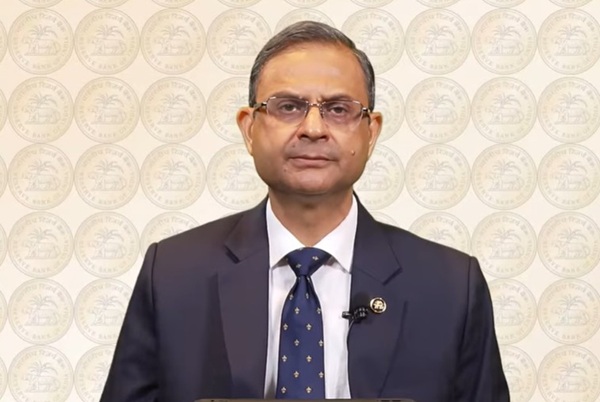
Governor Sanjay Malhotra said India’s foreign exchange reserves stood at $682.3 billion as of May 29, providing about 11 months of import cover and covering 89.1% of external debt.
He said services trade surplus and remittances were expected to provide comfort, though higher energy prices and persistent trade-policy uncertainty posed upside risks to the current account deficit in 2026-27.
The central bank said several policy initiatives were expected to support the balance of payments, including recent trade agreements with major partners, opening the insurance sector to 100% foreign direct investment, the ethanol-blending programme, the push for energy transition, easing of foreign direct investment restrictions for land-bordering countries and liberalisation of the external commercial borrowing framework.
Capital Push
To attract foreign capital, Malhotra said, all new issuances of 15-year, 30-year and 40-year government securities would be included under the Fully Accessible Route, expanding the universe of specified securities available to foreign investors.
The RBI also removed limits relating to short-term investment, concentration and individual securities for foreign portfolio investment under the General Route.
“These measures along with the tax benefits provided by the government this morning should help attract foreign capital for government borrowing,” Malhotra said.
The government today, through an income-tax ordinance, exempted foreign institutional investors from tax on interest income from government securities and capital gains arising from the sale, exchange or transfer of such securities, subject to prescribed reporting requirements.
The central bank also increased the limits for investment by non-resident Indians and overseas citizens of India in equity instruments traded on the stock market without registration with the Securities and Exchange Board of India.
The same facility will be extended to all individuals residing outside India, on par with non-resident Indians and overseas citizens of India.
The RBI also announced a concessional forex swap facility till September 30, 2026 to incentivise external commercial borrowings by public sector undertakings.
A similar facility for bearing the full hedging cost will be provided till September 30 to authorised dealer banks for raising fresh three- to five-year FCNR(B) deposits.
The central bank also proposed restoring the time allowed for the realisation of export proceeds to 9 months.
Market Signal
The measures come as policymakers seek to manage external-sector pressures without changing the formal exchange-rate framework. Malhotra said the RBI would continue to make policy adjustments to promote exports and attract and incentivise capital inflows.
While the RBI reiterated that India’s reserves remained healthy, the package indicates a broader attempt to strengthen foreign-exchange inflows and ease balance-of-payments pressure as higher oil prices and geopolitical uncertainty weigh on the external outlook.
The announcement also suggests the RBI is willing to use regulatory and market-based tools alongside conventional liquidity and rate instruments, rather than relying only on foreign-exchange intervention or monetary tightening.
The measures aimed at government bonds could help improve foreign demand for long-tenor sovereign paper, while the support for external commercial borrowings and FCNR(B) deposits may lower hedging-related costs for borrowers and banks seeking overseas funds.
For markets, the key signal is that the RBI is moving to create additional channels for dollar inflows while keeping the policy rate unchanged. The stance leaves room for the central bank to respond later if imported inflation, the current account deficit or currency volatility intensify.
The RBI said the new measures were expected to strengthen the balance of payments and that it would continue to make policy adjustments to further promote exports and attract capital inflows.
More From BasisPoint