The Reserve Bank of India's Monetary Policy Committee kept the repo rate unchanged at 5.25% on Friday, and retained its neutral policy stance, saying heightened uncertainty over inflation and growth warranted caution despite rising price pressures. The RBI raised its inflation forecast, and lowered its GDP projection as policymakers assessed the impact of higher energy prices, supply-chain disruptions and monsoon-related risks.
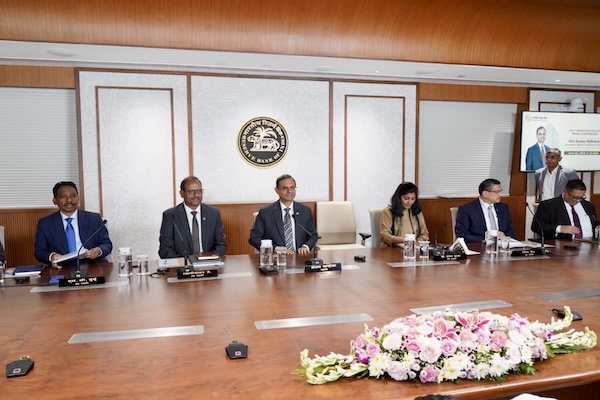
The six-member committee unanimously voted to leave the benchmark policy rate unchanged. It also unanimously voted to retain the neutral stance.
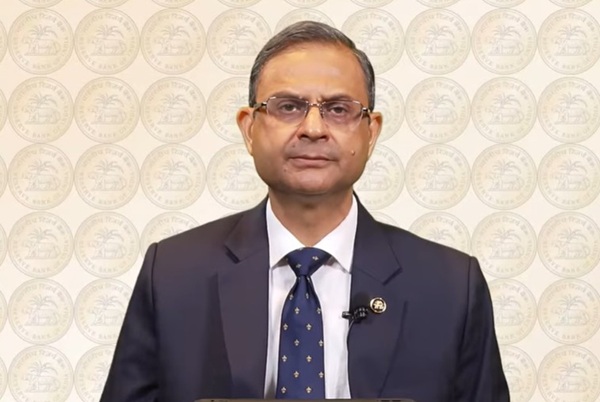
Governor Sanjay Malhotra said the MPC was of the view that there were "considerable risks" to its baseline assessment of inflation and growth because of uncertainty surrounding the duration and intensity of the conflict in West Asia, the magnitude of its spillover effects, and the pace of restoration of disrupted supply chains.
He added that the global environment had deteriorated since the MPC's April meeting, with the continuing conflict in West Asia, elevated energy prices and supply-chain disruptions prompting the RBI to revise both, its growth and inflation projections.
The RBI lowered its real GDP growth forecast for 2026-27 to 6.6% from 6.9% projected earlier, while raising its inflation forecast for the year to 5.1% from 4.6% projected earlier.
Growth in the April-June quarter was projected at 6.6%, followed by 6.3% in July-September, 6.5% in October-December and 6.8% in January-March. Inflation was projected at 4.2% in the first quarter, 5.1% in the second quarter, 5.9% in the third quarter and 5.4% in the final quarter of the year.
Risk Assessment
Although domestic economic activity remained resilient so far, supported by private consumption, investment spending and strong manufacturing and services-sector activity, Malhotra said rising energy prices and supply disruptions were likely to weigh on growth going forward. He said merchandise exports had remained robust despite elevated freight and insurance costs, while services exports continued to perform well.
The governor also flagged uncertainty surrounding the food outlook because of forecasts of a subnormal southwest monsoon linked to El Niño conditions. Higher energy costs, weaker global demand, elevated logistics expenses, supply disruptions and weather-related uncertainties were expected to weigh on economic activity in the coming quarters.
"Although risks of higher inflation have amplified, the MPC felt it would be prudent to wait for greater clarity to emerge," Malhotra said.
Inflation Watch
The governor noted that headline inflation had remained below the 4% target despite the global shock, with the pass-through to domestic prices remaining limited so far. He said underlying inflation pressures continued to remain benign at this stage.
Malhotra said international crude oil prices had averaged around $110 per barrel over the past two months, well above the assumptions used in the previous policy review. The partial pass-through of higher global oil prices to domestic petrol and diesel prices had already begun, while costs of industrial inputs such as chemicals, base metals, rubber and plastics had also risen sharply.
These developments, together with supply-chain disruptions and weather-related uncertainties, were expected to exert upward pressure on consumer prices in the coming months. Wholesale price inflation accelerated to 8.3% in April from 3.9% in March, reflecting the broadening impact of higher commodity and energy costs.
While inflation remained below target, Malhotra warned that the generalisation of price pressures through second-round effects on wages and inflation expectations was a distinct possibility and warranted close monitoring.
The RBI projected core inflation at 4.7% for 2026-27. Malhotra said the MPC would remain data-dependent and continue to monitor developments closely, including the risk of supply-side pressures becoming embedded in broader prices and inflation expectations.
While headline inflation is projected to firm up towards the upper tolerance level in October-December, the RBI expects the impact of the supply shock to wane from January-March. Underlying inflation pressures remain benign at present, although policymakers warned that second-round effects on wages and inflation expectations warrant close monitoring. Risks to both growth and inflation have increased materially since the April policy review.
.png)