.png)


D. Tripati Rao is a Senior Professor of Economics and Business Environment at IIM Lucknow.
March 15, 2026 at 6:53 AM IST
The escalating war in West Asia is beginning to disrupt global supply chains, choking shipping routes and pushing up freight and insurance costs. Although India is relatively insulated due to its diversified crude and gas imports and sizeable strategic oil reserves, the conflict could still threaten its growth momentum. Beyond supply chain and logistics disruptions, the crossing of red lines by both Israel and Iran — expanding targets from airfields to oil and gas refineries to desalination plants — carries significant costs for the Indian economy in terms of trade, remittances and financial markets.
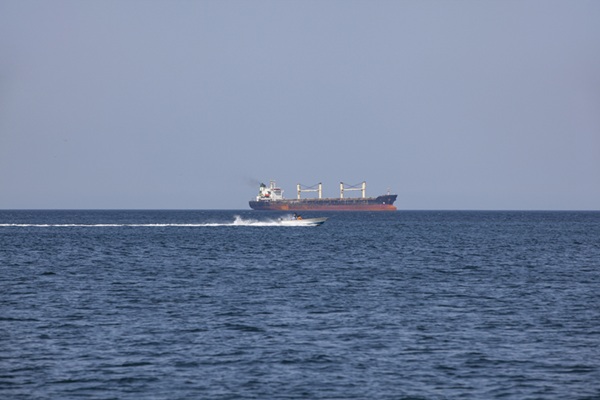
The criticality of the Strait of Hormuz in global trade is evident from the nearly 20 million barrels per day of crude oil flows through it – roughly 20% of global consumption. Of this, around 2.5 mb/d flows to India, accounting for about 12.5% of the crude oil traffic through the strait. Nearly 67.3% of India’s total imports depend on sea-borne trade. In 2025, India’s bilateral trade with Hormuz Strait-dependent nations was approximately $185.11 billion – about 20% of its top 25 global trading partners.
The ongoing war risks disrupting this 20 mb/d energy flow and affecting more than a fifth of India's top trading partners. It also threatens 19.5 million tonnes of annual LPG imports, about 90% of which pass through the strait. This is particularly critical as India has minimal strategic reserve storage infrastructure for LPG and LNG compared with petroleum, which could have a severe impact on ordinary households within weeks.
Energy Shock
Data suggest that nearly 33% of India’s $915.9 billion import bill consists of hyper-inelastic seaborne commodities, particularly fuel, fertiliser and edible oil in 2024-25. Given that fuel and power carry a weight of 13.2% in the WPI basket, logistics disruptions alone could increase WPI inflation. Higher import prices could increase the import bill by close to $40 billion.
The second important spillover is on remittances. A large share of India’s emigrant workers is employed in West Asia. Although the number of workers migrating annually has declined over the past decade, West Asia is still the dominant destination for Indian emigrants. The last major decline occurred between 2015 and 2018, driven by the slump in oil prices and policy changes such as the Nitaqat programme in Saudi Arabia.
Even though remittances from GCC countries declined during 2016-17 to 2023-24, they still account for nearly 38% of India’s total remittance inflows, equivalent to roughly 1.3% of GDP. In absolute terms, remittances from the GCC remain a major source of external financing, covering nearly one-fifth of India’s trade deficit. Needless to emphasise that the longer the war persists, the greater the potential disruption to inward remittance flows.
This calls for a strategic policy response to manage the rise in the trade deficit, absorb returning emigrants through employment support, and manage potential pressure on the rupee, which is already under strain.
Market Stress
With heightened capital outflow towards safe-haven assets such as the US dollar and gold, the RBI reportedly deployed nearly $12 billion in a single week to stabilise the currency. A protracted war could pause capital flows from West Asian countries as these economies redirect resources towards domestic defence and infrastructure spending.
Coupled with a widening trade deficit, this raises the risk of a possible downgrade of India’s credit outlook by global rating agencies. Such a scenario could trigger capital outflows and increase borrowing costs for Indian firms, particularly those reliant on external commercial borrowings.
According to IMF estimates, India’s external debt is projected to reach around $791 billion by 2026. While only 5.2% of this is sovereign borrowing, the majority consists of commercial debt. Around 54% of the external debt is denominated in US dollars, which makes corporate balance sheets vulnerable to currency depreciation and global interest rate cycles. As the rupee weakens, external commercial borrowings become more expensive, straining corporate finances and placing additional pressure on domestic liquidity.
As India consolidates its position as the world’s third-largest start-up ecosystem, uninterrupted foreign investment flows remain essential. Nearly 83% of start-up funding between 2014 and 2025 came from foreign investors, with West Asian investors contributing over $200 million in funding in 2024. Initiatives such as the India-UAE start-up bridge were expected to strengthen these flows. However, the sudden geopolitical shift amid the war could disrupt efforts to diversify start-up funding beyond the US and Europe.
Despite these challenges, there are some potential silver linings. The crisis could provide renewed impetus for India to accelerate oil and gas exploration as part of its long-term energy diversification strategy. The share of remittances from advanced economies could also be increased through policies that ease transfers, reduce transaction costs and leverage fintech platforms.
Similarly, reskilling programmes could help shift the emigrant workforce towards higher-skilled, white-collar employment, reducing overdependence on West Asian labour markets. Institutional mechanisms such as the Education to Employment and Enterprise Standing Committee could help generate domestic opportunities and cushion the integration of returning migrant workers.
At the same time, Indian oil refiners could benefit from higher refining margins and increased demand from European markets.
Against this backdrop of geopolitical uncertainty, the RBI will likely remain highly active. It must carefully calibrate monetary policy, including repo rate adjustments, while avoiding abrupt shocks in order to stabilise the rupee through strategic foreign exchange interventions. Active fiscal management will also be critical. Counter-cyclical fiscal tools, targeted income support and capital subsidies for affected industries could help contain cost-push inflationary pressures and prevent a slowdown in rural consumption. In essence, both monetary and fiscal policy will have to perform a delicate balancing act in managing the economic fallout from the West Asia conflict.
* With Ambarish Borah and Rajat Gupta, Business Graduates, IIM Lucknow
More From BasisPoint