.png)

The Hidden Risks of Simplifying US Bank Supervision
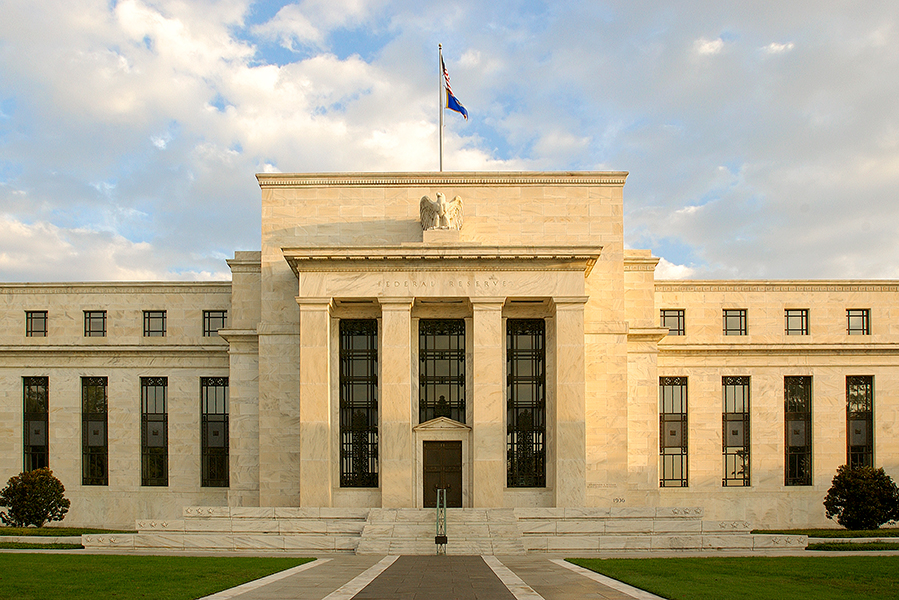
he Federal Reserve has recently begun to overhaul its approach to bank oversight, raising the bar for enforcement and leaning more heavily on data-driven tools. These changes could impede regulators’ ability to identify emerging risks at a time when the US financial system faces hidden losses and structural weaknesses.
Amit Seru is Professor of Finance at the Stanford Graduate School of Business and a senior fellow at the Hoover Institution.
February 13, 2026 at 3:28 PM IST
Bank supervision in the United States is once again under scrutiny. In recent months, senior officials at the Federal Reserve have begun cutting staff, revising examiner guidance, and moving away from what they describe as a process-heavy approach to oversight. The stated aim is to make supervision more transparent, less costly, and better suited to a data-driven financial system.
This is not just an academic debate. With Kevin Warsh – President Donald Trump’s nominee for Fed chair – widely expected to favor a light-touch regime, the decisions made in the coming months will determine how aggressively regulators identify and respond to banking risks.
The shift is already underway. The Fed’s vice chair for supervision, Michelle Bowman, has moved quickly to reorganize her division: raising the bar for formally citing banks, encouraging examiners to place less emphasis on documentation, and refocusing oversight on core financial risks. Supporters see this as a long-overdue correction to bureaucratic excess, while critics worry that the pendulum could swing too far, impeding regulators’ ability to spot emerging risks amid growing vulnerabilities.
To be sure, there is a strong case for modernization. The CAMELS supervisory framework – which covers capital adequacy, asset quality, management, earnings, liquidity, and sensitivity to market risk – was designed decades ago. It is resource-intensive and often applied uniformly to institutions with very different risk profiles.
Smaller banks, in particular, face significant fixed-compliance costs. At the same time, supervisors now have access to vastly richer and timelier data than their predecessors, enabling them to detect risks earlier and more consistently. Some degree of evolution is both welcome and overdue.
But modernization should not be confused with simplification. Treating bank supervision as a mechanical or algorithmic exercise, rather than one that depends on informed judgment, would blind supervisors to early signs of trouble. Given that banks are still absorbing large interest-rate losses and that commercial real-estate values remain under pressure, such an approach could prove to be a costly mistake.
Any serious reform effort must begin with a clear understanding of what bank supervision is. It is not just about enforcing rules or ticking boxes. At its core, supervision is a process of gathering and interpreting information about risks that markets, capital ratios, and formal models often overlook. By combining hard data with qualitative assessments of strategy, governance, and risk management, bank supervisors seek to identify vulnerabilities before they turn into losses or runs.
For that reason, supervisory decisions have never been reducible to a formula. CAMELS ratings were not meant to be precise scores. They are structured assessments that synthesize disparate signals into early warnings. Their value lies less in pinpoint accuracy than in prompting action while problems are still manageable, even if such early interventions are unpopular at the time.
Critics often point to differences among bank supervisors as evidence that discretion is flawed. But variation does not mean that judgments lack value. My own recent empirical work shows that supervisors place considerable weight on management quality when assigning CAMELS ratings. While those assessments are undeniably imperfect, they also contain useful information. Critically, they help predict future declines in asset quality and earnings that balance-sheet metrics often miss, especially when banks with thin capital and government backstops are most tempted to take risks.
That mix of subjectivity and insight is not accidental. While management quality, governance, and risk culture are inherently difficult to quantify, they shape how banks behave under stress. A thinly capitalized bank with weak internal controls and access to a public safety net has strong incentives to gamble when conditions deteriorate. Models can identify exposures, but human judgment is required to interpret behavior and intent.
AI can play a constructive role if used carefully. New machine-learning tools can detect patterns across banks, help supervisors calibrate the weight assigned to different risk indicators, reduce inconsistency among examiners, and make supervisory judgments more transparent and comparable. What they cannot do is replace accountability. Decisions about enforcement, dividend restrictions, or whether to shut down a failing bank ultimately require human decision-making. Reducing discretion without clarifying who is accountable risks substituting judgment with institutional ambiguity, precisely when clarity matters most.
The margin for error is thin. Many US banks still carry significant unrealized losses from higher interest rates, while recent policy responses have effectively backstopped uninsured depositors, shifting incentives across the system. Commercial real estate remains a source of stress, particularly for midsize and regional banks. Against this backdrop, loosening capital requirements and scaling back supervision amounts to a bet that growth will resolve structural vulnerabilities.
When regulators make such a bet, taxpayers often bear the cost. Capital and supervision are complements, not substitutes. Strong capital provides a cushion when supervisory judgment proves imperfect, while effective supervision discourages excessive risk-taking when capital is thin. Weakening both at the same time increases fragility, not resilience.
A sensible reform agenda would recognize these trade-offs. Bank regulators should make better use of data and AI tools to improve consistency and risk detection, but oversight cannot be fully automated. Capital requirements should remain robust during this transition, especially while hidden losses and structural risks persist. Above all, human judgment – disciplined, transparent, and accountable – must remain central.
Modernization is necessary. But, in finance, efficiency does not equal safety. A supervisory system that is easier to administer but less capable of detecting risk would be a step backward. The goal of reform should be a financial system that absorbs losses without drama, not one that values simplicity over resilience.
© Project Syndicate 1995–2026
More From BasisPoint