.png)

Risk-On Mood Holds as Hormuz Reopens, Though Geopolitical Risks Linger
Here’s your quick read to start the day: a chatty, no-fuss look at overnight moves, the big story, what’s on the docket, and the tickers you need to watch.
June 19, 2026 at 2:07 AM IST
GLOBAL MOOD: Risk On
Drivers: Strait of Hormuz Reopens, US Lifts Iran Blockade, Ukraine Strikes Russian Energy Assets
Asian markets maintained a broadly risk-on tone on Friday as easing concerns over energy supplies and lower oil prices supported investor sentiment, although gains were moderated by lingering geopolitical uncertainties. South Korea's Kospi extended its record-setting rally, driven by fresh highs in technology heavyweights Samsung Electronics and SK Hynix, while Japan's Nikkei also advanced after touching record levels.
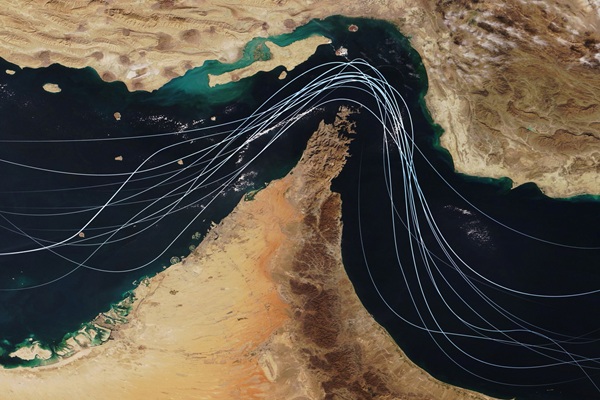
The key driver remained the implementation of the interim US-Iran agreement, which has reopened the Strait of Hormuz and restored the flow of oil through one of the world's most critical energy corridors. The resulting decline in crude prices has eased fears of energy-driven inflation and improved the outlook for global growth, encouraging investors to rotate into risk assets.
However, sentiment remained cautious rather than euphoric. US officials reiterated that sanctions relief for Iran would depend on strict compliance with the agreement, while Tehran stressed that future negotiations remain conditional. Ongoing Israel-Hezbollah hostilities and escalating Ukrainian attacks on Russian energy infrastructure also underscored that broader geopolitical risks remain elevated despite the reduction in Gulf tensions.
THE BIG STORY
Despite the easing of Gulf tensions, broader geopolitical risks remain elevated. Israel's military campaign against Hezbollah continued, raising questions about the durability of the regional ceasefire. Meanwhile, Ukraine intensified its campaign against Russian energy infrastructure, striking an oil refinery near Moscow for the second time in three days. The attacks underscore Kyiv’s efforts to weaken Russia’s war-financing capabilities and demonstrate its ability to hit strategic targets deep inside Russian territory as diplomatic efforts to end the conflict continue.
Data Spotlight
Initial jobless claims fell to 226,000, matching expectations. However, continuing claims hit a three-month high of 1.81 million, suggesting that while layoffs remain low, hiring is losing momentum.
The Philadelphia Fed Manufacturing Index rebounded to 10.3 in June, beating estimates. New orders and shipments both saw double-digit gains, though price pressures remained elevated at 53.2.
Takeaway:
Regional manufacturing showed encouraging signs of recovery in June, with Philadelphia factory activity rebounding solidly after May's contraction. Labour market conditions remained stable but not strengthening, with low layoffs offset by persistently weak hiring and rising continuing claims, consistent with a cautious Federal Reserve stance as inflation pressures linger.
WHAT HAPPENED OVERNIGHT
- US stocks rally as Iran peace deal eases inflation fears and chips surge
- The S&P 500 and Nasdaq jumped 1.08% and 1.91%, respectively, while the Dow added 0.14%. Markets were closed on Friday for Juneteenth, securing weekly gains across all three indices.
- The Philadelphia Semiconductor Index soared 6.4%. Intel hit a record high, climbing 10.6% following reports of a chip design and US manufacturing partnership with Apple.
- The US and Iran signed an interim agreement extending the April ceasefire by 60 days, with the first ships beginning to sail through the Strait of Hormuz.
- Markets now price a 50% chance of a 25bps Fed hike in September as investors digest Kevin Warsh’s hawkish inflation focus.
- The Russell 2000 rose 2% to a record closing high, while travel and consumer stocks rallied on lower fuel price prospects.
- Accenture tumbled 18% after lowering its annual revenue forecast, dragging down peers Cognizant, Gartner, and IBM.
- Kroger fell 8.4% after reporting a weaker-than-expected quarterly profit while keeping annual forecasts unchanged.
- SpaceX fell 3.6% for a second straight day of declines following its strong post-IPO debut rally.
- Triple witching drove volume to 33.59 billion shares, well above the 21.83 billion 20-session average.
- The S&P 500 and Nasdaq jumped 1.08% and 1.91%, respectively, while the Dow added 0.14%. Markets were closed on Friday for Juneteenth, securing weekly gains across all three indices.
- US Treasury yields edge lower as markets digest hawkish Fed and Warsh's policy stance
- The 10-year Treasury yield fell to 4.44%, partially reversing Wednesday's near 5bps rise, as investors assessed the implications of Warsh's Fed leadership.
- The Fed held unchanged rates but signalled further tightening may be needed, with half of policymakers projecting at least one hike in 2026.
- The Fed sharply raised its 2026 headline and core PCE inflation forecasts, reinforcing the case for additional tightening.
- Warsh reaffirmed his inflation-fighting credentials, pledging a different policy approach and a firm commitment to restoring price stability.
- Markets are now fully pricing in a Fed rate hike by October, while the 2-year Treasury yield edged up to 4.20%.
- The 10-year Treasury yield fell to 4.44%, partially reversing Wednesday's near 5bps rise, as investors assessed the implications of Warsh's Fed leadership.
- US Dollar rises to highest since May 2025 as Fed rate hike bets firm up
- The dollar index climbed to 100.8, its highest since May 2025, as investors ramped up bets on Fed tightening following Wednesday's hawkish signal.
- Around half of FOMC members now project at least one rate hike in 2026, with the Fed also raising its inflation forecasts amid the West Asia conflict's economic impact.
- Warsh declined to offer forward guidance but stressed inflation has remained above the 2% target for several years, reaffirming the Fed's price stability commitment.
- The dollar strengthened broadly, with the largest gains against the British pound and Swiss franc after both the BoE and SNB held rates unchanged.
- The dollar index climbed to 100.8, its highest since May 2025, as investors ramped up bets on Fed tightening following Wednesday's hawkish signal.
- Oil edges up as Vance's Lebanon warning clouds ceasefire durability
- Brent crude settled at $79.85 per barrel, up by 0.38%, while WTI dipped by 0.25% to $76.60, after Vance warned Israel against further attacks on Hezbollah in Lebanon.
- Before Vance's comments, Brent touched its lowest level since March 2, the first trading day after the initial US-Israeli strikes on Iran.
- The 14-point US-Iran MOU establishes a 60-day negotiation period with toll-free Hormuz passage, full capacity restoration within 30 days, and a ceasefire binding on both sides' allies, including in Lebanon.
- The deal defers thorny issues like Iran's nuclear program and requires the US and partners to develop a $300 billion plan to finance Iran's recovery.
- Goldman Sachs expects Gulf exports to normalise to pre-war levels by the end of July and crude production to recover by October.
- BNP Paribas sees $75 per barrel as a durable floor, not anticipating a return to pre-war price levels given ongoing supply losses and recovering demand.
- China's oil consumption is forecast to fall 4.9% in 2026 to 753 million metric tons, amid a pivot to new energy and elevated prices.
- Ukrainian drones struck a Moscow oil refinery for the second time this week, highlighting continued risks to Russian supply.
- Brent crude settled at $79.85 per barrel, up by 0.38%, while WTI dipped by 0.25% to $76.60, after Vance warned Israel against further attacks on Hezbollah in Lebanon.
Day’s Ledger*
Economic Data
- German May PPI Data
- UK May Retail Sales Data
- India weekly FX Reserves Data
Corporate Actions
- RIL AGM
- Gujarat Themis Biosyn board to consider fund raising
- GVP Infotech board to consider fund raising
Policy
- RBI MPC Minutes
- Central Bank of the Russian Federation June Interest Rate Decision
- ECB's Elderson Speaks
- ECB's Lane Speaks
Tickers to Watch
- AMBER ENTERPRISES entered into a manufacturing partnership with Oppo Mobiles India to produce smartphones for the OPPO, OnePlus and Realme brands in India.
- BHARAT FORGE arm Kalyani Strategic Systems signed a strategic partnership with US-based AM General at the Eurosatory defence exhibition in Paris.
- BOSCH HOME COMFORT INDIA saw promoter Bosch Global Software Technologies exercise the greenshoe option in its OFS, raising the total offer size to 7.97% equity.
- DIAMOND POWER INFRASTRUCTURE approved fundraising of up to ₹20 billion through a QIP and reiterated plans to achieve minimum public shareholding norms.
- HCLTECH launched an AI Innovation Zone in Chennai to help enterprises develop and deploy Intel-based AI products and HCLTech AI solutions.
- HDFC BANK received RBI approval for a three-month extension of Keki Mistry’s tenure as Interim Part-time Chairman until Sept. 18, 2026, or until a regular chairman is appointed.
- INFOSYS and WIPRO ADRs fell over 7% and 8%, respectively, after Accenture lowered its annual revenue growth guidance.
- MAHINDRA LIFESPACE DEVELOPERS said YKK India will set up a new manufacturing facility at Origins by Mahindra in Chennai.
- RELIANCE INDUSTRIES will hold its AGM on June 19, with investors tracking updates on new energy ventures, Jio Platforms’ proposed listing and capital allocation plans.
- TATA MOTORS signed an MoU with the Ministry of Road Transport and Highways to participate in the Delhi-NCR old vehicle replacement programme.
- TRUALT BIOENERGY secured government financial assistance of ₹1.50 billion under the PM JI-VAN Yojana for its sustainable aviation fuel project.
- WIPRO will acquire an additional 20% stake in Aggne Global IT Services, increasing its holding to 80%, with the transaction expected to close by June 30, 2026.
Must Read
- Iranian oil may return to India as US-Iran peace boosts Chabahar project
- India Should Discourage Excessive Investments in Equities
- The Real NSE IPO Already Happened, The Listing Is Just Theatre
- Two Chairs, One Question in Banking Governance
- Producer Price Index to Sharpen India’s Inflation, GDP Data
- Telegram Ban: No Neat Answer To A NEET Failure
- From Prudential Sufficiency to System Stewardship
- Warsh’s Fed has Put Inflation Credibility Ahead of Market Comfort
See you tomorrow with another edition of The Morning Edge.
Have a great trading day
When the Strongest Move Is Not to Move
In an environment of rising inflation risks, slowing growth, geopolitical uncertainty and global policy tightening, many expected the RBI to follow the crowd.
It didn't.
Sparsh Chhabra writes, the decision to hold rates was not simply a pause. It was a judgement about the nature of the shocks confronting the economy and the risks of overreacting to them.
When does policy credibility come from action; and when does it come from restraint?
(*Compiled from various media sources)
More From BasisPoint