.png)

Risk-Off Mood Grips Asia as Iran Uncertainty Overshadows Tech Rally
Here’s your quick read to start the day: a chatty, no-fuss look at overnight moves, the big story, what’s on the docket, and the tickers you need to watch.
June 2, 2026 at 1:48 AM IST
GLOBAL MOOD: Cautious Risk Off
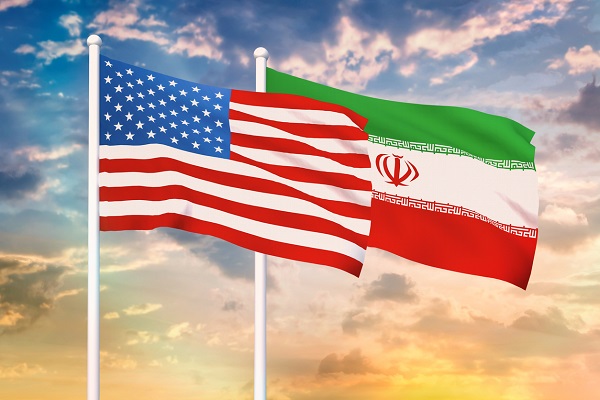
Asia-Pacific markets opened lower on Tuesday, reflecting a risk-off tone as investors weighed rising geopolitical uncertainty in the Middle East despite continued strength in US equities driven by technology stocks. While Wall Street reached fresh record highs on optimism surrounding AI and large-cap technology companies, Asian investors remained focused on escalating risks surrounding Iran, Israel and regional shipping routes.
Sentiment deteriorated after President Donald Trump appeared dismissive about the future of US-Iran negotiations, raising concerns that diplomatic efforts may be losing momentum. Reports that Iran could suspend talks and potentially disrupt critical shipping routes, including the Strait of Hormuz and Bab el-Mandeb, renewed fears of energy supply disruptions and higher oil prices.
Although a partial Hezbollah-Israel ceasefire offered some relief, continued military activity in southern Lebanon highlighted the fragility of regional stability. Markets remain concerned that any escalation could reignite inflation pressures through higher energy costs.
Adding to investor caution, ongoing debate over Federal Reserve independence and the future direction of US monetary policy reinforced uncertainty. As a result, investors shifted toward a more defensive stance, prioritising geopolitical developments and inflation risks over the positive signals coming from technology-led market gains.
THE BIG STORY
US-Iran tensions also worsened after Iranian media said Tehran suspended indirect talks with Washington following Israeli strikes in Lebanon. Tehran warned any ceasefire breach could widen the regional conflict, with Foreign Minister Abbas Araqchi blaming the US and Israel for any escalation.
Iran and allied groups were also reported to be considering disruption of the Strait of Hormuz and Bab el-Mandeb, heightening fears over energy supply and inflation.
Separately, Jerome Powell warned that political pressure could weaken central bank independence and other US institutions vital to stability. Kevin Warsh became Fed chair on May 22, while Powell stayed on as a governor, preserving continuity and limiting immediate political reshaping of the Board.
Together, the fragile ceasefire, shipping risks and concerns over Fed independence kept markets focused on geopolitics, inflation and policy credibility.
Data Spotlight
US manufacturing strengthened in May, with the ISM PMI rising to 54, its highest since May 2022. New orders, output and backlogs improved, employment weakness eased, and customer inventories stayed low, pointing to solid future demand. Price pressures cooled slightly but remained elevated as tariffs, the Iran conflict and supply volatility kept costs high.
The S&P Global PMI also rose to 55.1, with output growing at its fastest pace over four years as firms stockpiled against higher prices and supply risks tied to the West Asia. Employment and purchasing improved, but exports fell for an eleventh month, supplier delays worsened, costs and selling prices rose sharply, and business confidence slipped.
Takeaway:
WHAT HAPPENED OVERNIGHT
- US stocks advanced as ai optimism offset geopolitical concerns
- Dow Jones rose 0.09%, S&P 500 gained 0.26% and Nasdaq advanced 0.42%.
- Investors monitored developments in US–Iran negotiations amid escalating geopolitical tensions in West Asia.
- Rising oil prices and renewed conflict concerns increased fears that prolonged tensions could intensify inflationary pressures.
- Sentiment improved after Donald Trump said no Israeli troops would enter Beirut following discussions with Benjamin Netanyahu.
- Technology shares outperformed after Nvidia unveiled a new AI-focused personal computer chip developed in partnership with Microsoft.
- Semiconductor performance remained mixed, with Qualcomm falling 8.8% and Intel declining 4.7%.
- Dow Jones rose 0.09%, S&P 500 gained 0.26% and Nasdaq advanced 0.42%.
- US Treasury yields rose as oil-driven inflation fears intensified
- The US 10-year US Treasury yield climbed to 4.51%, extending May’s upward move in yields.
- Treasury markets reacted to renewed concerns over energy supply disruptions in West Asia.
- Markets increasingly expected that the Federal Reserve to maintain restrictive monetary policy for longer.
- Traders priced in more than a 60% probability of a Fed rate hike in December.
- Former Fed Chair Jerome Powell warned that political pressure on the central bank to cut rates could undermine confidence in Fed independence.
- The US 10-year US Treasury yield climbed to 4.51%, extending May’s upward move in yields.
- US Dollar strengthened as geopolitical tensions boosted inflation concerns
- The US dollar index rose to 99.2, extending May’s gains to around 0.9%.
- Renewed setbacks in US–Iran negotiations increased geopolitical uncertainty and supported demand for the greenback.
- Markets increasingly expected the Federal Reserve to maintain higher interest rates for longer.
- The ISM Manufacturing PMI rose to 54 in May, marking the strongest expansion in US factory activity in four years.
- Persistent price pressures within the manufacturing sector added further support to the dollar.
- The US dollar index rose to 99.2, extending May’s gains to around 0.9%.
- Oil prices surged as Iran tensions reignited supply disruption fears
- Brent crude rose 4.2% to settle at $94.98 per barrel, and
- Both oil benchmarks had climbed more than 6% earlier in the session before trimming gains.
- Reports also suggested Iran and its allies were considering moves to fully block the Strait of Hormuz and disrupt key shipping routes.
- Escalating tensions between Iran, the US and Israel renewed concerns over global energy supply disruptions.
- Investor fears eased slightly after Donald Trump said he was unaware of negotiations being suspended.
- Trump also said intermediaries had secured assurances from Hezbollah against attacks on Israel.
- Brent crude rose 4.2% to settle at $94.98 per barrel, and
Day’s Ledger*
Economic Data
- US JOLTS April Job Openings Data
Corporate Actions
- Canara Bank board to consider fund raising options
- Mufin Green Finance board to consider fund raising options
- Libas Consumer Products board to consider earnings and fund raising options
Policy
- FOMC Member Kashkari Speaks
- Bank of England Governor Bailey Speaks
Tickers to Watch
- ALKEM LABORATORIES informed that Samprada and Nanhamati Family Trust are likely to sell up to a 1.5% stake via a block deal at a floor price of ₹5,200 per share.
- ANANT RAJ plans to invest ₹250 billion in data centres and cloud services in Haryana under a collaboration framework with state agencies.
- COCHIN SHIPYARD informed that government extended the additional charge of Chairman and Managing Director held by Jose V. J. for another three months from May 1.
- EQUITAS SMALL FINANCE BANK informed that RBI approved Mirae Asset Mutual Fund to acquire up to 9.5% stake in the bank.
- FINO PAYMENTS BANK entered a strategic partnership with Ezee.ai to deploy AI-enabled loan origination, rules engine and collections platforms.
- NHPC informed that Government to divest up to 6% stake via OFS, including a 3% greenshoe option, at a floor price of ₹71 per share.
- OLA ELECTRIC MOBILITY launched its QIP on June 1 with a floor price of ₹37.74 per share.
- PNC INFRATECH received a Letter of Acceptance worth ₹1.94 billion from Lucknow Development Authority for a four-lane flyover project in Lucknow.
- SOFTTECH ENGINEERS partnered with BMC to launch CivitTWIN, India’s first AI-powered Digital Approval Twin for building permits.
- WIPRO: Step-down subsidiary Wipro IT Services will acquire an additional 20% stake in Aggne Global Inc., with the transaction expected to close by June 5.
Must Read
- RBI Balance Sheet Shows a Tighter Government Embrace
- Supreme Court’s Ruling on Gaming Tax Leaves Industry Fighting for Survival
- India’s Low-Equilibrium Growth Trap is the Real Stagflation Risk
- India’s Guided Missile Maker Has a Profit Problem Hiding Behind Its Cash Pile
- India-Oman FTA: Securing a Gulf Gateway Outside Hormuz
- Anthropic moves toward IPO, stepping up race with OpenAI
- Alphabet to Raise $80 Billion in Equity for AI Spending
- South Korea Overtakes India as World’s Sixth-Largest Stock Market
See you tomorrow with another edition of The Morning Edge.
Have a great trading day
Rate hikes feel like resolve. But what if they're the wrong medicine entirely?
When inflation is driven by supply shocks — oil, geopolitics, a weakening rupee — raising borrowing costs doesn't fix the source. It just slows the economy on top of an external hit.
Dr. Sachchidanand Shukla, Group Chief Economist at L&T, argues the RBI has a smarter toolkit available. Communication. Liquidity ops. Targeted FX intervention.
The question isn't whether the RBI should act. It's whether it can resist the pressure to act in the most visible way possible.
Will the MPC choose nuance over optics this June?
(*Compiled from various media sources)
More From BasisPoint