.png)

Oil Surge and Policy Uncertainty Keep Asian Markets on Edge
Here’s your quick read to start the day: a chatty, no-fuss look at overnight moves, the big story, what’s on the docket, and the tickers you need to watch.
April 29, 2026 at 2:03 AM IST
GLOBAL MOOD: Cautiously Risk-Off
Asia Pacific markets traded weaker on Wednesday as investors turned cautious ahead of the US Federal Reserve policy decision and rising concerns around the AI sector. Australia’s ASX 200 fell around 0.4%, extending its losing streak to a seventh consecutive session and touching a three-week low, while South Korea’s KOSPI slipped modestly after a strong recent rally.
Sentiment weakened following reports that OpenAI missed internal growth targets, triggering renewed selling in semiconductor and AI-linked stocks globally. Rising oil prices and persistent geopolitical tensions in West Asia also added pressure to risk appetite. Chinese markets also edged lower, reflecting broader regional caution as investors awaited guidance from the Federal Reserve on rates and inflation outlook.
THE BIG STORY
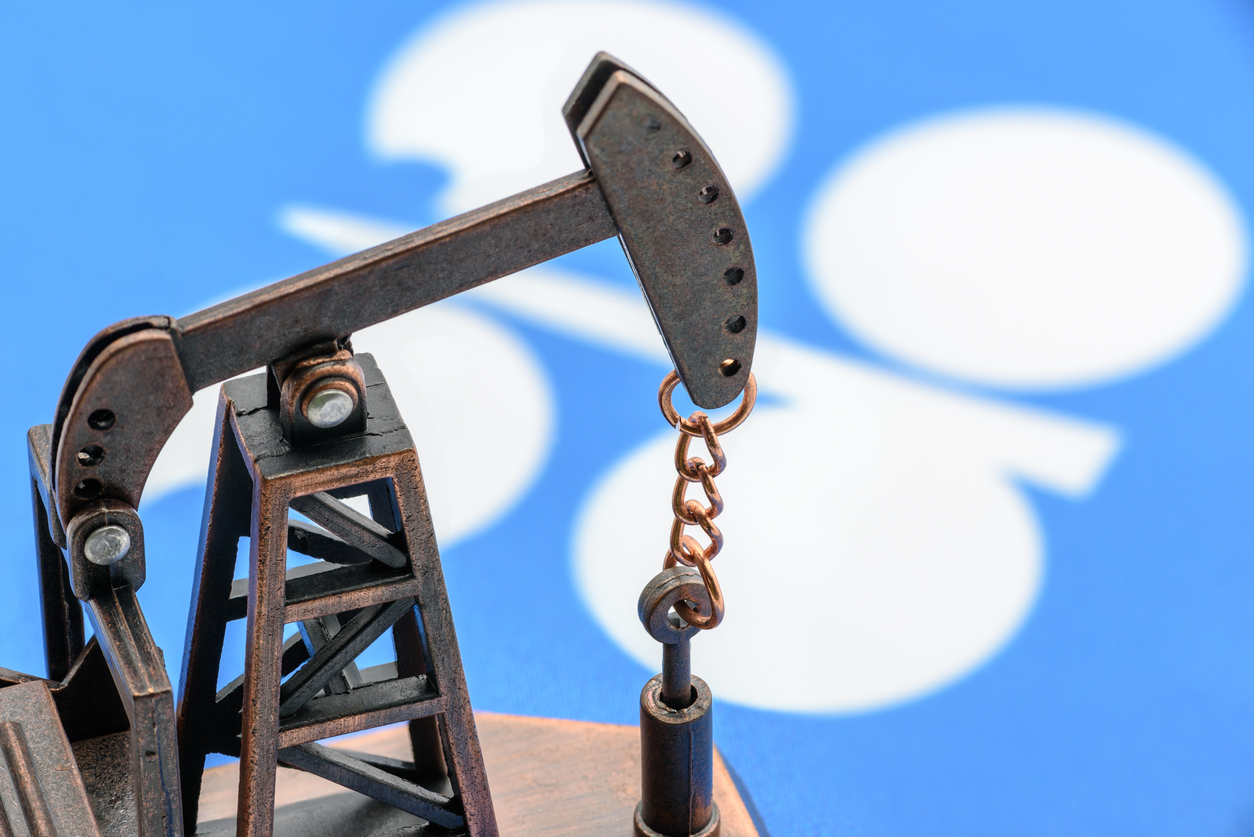
UAE Energy Minister Suhail Mohamed al-Mazrouei said the decision was based on long-term strategic considerations and rising global energy demand. The timing, however, amplified concerns about fragmentation within major oil-producing nations just as disruptions in the Strait of Hormuz continued to tighten supply and drive prices sharply higher.
Meanwhile, diplomatic efforts between the US and Iran remained deadlocked. US President Donald Trump rejected Tehran’s latest proposal, insisting that nuclear issues must be addressed immediately rather than postponed until after the conflict ends. Trump also claimed Iran had signalled internal instability while seeking reopening of the Strait of Hormuz, although Tehran publicly denied any indication that the conflict was nearing resolution. The combination of geopolitical deadlock and fractures within OPEC reinforced concerns about prolonged instability in global energy markets.
Data Spotlight
Manufacturing activity in the US Fifth District improved unexpectedly in April, with the Federal Reserve’s manufacturing index rising to 3 from 0, marking the first expansion since February last year. New orders strengthened further while local business conditions improved sharply, signalling that parts of the industrial economy remained resilient despite higher energy costs and supply chain disruptions linked to the conflict in West Asia. However, forward-looking indicators for shipments and new orders softened, suggesting some moderation ahead.
In contrast, the US housing market continued to cool. The Case-Shiller 20-city home price index rose just 0.9% year-on-year in February, the slowest growth since July 2023, as mortgage rates near 6% continued to pressure affordability and transaction activity. Several major cities, including Denver and Los Angeles, recorded annual price declines. Meanwhile, labour market trends remained relatively stable, with private employers adding an average of 39,250 jobs per week, indicating a moderation but not a collapse in hiring momentum.
Takeaway:
WHAT HAPPENED OVERNIGHT
- US stocks declined as AI concerns and higher oil weighed on tech
- S&P 500 fell 0.4% while Nasdaq dropped 1% amid weakness in technology shares.
- Dow Jones ended broadly flat as defensive gains offset pressure from AI-linked stocks.
- Markets reacted negatively after reports suggested slower-than-expected growth at OpenAI.
- Chipmakers declined sharply, with Nvidia, Broadcom, AMD, Intel and Oracle all ending lower.
- Mega-cap technology stocks including Meta, Microsoft and Alphabet also weakened ahead of earnings.
- The Coca-Cola Company rose 3.5% after strong quarterly results.
- After the closure, Starbucks raised its full-year outlook following stronger revenue and traffic growth.
- S&P 500 fell 0.4% while Nasdaq dropped 1% amid weakness in technology shares.
- US Treasury yield rose to one-month highs as oil and inflation concerns intensified
- The US benchmark 10-year yield edged up to 4.35%, highest level in about a month.
- Rising oil prices and West Asia uncertainty reignited fears of inflation persistence.
- Donald Trump was expected to respond to Iran’s Hormuz proposal shortly.
- Iranian proposal reportedly delayed discussion of nuclear issues until regional tensions eased.
- Investors turned cautious ahead of the Federal Reserve’s policy meeting.
- Markets largely expected the Fed to keep rates unchanged throughout the year.
- Expectations for possible ECB and BoE tightening also supported higher global yields.
- Bank of Japan kept rates unchanged, while Governor Kazuo Ueda gave limited guidance on future hikes.
- The US benchmark 10-year yield edged up to 4.35%, highest level in about a month.
- US Dollar firms as geopolitical tensions drive safe-haven demand
- The US dollar index rises 0.2% to 98.66, snapping two-day losing streak.
- Safe-haven flows strengthened dollar amid ongoing Iran conflict and stalled negotiations.
- Bank of Japan kept rates unchanged at 0.75%, but divided vote boosts rate hike expectations.
- Wider policy split under Kazuo Ueda briefly supported yen before risk-off sentiment dominates.
- Donald Trump rejects Iranian proposal over unresolved nuclear concerns.
- Euro weakens modestly while Swiss franc also retreats against the dollar.
- The US dollar index rises 0.2% to 98.66, snapping two-day losing streak.
- Oil extends rally as Hormuz disruption outweighs OPEC concerns
- Brent crude rises 2.8% to $111.26 per barrel, marking seventh straight daily gain.
- WTI jumps 3.7% to $99.93, briefly crossing $100 intraday for first time since April 13.
- Markets remain focused on supply constraints from effectively closed Strait of Hormuz.
- Geopolitical disruptions continue to tighten global energy supply outlook.
- Concerns over UAE leaving OPEC+ fail to offset immediate supply risk premium.
- Oil rally reinforces broader inflation concerns across global markets.
- Brent crude rises 2.8% to $111.26 per barrel, marking seventh straight daily gain.
Day’s Ledger*
- US March Housing Starts Data
Corporate Actions
- Capital Small Finance Bank, Federal Bank, Fino Payments Bank, Geojit Financial Services, NDTV, Vakrangee, Waaree Energies
Policy
- Bank of Canada Interest Rate Decision
- US Fed Interest Rate Decision
Tickers to Watch
- BHARAT HEAVY ELECTRICALS signed technology transfer agreement with DRDO’s NSTL for naval gas turbine infrared suppression systems.
- CANARA HSBC LIFE INSURANCE profit increased 8.2% YoY to ₹0.35 billion from ₹0.32 billion.
- ENVIRO INFRA ENGINEERS subsidiary to acquire 100% stake in Suyog Urja for ₹3.11 billion in phases, with 51% upfront.
- MOTHERSON SUMI WIRING profit rose 1.4% YoY to ₹1.67 billion from ₹1.65 billion.
- ONE MOBIKWIK SYSTEMS bulk deal-- Peak XV exited stake worth ₹1.33 billion, while multiple investors including Viridian Asia, Societe Generale and Elimath Advisors bought stakes cumulatively.
- SANOFI CONSUMER HEALTHCARE profit grew 35.6% YoY to ₹680 million.
- SOLARA ACTIVE PHARMA SCIENCES puducherry ibuprofen facility cleared US FDA inspection with VAI classification and EIR issued.
- WANBURY’s Patalganga facility cleared Korea FDA inspection with zero observations.
Must Read
- Foreign Money Is Not Ignoring India, It Is Screening It OutCoal India's Cash Engine Is Outrunning Its Coal Engine
- Voltas Blue Star Best Geared to Outperform in an El Niño Year
- RBI’s Currency Curbs Leave Markets Nursing More Than Losses
- India's Gold Addiction Is Bleeding Its Foreign Exchange Dry
- Ten Optical Illusions of India’s GDP Ranking by the IMF
- Airtel is said to eye $2 billion London IPO of mobile money unit
- FSSAI plastic-free push for pan masala may disrupt sachet economics, shift to paper formats
More From BasisPoint