.png)

Oil Slides, Equities Jump on Optimism Over US-Iran Peace Accord
Here’s your quick read to start the day: a chatty, no-fuss look at overnight moves, the big story, what’s on the docket, and the tickers you need to watch.
June 12, 2026 at 1:30 AM IST
GLOBAL MOOD: Cautiously Risk On
Risk appetite returned strongly to global markets on Friday as investors cheered signs that the United States and Iran could be nearing a peace agreement, easing concerns over energy supplies and geopolitical instability in West Asia. Asian equities rallied sharply, led by South Korea's Kospi and Japan's Nikkei, while oil prices fell on expectations that the Strait of Hormuz could reopen and supply disruptions may ease.
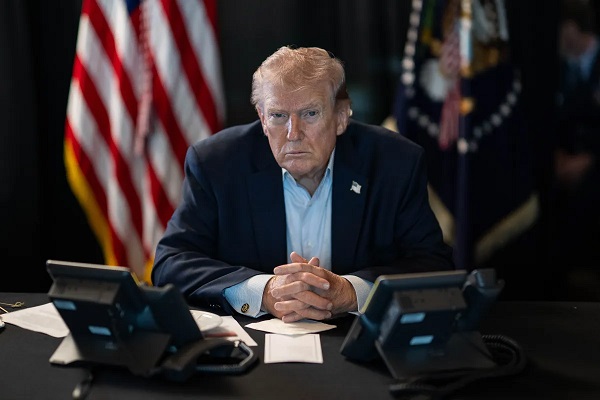
Investor sentiment improved after US President Donald Trump said a framework agreement with Iran was largely complete and could be signed within days. The cancellation of planned US military strikes further reinforced hopes that the three-month conflict may be approaching a diplomatic resolution.
Lower crude prices also helped support equities by reducing concerns over energy-driven inflation and its impact on global growth. However, investors remained cautious as Iranian officials indicated that key issues still required final approval.
Despite the positive market reaction, central banks continued to maintain a hawkish bias, reflecting lingering inflation risks stemming from recent energy market disruptions.
However, Iranian officials struck a more cautious tone. Iranian Foreign Ministry spokesperson Esmaeil Baghaei said large portions of the agreement text had been finalised but stressed that Tehran had not yet reached a final decision and would not compromise on its “red lines”. The comments highlighted continuing uncertainty around the durability and finalisation of any agreement. Markets reacted positively to signs of diplomatic progress, with oil prices falling and US equities gaining after Trump said planned military strikes on Iran had been cancelled due to progress in negotiations.
Meanwhile, central banks globally continued responding to inflationary pressures stemming from elevated energy prices and prolonged disruptions linked to the West Asia conflict. European Central Bank raised interest rates by 25 basis points at its June meeting, marking its first hike since 2023, while also revising inflation forecasts sharply higher for both 2026 and 2027. The ECB specifically cited the Iran conflict and disruptions around the Strait of Hormuz as key inflation risks.
Other central banks also maintained cautious or hawkish stances. Central Bank of the Republic of Turkey kept rates unchanged at 37%, citing rising energy costs and inflation risks, while National Bank of Serbia and Central Bank of Peru maintained policy rates amid geopolitical uncertainty. Denmark’s central bank also raised rates in line with the ECB to counter inflationary pressures.
Data Spotlight
Initial jobless claims in the US rose by 4,000 to 229,000 in the first week of June, the highest level in three months and above market expectations of 219,000. Continuing claims also increased by 24,000 to 1.795 million, slightly above forecasts. Despite the rise, labour market conditions remained historically resilient, suggesting layoffs continued to stay relatively contained. Claims filed by federal employees rose sharply to 553 amid ongoing government workforce reduction efforts.
Meanwhile, US producer prices increased 1.1% month-on-month in May, matching April’s revised gain and exceeding expectations of 0.7%. Goods prices surged 2.8%, driven primarily by a 23.4% jump in gasoline prices amid elevated energy market volatility linked to tensions in West Asia. Diesel fuel, jet fuel, industrial chemicals and natural gas liquids also recorded strong increases.
Service-sector producer inflation moderated to 0.3% from 0.7% in April, partly offsetting the sharp rise in goods prices. On an annual basis, headline producer inflation accelerated to 6.5%, the highest since November 2022 and slightly above expectations. Core PPI rose 0.4% month-on-month and 4.9% year-on-year, both below market forecasts.
Takeaway:
Elevated energy prices continued driving strong producer inflation in the US, reinforcing concerns over persistent price pressures, while labour market data suggested economic conditions remained firm enough to support a restrictive Federal Reserve policy stance.
WHAT HAPPENED OVERNIGHT
- US stocks surge as Trump cancels Iran strikes, chip stocks rebound
- The Dow rose 1.86%, S&P 500 gained 1.75%, and Nasdaq jumped 2.54%, marking the biggest daily gains since April 8's Iran ceasefire.
- The PHLX Semiconductor Index surged 7.9%, its biggest one-day gain since April 2025, leading the S&P 500 rebound.
- Trump told reporters the US and Iran could sign a peace deal as soon as this weekend, reopening Strait of Hormuz shipping traffic.
- Oracle plunged 8.5% after projecting fiscal 2027 capital spending plans above Wall Street estimates.
- SpaceX priced its record $75 billion IPO at $135/share, valuing the company at $1.77 trillion ahead of its Friday Nasdaq debut.
- US producer prices rose more than expected in May, marking the largest annual gain in over three years and adding to inflation worries.
- Weekly jobless claims rose marginally, while the Fed is expected to hold rates steady next week with one 25bps hike still priced in by year-end.
- The Dow rose 1.86%, S&P 500 gained 1.75%, and Nasdaq jumped 2.54%, marking the biggest daily gains since April 8's Iran ceasefire.
- US Treasury yields edge down as markets weigh Iran escalation and PPI data
- The 10-year Treasury yield slipped to 4.53% as investors assessed rising West Asia tensions alongside the latest PPI report.
- Trump vowed additional strikes on Iran, threatening to target its energy infrastructure, including the Kharg Island oil export terminal.
- Headline PPI rose to 2022-highs, but core measures undershot forecasts, echoing the softer core CPI print from a day earlier.
- Despite the energy shock, broader pass-through to underlying inflation has yet to materialise fully.
- The data left Fed policy expectations largely unchanged, with markets still pricing one rate hike this year, likely in October.
- The 10-year Treasury yield slipped to 4.53% as investors assessed rising West Asia tensions alongside the latest PPI report.
- Dollar nears ten-week high as Iran escalation fears boost safe-haven demand
- The dollar index climbed above 100, nearing a ten-week high amid concerns that further US-Iran escalation could push energy prices and inflation higher.
- Trump warned the US would strike Iran "very hard" and signalled Washington could take control of Kharg Island in the near future.
- US producer prices rose 6.5% year-on-year and 1.1% month-on-month, with May inflation accelerating at its fastest pace in over three years amid the Iran conflict.
- The ECB raised interest rates for the first time in nearly three years, citing rising inflation risks from geopolitical uncertainty.
- The euro remained largely stable against the dollar despite the ECB move.
- The dollar index climbed above 100, nearing a ten-week high amid concerns that further US-Iran escalation could push energy prices and inflation higher.
- Oil falls nearly 3% as Trump cancels Iran strikes, raising hopes for a deal
- Brent settled at $90.38/barrel, lower by 2.9%, and WTI at $87.71, down 2.6%, after Trump called off strikes, citing progress in talks with Iran's leadership.
- Iran's Fars news agency said no agreement text has been approved yet, with Trump having previously claimed a deal was imminent, only to reissue threats.
- Earlier Thursday, Trump had threatened to hit Iran "very hard," even as indirect peace talks reportedly intensified.
- Despite Iran's announced closure of the Strait of Hormuz on Wednesday, the US military said commercial ships continued to transit the waterway with no warships struck.
- Three more LNG tankers slipped out of the strait with transponders off, heading to Asia.
- India reported a third vessel incident this week off Oman's coast, though Indian refiners said they have secured enough crude to meet needs through August.
- US crude inventories fell 7.2 million barrels to 426.5 million in the week ended June 5, far exceeding the expected 4-million-barrel draw.
- Brent settled at $90.38/barrel, lower by 2.9%, and WTI at $87.71, down 2.6%, after Trump called off strikes, citing progress in talks with Iran's leadership.
- Japan April Industrial Production Data
- India May CPI Inflation Data
- India Weekly FX Reserves Data
Corporate Actions
- Soma Textiles & Industries board to consider dividend
- Omkar Speciality Chemicals board to consider financial results
- Ather Energy board to consider fund raising
- Ducon Infratechnologies board to consider fund raising
- Mukka Proteins board to consider fund raising
Policy
- German Buba President Nagel Speaks
Tickers to Watch
- DABUR INDIA said the US FDA has placed drugs manufactured at its Silvassa plant under Import Alert 66-40 following observations related to data integrity and maintenance lapses.
- VEDANTA said subsidiaries VEDANTA OIL AND GAS, VEDANTA POWER, VEDANTA ALUMINIUM METAL and VEDANTA IRON AND STEEL will list on stock exchanges on June 15.
- INFOSYS contributed to the CMMI AI Maturity Framework and pilot assessment, helping develop standards for AI governance, deployment and maturity measurement.
- HAPPIEST MINDS TECHNOLOGIES launched Rel(AI)Build, its proprietary agentic AI development platform, along with an Agentic Development Lifecycle framework.
- ADANI ENTERPRISES said its joint venture ADANICONNEX has acquired a 100% stake in MADHUVANTI BUILD ESTATE from ADANI INFRA (INDIA).
- JK PAPER acquired a 15.4% stake in BORKAR PACKAGING, raising its total shareholding in the company to 87.36%.
- SAGILITY acquired US-based healthcare analytics company CARESEED to strengthen its healthcare data, quality reporting and regulatory analytics capabilities.
Must Read
- When Investor Protection Prevents Investors From Selling
- US puts import alert on drugs from Dabur plant
- PM highlights El Nino concerns at NITI Aayog meet
- OPEC lowers 2026 oil demand forecast again
- US drug regulator issues import alert for drugs made at a Dabur India plant
- Real cost of freebies is the erosion in quality of public spending
See you tomorrow with another edition of The Morning Edge.
Have a great trading day
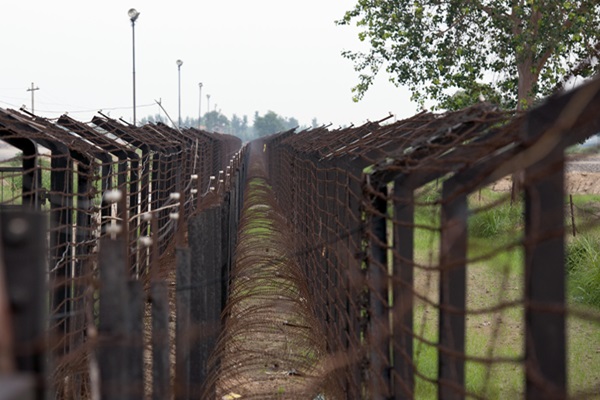
Why India’s Pakistan Policy Needs a Serious Review
The current debate often presents a false binary: punitive resolve or naive accommodation. But a relationship defined by terrorism, military dominance in Pakistan’s state structure, nuclear risk and external alignments cannot be managed through domestic optics alone.
Ashok K. Kantha writes, the key issue is strategic flexibility. If every major terror attack creates public pressure for a visible military response, India risks narrowing its own options. Deterrence should be shaped for the adversary, not for the domestic gallery.
That makes crisis-management channels, back-channel communication and diplomatic lines essential. They are not rewards for good behaviour. They are tools to reduce miscalculation between neighbours.
Hard power remains central. But India also needs a broader toolkit: calibrated responses, multidomain pressure, crisis communication and protection of its wider interests, especially in West Asia.
A rivalry that cannot be resolved still has to be governed.
(*Compiled from various media sources)
More From BasisPoint