.png)

Oil Above $100 and Fed Outlook Weigh on Asian Markets
Here’s your quick read to start the day: a chatty, no-fuss look at overnight moves, the big story, what’s on the docket, and the tickers you need to watch.
Richard is an independent financial journalist who tracks financial markets and macroeconomic developments
March 19, 2026 at 1:44 AM IST
GLOBAL MOOD: Risk-Off
Asian markets slipped on Thursday, reflecting a clear risk-off mood after Wall Street losses and a cautious Federal Reserve outlook dampened sentiment.
The Fed kept rates unchanged but pushed back against early rate-cut expectations as inflation remained stubborn, highlighted by a stronger-than-expected rise in US wholesale prices.
At the same time, rising crude prices, with Brent climbing above $107 a barrel, intensified worries about persistent inflation and slower global growth. Investors are also awaiting the Bank of Japan decision, adding to the cautious tone across regional markets.
TODAY’S WATCHLIST
THE BIG STORY
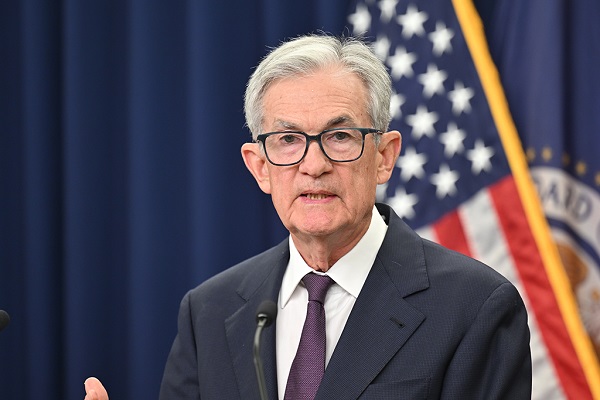
The admission of profound uncertainty from the world's most powerful central banker underscored the impossible position the Fed occupies, unable to cut as inflation surges, unwilling to hike as growth deteriorates. In a notable hawkish signal, one Fed policymaker pencilled in a rate hike for next year, the first such projection in two and a half years. Of the Fed's 19 policymakers, seven see rates unchanged at year-end, seven favour one cut, and five favour at least two.
As if to emphasise the depth of uncertainty Powell described, Qatar reported "extensive damage" to an energy industry hub from Iranian missiles, and Iran's massive South Pars gas field was also struck — just as the Fed chair spoke. The escalation sent fresh shockwaves through energy markets already pricing a structural supply shock.
Meanwhile, the Trump administration is actively considering deploying thousands of additional US troops to the West Asia theatre, with options including securing Hormuz through air and naval forces and most dramatically sending ground forces to Iran's Kharg Island, the hub for 90% of Iran's oil exports. US officials acknowledged such an operation would be "very risky" given Iran's missile and drone capabilities, but confirmed the option is on the table as the war enters its fourth week with no resolution in sight.
Data Spotlight
Takeaway:
WHAT HAPPENED OVERNIGHT
- US stocks fall sharply as hawkish Fed, hot PPI and Iran strikes combine
- The S&P 500 lost 1.4%, Nasdaq 100 fell 1.3%, and the Dow dropped 1.6% as the Fed's inflation upgrade and surging energy costs hit equities broadly.
- A large group of FOMC members projected zero rate cuts for 2026, aligning with rate futures that increasingly price out any near-term easing.
- A hot February PPI reading amplified the hawkish Fed signal, with energy-driven producer price inflation feeding directly into the outlook.
- Fresh strikes on Iranian energy infrastructure triggered another leg higher in oil and yields, pressuring equities across the board.
- Visa fell 3.1% and Mastercard dropped 3.7%, leading credit services lower as consumer spending concerns mounted.
- Walmart and B&G fell over 2.5% each, a notably pessimistic session for defensive stocks that would typically outperform in a risk-off environment.
- Micron closed flat ahead of its earnings report markets unwilling to take directional bets given the macro backdrop.
- The S&P 500 lost 1.4%, Nasdaq 100 fell 1.3%, and the Dow dropped 1.6% as the Fed's inflation upgrade and surging energy costs hit equities broadly.
- US Treasury yield holds above 4.2% as Fed raises inflation projections and splits on rate path
- The 10-year Treasury yield stayed above 4.2%, trimming its two-session pullback as the Fed's inflation upgrade reinforced the higher-for-longer narrative.
- The Fed held rates unchanged but raised projections for both core and headline inflation while also upgrading its GDP growth outlook.
- A hot February PPI reading and fresh energy price increases following attacks on Iranian infrastructure added to the inflationary backdrop.
- A greater share of FOMC members signalled no rate cuts are required this year in their baseline scenario — a hawkish shift from prior projections.
- However, labour market softening concerns drove other members toward a more accommodative outlook, keeping the policy debate firmly unresolved.
- The 10-year Treasury yield stayed above 4.2%, trimming its two-session pullback as the Fed's inflation upgrade reinforced the higher-for-longer narrative.
- US Dollar tops 100 as Fed holds rates and flags elevated inflation risks from Iran war
- The US dollar index advanced against major currencies on Wednesday, recovering losses from the prior two sessions.
- The dollar index surpassed 100 as traders digested the US Federal Reserve’s latest monetary policy stance.
- The Fed kept interest rates unchanged, in line with expectations.
- Officials highlighted uncertainty over the economic fallout from the US and Israeli war on Iran.
- They flagged elevated upside risks to inflation but maintained projections for one rate cut this year and another in 2027—unchanged from December.
- The Fed forecasted higher inflation amid the ongoing geopolitical tensions.
- The US dollar index advanced against major currencies on Wednesday, recovering losses from the prior two sessions.
- Crude oil surged above $110 amid US-Iran war escalations
- Brent crude futures surged above $110 per barrel on Thursday, prolonging the rally amid fresh attacks on vital energy infrastructure in West Asia.
- WTI crude futures climbed above $99 per barrel on Thursday, reigniting the rally due to the same West Asian energy infrastructure attacks.
- Heightened fears of disruptions to global oil and gas flows drove the price jump.
- Iran fired missile strikes at a Qatari facility hosting the world’s largest LNG export plant, one of several energy targets Tehran pledged to hit after an Israeli strike on Iran’s South Pars gas field.
- US President Donald Trump revealed prior awareness of the Israeli attack on South Pars but cautioned against additional strikes on Iranian energy facilities.
- Brent crude futures surged above $110 per barrel on Thursday, prolonging the rally amid fresh attacks on vital energy infrastructure in West Asia.
Day’s Ledger*
Economic Data
- US Foreign Bond Investment
- Euro Wage Growth
- US Jobless Claims
- Euro Deposit Facility Rate
Corporate Actions
- IREDA board to consider fund raising
- Regal Entertainment board to consider rights share issue
- Vardhman Polytex board to consider fund raising
Policy
- BoJ Interest Rate Decision
- ECB Interest Rate Decision
- BoE Interest Rate Decision
Tickers to Watch
- Nazara to acquire 50% stake in two gaming firms for $100.3 million
- Amritanshu Khaitan quits McLeod Russel board citing personal reasons
- RBI grants approvals for Bain Capital's joint control in Manappuram Finance
- Cube Highways files ₹5,000 cr OFS to convert into India's 1st public InvIT
- Axis Bank to infuse ₹1,500 cr into Axis Finance after RBI's approval
- Ahluwalia Contracts wins ₹393 crore order to build new airport in Rajasthan
Must Read
- Over 1.7 million tonnes of India's oil, LNG, LPG stuck in Strait of Hormuz
- India blends sustainability with growth in twin-track model: Mospi
- Cabinet clears ₹2,585 crore scheme for small hydro power projects
- Parliamentary Committee urges expedited WPI base revision to 2022-23
- Trump asks if 'finishing off' Iran would make 'allies' reopen Hormuz Strait
- NSE sets modest advisory fee of just 0.65% for upcoming $2.5 bn IPO
- Powell’s Second-to-Last Meeting Previews an Increasingly Divided Fed
See you tomorrow with another edition of The Morning Edge.
Have a great trading day
𝐖𝐡𝐚𝐭 𝐡𝐚𝐩𝐩𝐞𝐧𝐬 𝐰𝐡𝐞𝐧 𝐚𝐧 𝐨𝐢𝐥 𝐬𝐡𝐨𝐜𝐤 𝐡𝐢𝐭𝐬 𝐛𝐨𝐭𝐡 𝐬𝐮𝐩𝐩𝐥𝐲 𝐚𝐧𝐝 𝐩𝐫𝐢𝐜𝐞 𝐚𝐭 𝐭𝐡𝐞 𝐬𝐚𝐦𝐞 𝐭𝐢𝐦𝐞?
The current West Asia crisis sits uncomfortably between the Russia-Ukraine spike and the Covid supply shock, raising inflation risks even as growth faces disruption.
Gaura Sengupta’s writes, India enters this phase with strong macro buffers, but the policy challenge is delicate. If inflation rises while growth slows, the RBI may have to lean more on liquidity and signalling than rate hikes. The real question is whether policy can stay growth-supportive without letting inflation expectations slip.
(*Compiled from various media sources)
More From BasisPoint