.png)

Markets on Edge as Hormuz Conflict Reignites Volatility
Here’s your quick read to start the day: a chatty, no-fuss look at overnight moves, the big story, what’s on the docket, and the tickers you need to watch.
May 5, 2026 at 1:50 AM IST
GLOBAL MOOD: Risk-Off
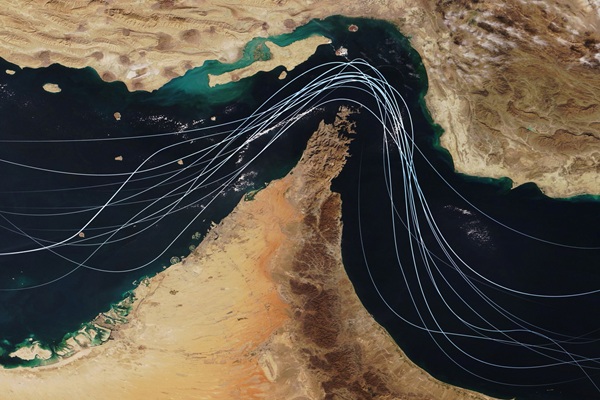
Asian markets reflected a cautious risk-off mood as renewed US–Iran hostilities rattled sentiment and reignited volatility in energy markets. Fresh missile and drone exchanges around the Strait of Hormuz disrupted the fragile ceasefire, pushing oil prices sharply higher, with Brent Crude hovering near $114–115 per barrel.
Equities were mixed, with weakness in Australian markets and muted US futures signalling investor caution after a strong global rally. The resurgence of conflict has revived concerns over supply disruptions in the Strait of Hormuz—a critical artery for global oil trade—raising fears of sustained high energy prices, elevated inflation and slower growth.
Despite efforts by Donald Trump to secure shipping routes under “Project Freedom,” continued attacks on vessels and regional infrastructure underscore the risk of prolonged instability. Markets are now recalibrating risk premia, with geopolitics once again overshadowing fundamentals and keeping volatility elevated.
TODAY’S WATCHLIST
- Earnings: Hero MotoCorp, Larsen & Toubro, Mahindra & Mahindra,
- Bank of England Deputy Governor Woods Speaks
- US Fed Vice Chair for Supervision Barr Speaks
- US FOMC Member Bowman Speaks
THE BIG STORY
US President Donald Trump announced a new initiative, “Project Freedom,” aimed at escorting stranded vessels through the strait, though details remained limited. The move came amid continued disputes over the legal basis of the operation and signalled a further intensification of maritime tensions in West Asia.
Despite ongoing military action, US intelligence assessments suggested limited progress in curbing Iran’s nuclear capabilities, with timelines for potential weapon development largely unchanged. This indicated that the conflict had yet to materially weaken Tehran’s strategic position, reinforcing concerns that the standoff could become prolonged.
The combination of escalating military activity, disrupted shipping flows and unresolved nuclear tensions continued to heighten risks for global energy markets, inflation trajectories and broader financial stability.
Data Spotlight
US factory orders rose 1.5% month-on-month to $630.4 billion in March 2026, significantly exceeding expectations and marking a second consecutive increase. Durable goods orders rebounded 0.8%, driven by strong demand in technology-related sectors, with computers and electronic products surging 3.6%. Notably, electromedical and control instruments hit record highs, reflecting continued investment in AI infrastructure and data centres.
Transportation equipment also contributed to the upside, supported by gains in vehicles, defence aircraft and marine orders. Meanwhile, nondurable goods orders climbed 2.1%, reaching their highest level since October 2022, signalling broader industrial strength.
Core measures reinforced the momentum, with orders excluding transportation rising 1.6% and those excluding defence up 0.9%, indicating underlying demand remained robust despite geopolitical uncertainty.
Takeaway:
WHAT HAPPENED OVERNIGHT
- US S&P 500 fell 0.4% and Nasdaq dropped 0.2%, pulling back from recent record highs.
- Dow Jones tumbled 557 points amid broad-based selling pressure.
- Escalation in West Asia and sharp rise in oil prices heightened inflation concerns.
- US–Iran tensions intensified after naval support plans for Strait of Hormuz triggered retaliatory threats.
- Materials and industrials led declines, while energy stocks outperformed.
- Apple, Alphabet, Broadcom, Walmart and JPMorgan all posted losses.
- Palantir Technologies gained after strong Q1 results and record revenue.
- Dow Jones tumbled 557 points amid broad-based selling pressure.
- US Treasury yield surged to multi-month highs as oil spike fuelled inflation fears
- The US benchmark 10-year yield rose to 4.46%, highest since July 2025.
- Escalation in West Asia drove oil prices higher, lifting inflation expectations.
- UAE reported intercepting Iranian missiles, signalling sharp deterioration in regional security.
- Markets braced for US Treasury borrowing plans and upcoming Fed commentary.
- Investors also focused on upcoming jobs data, with payroll growth expected to slow sharply.
- Unemployment rate was seen holding steady at 4.3% despite softer hiring outlook.
- Rising energy costs increased risk of further policy tightening despite expectations of rate hold.
- The US benchmark 10-year yield rose to 4.46%, highest since July 2025.
- US Dollar strengthened as escalation supported safe-haven demand
- The US dollar index rose 0.2% to 98.40 amid heightened geopolitical tensions.
- Greenback gained as investors sought safety following escalation in West Asia.
- Ongoing conflict and lack of diplomatic progress continued to underpin demand.
- Euro weakened modestly against the dollar during the session.
- Japanese yen briefly strengthened, fuelling speculation of possible intervention by authorities.
- Dollar remained supported despite pulling back from peaks seen earlier in the conflict.
- The US dollar index rose 0.2% to 98.40 amid heightened geopolitical tensions.
- Oil surged as escalation in Hormuz reignited supply disruption fears
- Brent crude jumped 5.8% to $114.44 per barrel, while WTI rose 4.4% to $106.42.
- Prices rallied sharply after Iran escalated attacks on ships and energy infrastructure.
- Multiple vessels were hit in the Strait of Hormuz, while a UAE oil port was set ablaze.
- Marked the most serious escalation since the ceasefire declared earlier in April.
- Markets priced in heightened risk of prolonged supply disruption in West Asia.
- Geopolitical risk premium surged as maritime security deteriorated.
- Brent crude jumped 5.8% to $114.44 per barrel, while WTI rose 4.4% to $106.42.
Day’s Ledger*
Economic Data
- US March New Home Sales Data
- US April S&P Global Composite PMI Index
- US April-June Atlanta Fed GDP Nowcast
- US March JOLTS Job Openings Data
Corporate Actions
- Earnings: Hero MotoCorp, Larsen & Toubro, Mahindra & Mahindra, Ajanta Pharma, Coforge, Marico, Poonawalla Fincorp, Punjab National Bank, Raymond, Shoppers Stop, and United Breweries,
Policy
- Bank of England Deputy Governor Woods Speaks
- US Fed Vice Chair for Supervision Barr Speaks
- US FOMC Member Bowman Speaks
- ADITYA BIRLA CAPITAL Jan-Mar consolidated profit rose 30% YoY to ₹11.24 billion from ₹8.65 billion.
- AMBUJA CEMENTS Jan-Mar profit surged 77.6% YoY to ₹18.30 billion from ₹10.30 billion.
- GODREJ PROPERTIES Jan-Mar consolidated profit jumped 134% YoY to ₹3.81 billion from ₹1.63 billion.
- INOX GREEN ENERGY SERVICES scheme of arrangement with Inox Renewable Solutions became effective May 4, 2026.
- KPR MILL promoter group member disclosed no encumbrance on 8.43 million shares as of March 31, 2026.
- STANDARD SURFACTANTS reported fire incident at Mandideep plant with no casualties; operations to resume in 2–3 months, assets insured.
Must Read
- When an India Bull Turns Underweight
- When Institutions Choose Rhetoric Over Reality, Markets Keep Score
- India’s Bond Yields May Drift to 7.25% as Pressures Build
- AI in Banking: From Data Processing to Institutional Thinking
- China's TCL in talks with local cos to sell 51% in Indian plant
- UAE flags Hormuz risk after OPEC exit
- No govt support for fuel retailers' fuel losses
- India explores steps to mobilise dollar inflows as rupee slides, sources say
- India resumes wheat exports after four years but high prices likely to limit demand
- Intense heat drives India's power output to two-year high
See you tomorrow with another edition of The Morning Edge.
Have a great trading day
The ECL Framework Can Foster Sustainable Asset Quality
India's banks have spent 40 years learning to see bad loans after they happen. ECL flips the script, provisioning for risk before it becomes a loss.
Effective April 2027, the Expected Credit Loss framework marks the most consequential shift in Indian banking's approach to asset quality since the Narasimham Committee reforms of 1992.
The mechanics: PD × LGD × EAD. The real test: data depth, model discipline, and governance that can hold up under scrutiny.
PSU banks face the steepest climb. Stage 2 provisioning floors jump from 40 bps to 500. That's not a rounding error.
kembai Srinivasa Rao breaks down what ECL demands, what it promises, and why the banks that build this capability well won't just comply. They'll compete on its strength.
(*Compiled from various media sources)
More From BasisPoint