.png)

Markets Look Past West Asia Tensions, Focus on Fed and Big Tech
Here’s your quick read to start the day: a chatty, no-fuss look at overnight moves, the big story, what’s on the docket, and the tickers you need to watch.

July 29, 2026 at 2:37 AM IST
Global Mood: Cautiously Risk- on
Asia-Pacific markets traded higher on Wednesday, signalling a cautiously risk-on mood as investors looked beyond renewed tensions in West Asia and instead focused on the US Federal Reserve's policy decision and earnings from major technology companies. South Korean equities led regional gains, while Japan and Australia also advanced despite a sharp rise in oil prices after Iran launched ballistic missiles targeting US forces, all of which were intercepted. The limited market reaction suggested investors viewed the latest military exchange as unlikely to derail broader economic sentiment.
Attention remained firmly on the Federal Reserve, where policymakers are widely expected to keep interest rates unchanged, and on earnings from major US technology companies for fresh evidence of sustained AI-related spending. Although geopolitical risks remained elevated, with continued attacks involving Iran-backed groups and uncertainty over the future of the Strait of Hormuz, investors took comfort from ongoing diplomatic contacts between Washington and Tehran. The combination of resilient corporate expectations and hopes of policy stability outweighed concerns over higher oil prices and regional tensions.
THE BIG STORY
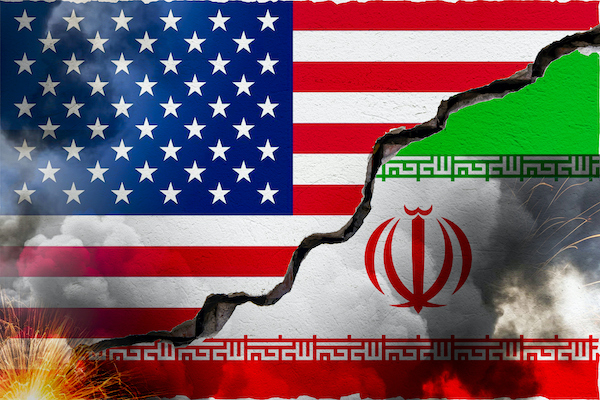
The fragile informal ceasefire showed fresh cracks Tuesday as Iran launched multiple ballistic missiles in what CENTCOM described as an attempted surprise attack on US forces in West Asia, all of which were intercepted. Saudi oil facilities were also targeted by Iran-backed Iraqi militias, prompting a joint US-Saudi strike on militant sites in Iraq. Oman meanwhile presented Iran with a Gulf-backed proposal to manage Hormuz transit through voluntary fees, but a US official swiftly rejected any tolls or fees, insisting the strait must remain free of Iranian control. The contradictions are stark: Trump claims good talks are underway, Iran denies seeking negotiations, and both sides continue exchanging fire even as oil prices fall on ceasefire optimism. The gap between the diplomatic narrative and the military reality on the ground remains as wide as ever.
In Washington, Zelenskiy's Oval Office meeting with Trump yielded tangible progress on the Patriot interceptor licence and opened a path to reviving Russia peace talks, with Witkoff and Kushner agreeing to visit Ukraine for the first time. Zelenskiy underscored Ukraine's critical shortage of anti-ballistic systems to both Trump and senators, welcomed new Russian energy sanctions legislation advancing through the Senate, and met with Lockheed Martin officials to accelerate co-production of Patriot interceptors. The visit came as the Pentagon faced mounting criticism for planning to delay $400 million in congressionally approved Ukraine aid until 2029, and as Graham's death removed one of Kyiv's most influential advocates from Washington's political landscape.
Data Spotlight
The S&P Case-Shiller 20-City Home Price Index rose 1.6% year-on-year in May, the strongest gain since August 2025 and above expectations of 1.3%. Chicago led for a third straight month, up 6.9%, followed by New York, up 4.2%, while Las Vegas fell 1.9% and Seattle and Denver each declined 1.8%. Real home prices fell for a 12th consecutive month as inflation continued to outpace nominal price growth.
The US goods trade deficit narrowed to $101.5 billion in June from a 14-month high of $105.9 billion in May, as imports fell 2.6% and exports declined 1.8%. The first-half cumulative goods deficit narrowed to $535.5 billion from $716.6 billion a year earlier, suggesting trade flows are normalising following last year's tariff announcements, though policy uncertainty persists.
US wholesale inventories rose 0.3% in June for a fifth consecutive monthly gain, driven by a 0.7% rise in durable goods stocks, while nondurable goods inventories fell 0.4%. Year-on-year, inventories were up 4.4%.
Takeaway: Nominal home price growth accelerated but continued to lag inflation, eroding real housing wealth for a 12th straight month. A narrowing goods trade deficit and rising wholesale inventories point to gradually normalising trade flows and cautious restocking, consistent with a slowing but still resilient domestic economy.
WHAT HAPPENED OVERNIGHT
US stocks edge higher as rotation into staples and healthcare offsets chip weakness ahead of Fed and tech earnings
- The Dow rose 1.03%, S&P 500 gained 0.21%, and Nasdaq fell 0.22%, as investors rotated into defensive and value sectors while chip stocks extended their recent slide.
- The Philadelphia Semiconductor Index fell 4.5%, now down 25% from its June 22 record high, though it remains up 56% year-to-date.
- Apple briefly hit a $5 trillion market cap for the first time, closing up 1% at $340.08, while Microsoft rose 1.1% ahead of its Wednesday results.
US Treasury yields fall for a third straight session as oil retreat and ceasefire hopes support bonds
- The 10-year yield dipped to 4.59%, its lowest in about a week, as lower oil prices eased inflation concerns amid a holding US-Iran ceasefire.
- Discussions between Saudi Arabia and Oman on the future of Strait of Hormuz shipping remained a key indicator of the durability of the de-escalation.
- The FOMC meeting begins today, with markets pricing a 35% chance of a hike tomorrow and 80% odds of a September move, with the voting split closely watched for further signals.
US Dollar steadies at 101.3 ahead of Fed decision as West Asia tensions flare anew
- The dollar held steady as markets priced a 35% chance of a hike today, reflecting unusually high uncertainty this close to a Fed decision.
- The US military intercepted what it described as a surprise Iranian attack on US troops across the West Asia region, reigniting tensions and reviving oil price and inflation concerns.
- Rebounding oil prices added to the cautious tone, keeping rate hike expectations elevated despite the broader de-escalation narrative from earlier in the week.
Oil falls 5% to two-week low as ceasefire pause raises cautious hopes of diplomacy
- Brent settled at $84.09/bbl, down 4.8%, and WTI at $79.26, down 4.1%, with Brent at its lowest since July 13 after dropping 16% over three sessions.
- Iran rejected Oman's Gulf-backed Hormuz management plan and instead proposed a temporary reopening with shipping lanes partly inside Iranian waters, while denying it is seeking talks with the US.
- Strait of Hormuz traffic remained subdued despite the pause in hostilities, while Bab el-Mandeb saw a four-day high of 28 vessel crossings on Monday.
- Saudi Aramco shut its 400,000 bpd Jizan refinery after a Houthi attack on Saturday, with the Houthis also firing ballistic missiles at a Saudi oil tanker on Tuesday.
- China held direct talks with the Houthis to enable its tankers to transit the southern Red Sea without being attacked.
- OPEC+ is likely to pause output target increases for three months from October, sources said, after completing the scheduled return of voluntarily cut barrels.
- A potential Ukraine-Russia peace settlement could lift some sanctions on Moscow, potentially unlocking additional Russian oil supply to global markets.
Day’s Ledger*
Economic Data
- US Crude Oil Inventories
Corporate Actions
- Earnings: Adani Enterprises, Adani Ports and Special Economic Zone, Asian Paints, Bajaj Housing Finance, Colgate Palmolive (India), Dabur India, Eicher Motors, Karnataka Bank, Piramal Pharma, Vedanta Power, Vedanta Iron and Steel, Vedanta Oil and Gas.
Policy
- US Fed Interest Rate Decision
Tickers to Watch
- BIRLASOFT: April-June consolidated net profit up 51.2% YoY, aided by higher revenue and sharp improvement in operating profitability.
- DCM SHRIRAM: April-June PAT jumps over six-fold YoY, with revenue and operating profit also posting YoY growth.
- DYNACONS SYSTEMS & SOLUTIONS: Secures 2.6758 billion rupee contract from NPCI for data centre augmentation, including server infrastructure and 7-year support/warranty.
- LARSEN & TOUBRO: April-June consolidated PAT up 14% YoY to 41.23 billion rupees from 36.17 billion rupees, beating CNBC-TV18 poll estimate of 34.90 billion rupees.
- LIFE INSURANCE CORPORATION OF INDIA: Appoints Shatmanyu Shrivastava as CFO effective July 28, 2026.
- OIL AND NATURAL GAS CORPORATION: Board approves $500 million parent guarantee to Saudi Aramco on behalf of MRPL, facilitating crude oil imports from September 1, 2026 to August 31, 2028.
- PARADEEP PHOSPHATES: Board approves 15,000 MTPA aluminium fluoride plant at Paradeep, with estimated investment of 2.5 billion rupees.
- PHOENIX MILLS: April-June consolidated profit up 23.3% YoY to 2.969 billion rupees from 2.407 billion rupees.
- RAIL VIKAS NIGAM: Receives letter of acceptance from East Central Railway for 3.5897 million rupee railway-doubling project between Kundawa Chainpur and Raxaul.
- RAILTEL CORPORATION OF INDIA: Secures a 439 million rupee work order from AIG of Police, Odisha, to deploy 170 IT, cyber forensics, and finance experts; completion by August 30, 2029.
- SANOFI CONSUMER HEALTHCARE INDIA: April-June net profit up 13.3% YoY, aided by higher revenue and sharp operating margin expansion.
- TATA CAPITAL: April-June consolidated PAT up 56% YoY to 15.47 billion rupees; AUM up 22% to 2,905.02 billion rupees.
Must Read
- Beware the Debt-Fuelled AI Boom
- The Brand-Building Bypass
- AI Layoffs Came Too Soon;The Rehiring Wave Shows Why
- The Cost of Not Building Data Centers
- When Functional Regulation Meets Formidable Institutions
(*Compiled from various media sources)
See you tomorrow with another edition of The Morning Edge.
Have a great trading day
More From BasisPoint