.png)


Aadya Tyagi is a student with keen interests in history and economics.
June 6, 2026 at 6:30 AM IST
In a Colaba building constructed in the 1940s, two nearly identical apartments sit under very different arrangements. One family moved in during 2011 under a corporate lease and pays market rent running into lakhs every month. The other has occupied a similar flat since the building's inception. Its rent was fixed long ago and today amounts to a fraction of what the neighbouring apartment commands. The first flat was renovated before being leased and continues to be maintained; in the latter, the roof partially collapsed during a dispute between landlord and tenant.
The difference between them wasn't created in Colaba. It began decades earlier, when Bombay was struggling to house the people arriving in the city in search of work.
The mills were booming. The docks were busy. Every year, more workers arrived looking for jobs, and many ended up in neighbourhoods around Parel, Girgaum and Worli because that was where the work was. Living far from work was rarely practical. The long suburban commute that later became part of Mumbai life was not yet an option for most workers.
The city kept growing, but housing did not keep pace. Chawls filled up, families squeezed into ever smaller spaces, and overcrowding spread across entire neighbourhoods. The state's answer to growing land scarcity was simple: make more land. Reclamation projects pushed the city further into the sea, particularly along the southern waterfront. These projects envisioned a modern Bombay associated with commercial power and elite residential life, but they offered little relief to the workers packed into central Bombay's increasingly crowded neighbourhoods.
Wartime Fix
The Second World War pushed up construction costs just as demand for housing was rising. Partition brought another influx of people into the city. By 1951, Bombay's population had reached roughly 2.3 million, including around 200,000 refugees who arrived after Independence. Rents climbed rapidly. Land prices followed. For many working families, the fear was not simply that housing had become expensive. It was that they could be pushed out altogether.
That mattered because a house was also a location. Being forced out of a neighbourhood often meant being forced further away from work. In a city where livelihoods depended on proximity to mills, docks and workshops, housing insecurity was also economic insecurity.
That was the problem rent control was trying to solve. Similar first-generation rent controls appeared across Europe and North America during and after the war. In Bombay, the Bombay Rents, Hotel and Lodging House Rates Control Act of 1947 froze rents at September 1940 levels, made eviction significantly more difficult, and allowed tenancies to pass from one generation to the next.
Viewed from 1947, the law made perfect sense. The city was in the middle of a housing crisis and tenants needed protection.
The law, however, outlived the crisis that produced it. The city changed, incomes changed, and entire neighbourhoods changed. The protections largely remained. A family that secured a rent-controlled flat in the late 1940s acquired something far more valuable than shelter: the right to remain in some of India's most expensive real estate at rents disconnected from the market, with that privilege passing to future generations.
The consequences accumulated gradually. As maintenance costs rose while rents remained frozen, landlords had little incentive to invest in their properties. Buildings deteriorated across the city, giving rise to cessed buildings that required state intervention simply to remain habitable.
Rental housing also became less attractive as an investment. The share of rental housing in urban India fell from 54% in 1961 to 31% by 2011. Landlords increasingly turned to leave-and-license arrangements under the Indian Easement Act of 1882, which fell outside tenancy protections and allowed rents to reflect market conditions.
An informal parallel market emerged as well. Under the pagdi system, the right to occupy a rent-controlled flat became a marketable asset in its own right. New occupants paid substantial lump sums, sometimes approaching 80% of a property's value, to acquire protected tenancies from outgoing tenants, who received two-thirds of the payment while the landlord took the remainder. By the time the state formally recognised the pagdi system in 1999, it was acknowledging something that had already become common practice.
What buyers were really purchasing was security: low rent, inheritance rights and access to parts of the city that had become increasingly unaffordable.
Strange Inheritance
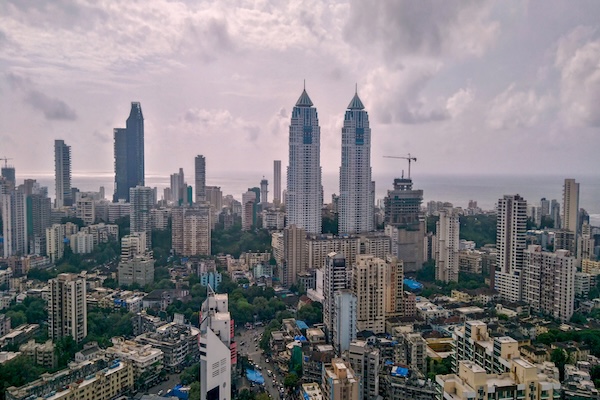
By the end of the century, Mumbai no longer had a single housing market.
As protected tenancies remained within the same families across generations, a significant amount of housing was effectively removed from circulation. New migrants and lower-income households without inherited protections entered a far more expensive housing market, moved into informal settlements, or were pushed towards the city's periphery. Access to affordable housing increasingly depended not on income, but on whether your family already had a place inside the system.
Yet none of this makes rent control simply a policy failure. Many households still consist of elderly residents and lower-income families who genuinely depend on these protections. In a city with some of the highest housing costs in the country, abrupt deregulation would produce rapid and widespread displacement.
Mumbai would also lose something less tangible. Parsi enclaves, old Maharashtrian neighbourhoods and countless other social ecosystems have survived partly because residents were insulated from the full force of the property market. The city would be poorer without them.
The difficulty is not that the law protects vulnerable tenants. The difficulty is that it protects everyone equally, regardless of whether they remain vulnerable. It draws no distinction between an elderly pensioner living on a fixed income and an affluent grandchild who inherited a rent-controlled flat in South Bombay as a windfall. Protection was originally linked to economic fragility; over time it became linked to the accident of occupancy history.
New York Now
Housing shortages have a habit of returning.
Today, New York is grappling with many of the pressures that shaped Bombay in the 1940s. Vacancy rates are near historic lows, rents have surged, and access to centrally located neighbourhoods has become increasingly difficult for lower-income households.
The popularity of Zohran Mamdani's mayoral campaign reflects those anxieties. Much like post-war Mumbai, the debate is once again centred on affordability, displacement and who gets to remain in the city.
The difference is that New York's rent regulations have not remained frozen in time. Over the decades, policymakers introduced measures such as vacancy decontrol and limits on protections for higher-income households. The system remains controversial, but it has been repeatedly modified as conditions changed.
Mumbai largely retained the original architecture of its post-war settlement. That does not mean tenant protections were a mistake. For many elderly residents and lower-income families, they remain essential. Nor would Mumbai be richer if every long-standing community were exposed overnight to the full force of the property market.
The story of Mumbai's rent control law is not really about rents. It is about time. A policy introduced as an emergency measure outlived the emergency, then outlived the generation it was designed to protect. What remains is one of the city's strangest inheritances: not a home itself, but the right to occupy one at a price that history forgot to update.
More From BasisPoint