.png)

Cautious Mood Prevails Despite Israel-Lebanon Truce Extension
Here’s your quick read to start the day: a chatty, no-fuss look at overnight moves, the big story, what’s on the docket, and the tickers you need to watch.
April 24, 2026 at 2:05 AM IST
GLOBAL MOOD: Cautiously Risk-Off
Asia-Pacific markets showed a cautious, risk-off bias as investors weighed mixed geopolitical signals from West Asia. While the extension of the Israel–Lebanon ceasefire offered some relief, it was insufficient to fully offset concerns around escalating tensions involving Iran and the Strait of Hormuz.
Regional equities reflected this divergence, with the Nikkei 225 and Topix edging higher on domestic factors, including firmer Japanese inflation data, but broader sentiment remained restrained. The extension of the truce, announced by Donald Trump, signalled ongoing diplomatic engagement, yet markets stayed wary given unresolved risks.
Iran’s continued assertiveness over the Strait of Hormuz and the collapse of US-Iran talks have reinforced fears of supply disruptions and elevated oil-driven inflation pressures. The contrasting developments—progress in Israel–Lebanon talks versus persistent friction with Iran—underscore a fragmented geopolitical backdrop, keeping volatility elevated and risk appetite subdued in the near term.
TODAY’S WATCHLIST
THE BIG STORY
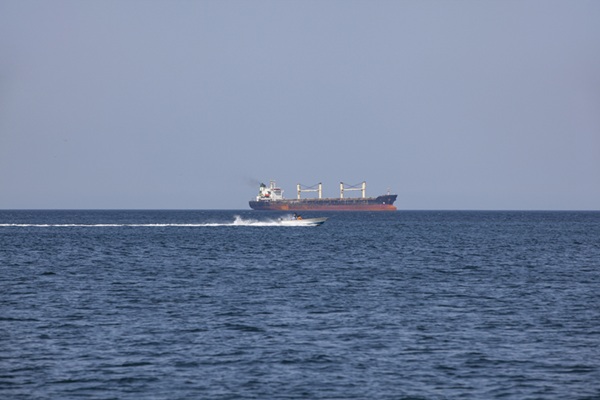
Iran has escalated its show of control over the Strait of Hormuz by releasing footage of armed commandos boarding a commercial cargo vessel, underscoring the strategic leverage Tehran continues to exert over one of the world’s most critical shipping routes. The display comes after the collapse of peace talks that Washington had hoped would help reopen maritime trade flows and reduce pressure on global energy markets. US President Donald Trump struck a mixed tone, saying Iran’s leadership appeared unstable while warning that military action remained an option if diplomacy failed.
Despite rising tensions around Hormuz, diplomatic momentum elsewhere in the region showed some progress. The ceasefire between Israel and Lebanon has been extended by three weeks following US-mediated talks at the White House, with Washington positioning itself as a key facilitator in broader regional stabilisation efforts. Trump indicated optimism about the possibility of a formal peace agreement later this year and signalled plans for further engagement with both Israeli and Lebanese leadership.
The contrasting developments highlight the fragmented nature of the geopolitical landscape in West Asia. While diplomacy is advancing on some fronts, the unresolved standoff with Iran and continued maritime tensions in Hormuz remain major risks for global energy supply chains, inflation expectations and overall market stability.
Data Spotlight
The S&P Global flash US Composite PMI rose to 52.0 in April 2026, the highest in three months, signalling a modest recovery in business activity after recent geopolitical disruptions. Manufacturing remained the key driver, with output climbing to 55.7, the strongest level in four years, partly due to inventory build-up amid supply concerns. Services activity also returned to expansion territory at 51.3, although demand remained soft and export orders continued to weaken.
At the same time, inflationary pressures intensified, with input costs and supply delays rising at the fastest pace since mid-2022, resulting in the sharpest increase in selling prices since July 2022. Broader activity indicators remained mixed, with the Chicago Fed National Activity Index slipping to -0.20, pointing to softer overall momentum. Labour market conditions, however, stayed relatively resilient, with jobless claims rising only modestly to 214K and continuing claims below historical averages.
Takeaway:
US activity is stabilising, led by manufacturing resilience, but persistent inflation pressures and weaker demand trends continue to cloud the broader economic outlook.
WHAT HAPPENED OVERNIGHT
- US stocks fall as Hormuz tensions and tech weakness weigh on sentiment
- Dow Jones declined 0.36%, S&P 500 fell 0.41%, and Nasdaq dropped 0.89%.
- Markets turned weaker as hopes for quick resolution to Iran conflict faded.
- Iran tightened control over Strait of Hormuz and demanded end to US naval blockade.
- Technology sector underperformed, with S&P tech index falling 1.47%.
- IBM dropped 8.3% on slowing software growth, while ServiceNow plunged 17.8% after weak outlook tied to West Asia deal delays.
- AI disruption concerns resurfaced, dragging software and services index down over 5%.
- Tesla declined 3.6% after raising annual spending plans.
- Dow Jones declined 0.36%, S&P 500 fell 0.41%, and Nasdaq dropped 0.89%.
- US Treasury yield remain elevated as oil and geopolitical risks persist
- The US benchmark 10-year yield held near 4.30%, steady around mid-month levels.
- Ongoing US–Iran standoff keeps inflation and energy concerns elevated.
- Donald Trump orders stronger naval measures in Strait of Hormuz.
- Maritime disruptions and blockades continue to limit shipping activity.
- Oil prices remain well above pre-conflict levels, supporting higher borrowing costs.
- Markets continue to expect Fed to hold rates steady through most of the year.
- Expectations for rate cuts have reduced sharply since escalation in conflict.
- The US benchmark 10-year yield held near 4.30%, steady around mid-month levels.
- US Dollar held firm as Hormuz tensions support safe-haven demand
- The US dollar index hovers around 98.6, near two-week highs.
- Strength supported by escalating US–Iran tensions and uncertainty over negotiations.
- Donald Trump orders stronger naval action to secure Strait of Hormuz.
- Continued blockade and disruption to maritime traffic sustain geopolitical risk premium.
- Markets scale back Fed rate cut expectations amid inflation and energy concerns.
- Probability of December rate cut declines sharply from pre-conflict expectations.
- The US dollar index hovers around 98.6, near two-week highs.
- Oil spiked as Tehran tensions and political uncertainty raise risk premium
- Brent crude rises 3.1% to $105.07 per barrel, while WTI gains 3.1% to $95.85.
- Prices briefly surged by around $5 per barrel amid reports of air defence activity over Tehran.
- Markets react to signs of rising internal political tensions within Iran.
- Reports of resignation of Iran’s top negotiator increase uncertainty around peace talks.
- Geopolitical risk premium widens as prospects for near-term resolution weaken.
- Oil volatility remains elevated amid fears of renewed escalation and supply disruption.
- Brent crude rises 3.1% to $105.07 per barrel, while WTI gains 3.1% to $95.85.
Day’s Ledger*
Economic Data
- India FX Reserves
- Japan Inflation Rate
Corporate Actions
- Jan-Mar Earnings: Adani Green Energy, Atul, Can Fin Homes, Chennai Petroleum, Hindustan Zinc, IndusInd Bank, L&T Finance, Lodha Developers, Mahindra and Mahindra Financial Services, Mangalore Refinery and Petrochemicals, Reliance Industries, Shriram Finance, Supreme Petrochem, Zensar Technologies
- DCB Bank board to consider fund raising
- L&T Finance board to consider fund raising
- Regency Fincorp board to consider fund raising
Policy
- Russia Interest Rate Decision
Tickers to Watch
- Shyam Metalics to invest ₹7 billion in downstream aluminium plant in Odisha
- Dabur India appoints Herjit S Bhalla as CEO for India business operations
- Mphasis acquires TAP Business Intelligence for ₹680 million to boost AI push
- Birla Estates reports FY26 bookings of ₹81.36 billion, up nearly 1.7%
- Infosys net profit rises 20.9% to ₹85.01 billion, revenue up 13.4%
- Tata Capital net profit rises 80.6% to ₹11.82 billion
- Adani Energy profit up marginally at ₹7.23 billion, income rises 15%
- Union Bank of India net profit rises 6.6% to ₹53.16 billion
Must Read
- West Asia war, supply issues may pose challenges to economy: RBI Bulletin
- India-South Korea to conclude FTA renegotiation by mid-2027: Goyal
- Oil firms lose ₹20/l petrol, ₹100/l diesel; no plan to hike price: Govt
- Inflation, external debt within target despite global shocks: RBI governor
- Donald Trump orders US Navy to 'shoot and kill' Iranian boats in Hormuz
- Indian seafarers safe after Iran firing in Strait of Hormuz, says govt
More From BasisPoint