.png)

Asian Markets Mixed as Easing Us-Iran Tensions Offset Caution
Here’s your quick read to start the day: a chatty, no-fuss look at overnight moves, the big story, what’s on the docket, and the tickers you need to watch.
June 30, 2026 at 2:23 AM IST
Global Mood: Cautiously Risk On
Drivers: US-Iran Ceasefire Relief, Tech Rebound, Energy Disinflation, Hormuz Risk
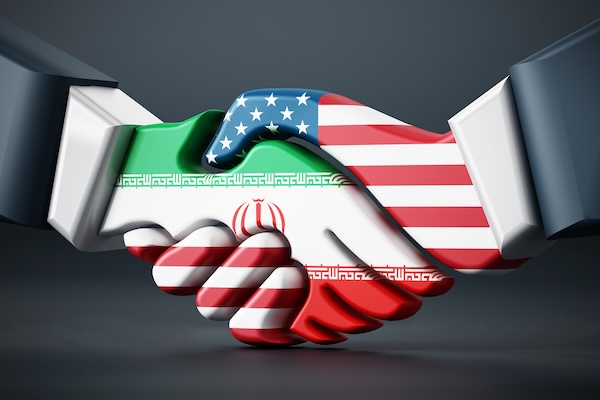
Asian markets traded mixed on Tuesday, as investors digested an overnight Wall Street rally and signs of easing US-Iran tensions ahead of resumed talks in Doha. Australia's ASX 200 hovered near 8,823, little changed as traders awaited the RBA's June meeting minutes and China's PMI data, though the index remains on track for a third straight monthly gain and its first quarterly rise in three. Sector-wise, tech and chip-related stocks broadly outperformed (echoing Monday's chipmaker-led Nasdaq surge), while miners, energy, and some heavyweight names like BHP and Telstra lagged.
Japan's Nikkei and Topix wobbled near the flatline as the yen slid to a 40-year low, stoking intervention concerns, while industrial production data came in softer than expected. South Korea's Kospi briefly rose before reversing to trade lower, with the Kosdaq also down, and Hong Kong's Hang Seng futures pointed to a slightly weaker open.
THE BIG STORY
Meanwhile, US crude inventories continued to deteriorate at an alarming pace. Strategic Petroleum Reserve stocks fell to 325.7 million barrels — the lowest since May 1983 — as Washington drew down reserves under an agreement to release 172 million barrels to offset the supply disruption caused by the Iran war. Combined commercial and SPR stocks have shed 111.4 million barrels since the conflict began in late February, hitting their lowest combined level since 1984, driven by strong export and refining demand for American crude. The deepening drawdown underscores how much the global oil market remains hostage to a ceasefire that is looking increasingly precarious.
Data Spotlight
China's NBS Manufacturing PMI rose to 50.3 in June from 50.0 in May, beating expectations of 50.1 and marking a fourth consecutive month of expansion. Output growth accelerated to 51.4 from 51.2, while new orders returned to expansion at 51.2 after contracting in May.
Takeaway: Both US regional manufacturing and Chinese factory activity showed signs of resilience in June, with forward-looking indicators in Texas and a return to order growth in China offering encouraging signals, even as headline readings remained modest.
WHAT HAPPENED OVERNIGHT
- US stocks rally as Iran ceasefire holds and tech rebounds from recent selloff
- The Dow rose 0.59% to a record closing high, S&P 500 gained 1.18%, and Nasdaq jumped 2.07% as markets shrugged off weekend US-Iran hostilities.
- Markets looked past the missile exchanges, with investors focused on the upcoming earnings season, with most S&P 500 companies set to report after mid-July.
- SpaceX jumped 7.2% after Nasdaq confirmed it will join the Nasdaq 100 on July 7, paving the way for significant passive fund buying.
- Alphabet closed up 4.8% on its first day as a Dow component, while the S&P 500 tech sector gained 1.7% as AI-related stocks rebounded.
- Comcast rose 4.5% after announcing a tax-free spinoff of NBCUniversal and Sky into two independent publicly traded companies.
- RBC Capital Markets raised its 12-month S&P 500 target to 8,150 from 7,900, citing earnings strength and a supportive macro backdrop.
- Quarter-end window dressing may have provided an additional tailwind to equities.
- US-Iran negotiating teams were due in Doha this week, though Iran said no meeting had been formally scheduled.
- Thursday's US jobs report is the next key data point in focus for investors.
- The Dow rose 0.59% to a record closing high, S&P 500 gained 1.18%, and Nasdaq jumped 2.07% as markets shrugged off weekend US-Iran hostilities.
- US Treasury yields fall to early May lows as easing energy prices dampen inflation fears
- The 10-year yield slipped below 4.38%, its lowest since early May, as declining energy prices reduced inflationary risks and tempered expectations for Fed tightening.
- Crude and fuel prices extended their sharp end-of-June decline as tanker flows through the Strait of Hormuz continued to recover, easing supply concerns.
- The inflation relief countered the hawkish projections from the June FOMC meeting, where several officials pencilled in one or more rate hikes this year.
- Long-term yields fell less than energy prices, reflecting lingering concerns over core inflation above 3% and a still-robust labour market.
- Chair Warsh's push to reduce Fed holdings of Treasury notes and bonds, backed by a newly formed task force, added a structural headwind limiting the decline in longer-term yields.
- The 10-year yield slipped below 4.38%, its lowest since early May, as declining energy prices reduced inflationary risks and tempered expectations for Fed tightening.
- US Dollar eases from 14-month highs as falling energy prices trim Fed rate hike bets
- The dollar index slipped to 101.2 from its June 24 peak of 101.8 as lower energy prices led markets to scale back expectations for Fed tightening.
- US and Iran were set to resume peace talks after halting recent attacks, adding continuity to rising tanker flows from the Persian Gulf and pushing crude toward pre-war levels.
- Easing energy costs tempered the hawkish FOMC projections that had driven the dollar's recent rally, though core inflation evidence kept rate hike expectations alive.
- A robust labour market continued to underpin the dollar, with this week's jobs report the next key test.
- Hawkish pivots by the ECB and BoJ, which have already raised rates to combat inflation, helped limit the dollar's broader gains against G10 peers.
- The dollar index slipped to 101.2 from its June 24 peak of 101.8 as lower energy prices led markets to scale back expectations for Fed tightening.
- Oil settles up over 1% as weekend US-Iran strikes highlight ceasefire fragility
- Brent settled at $73.15 per barrel, up by 1.61%, and WTI at $70.75, up by 2.2%, recovering modestly after Brent's 10.6% weekly loss last week.
- US and Iranian technical teams are expected to meet in Doha this week after tit-for-tat weekend strikes threatened to derail the interim peace deal.
- Persian Gulf crude exports are rebounding to at least 75% of pre-war levels, though analysts cautioned a full traffic recovery through the strait remains far off.
- Mines in the waterway, cautious insurers, and ongoing ship attack risks continue to weigh on Hormuz traffic, limiting the pace of supply recovery.
- Iranian and Omani experts will begin talks on redefining Hormuz transit paths, with Iran warning it will obstruct vessels outside designated routes.
- Saudi Aramco resumed crude loadings at its Ras Tanura terminal after a four-month halt, continuing operations even after a company helicopter crash killed 14 nationals on Sunday.
- West Asia producers are pressing ahead with oil and LNG loadings despite fresh ship attacks and renewed US-Iran strikes in recent days.
- Brent settled at $73.15 per barrel, up by 1.61%, and WTI at $70.75, up by 2.2%, recovering modestly after Brent's 10.6% weekly loss last week.
Day’s Ledger*
Economic Data
- UK GDP Data
- Germany May Retail Sales Data
- Germany June CPI Data
- US May JOLTS Job Openings Data
- India Government Finances for April-May
Corporate Actions
- Nagarjuna Fertilizers and Chemicals board to consider earnings
- Supreme Engineering board to consider earnings
- A2Z Infra Engineering board to consider earnings
- Apar Industries board to consider fund raising options
- Bhagyanagar India board to consider fund raising options
- Shanti Gold International board to consider fund raising options
- Suvidhaa Infoserve board to consider fund raising options
- Muthoot Microfin board to consider fund raising options
Policy
- ECB's Elderson Speaks
- ECB's Schnabel Speaks
- ECB's Lane Speaks
- RBA Meeting Minutes
Tickers to Watch
- AXIS BANK said CFO Puneet Sharma will resign effective Aug 31 to pursue the next phase of his professional career.
- BANDHAN BANK said CFO Rajeev Mantri has resigned, with the bank receiving his resignation on June 29.
- HDFC BANK appointed Rajiv Kumar as Additional Independent Director and Part-time Chairman-designate, subject to RBI approval, and named former Axis Bank CFO Puneet Sharma as CFO-Designate from Sep 1 and CFO from Dec 1.
- JAGSONPAL PHARMACEUTICALS signed a share purchase agreement to acquire an 85% stake in Aequitas Healthcare to strengthen its domestic pharma business.
- JUNIPER HOTELS said CFO Tarun Jaitly has resigned and will step down effective July 15.
- RITES signed an MoU with CONCOR to jointly provide end-to-end project management consultancy for logistics infrastructure projects.
- SJVN signed PPAs with GUVNL to supply green power from three hydroelectric projects in Himachal Pradesh with a combined capacity of 658 MW.
- STERLING & WILSON RENEWABLE ENERGY secured a $560 mln LoA through its JV with Hassan Allam Construction for the West Minya Solar Project in Egypt.
- YES BANK approved raising up to ₹75 billion through eligible securities and up to ₹85 billion through debt securities, subject to approvals.
Must Read
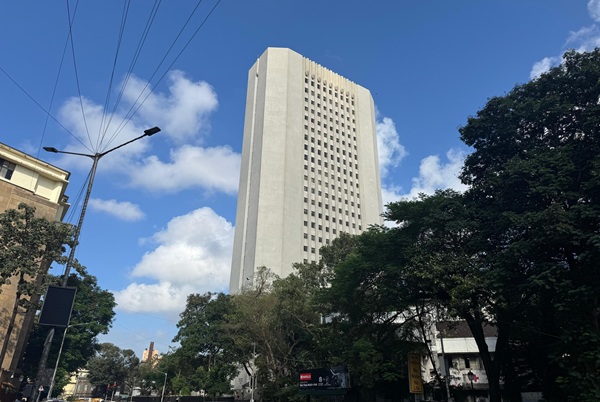
- What the RBI’s Annual Report Reveals Beyond the Record Surplus
- Worrying Signals from Inflation Data
- From Documentation to Diagnosis - Bank Supervision’s Clinical Turn
- HDFC Bank Names Former Finance Secretary & CEC Rajiv Kumar as Part-Time Chairman
- Supreme Court rejects Trump bid to fire Fed's Cook but expands presidential powers
- What's good for the US economy now may not be good for stocks
- Apple accuses India of 'copy-pasting' rivals' claims in antitrust investigation
- Yen hits 40-year low as clock ticks on intervention
See you tomorrow with another edition of The Morning Edge.
Have a great trading day
India’s Export Story Is Written by its States
In India, export outcomes are highly concentrated in a small number of states, even though the policy framework is uniform across the country. Uttar Pradesh accounts for more than 16% of population, but roughly 6% of exports. Bihar has close to 8% of the population but contributes a negligible share of exports. On the other hand, Gujarat, with about 5% of the population, accounts for nearly 30% of exports, while Maharashtra, with around 9-10% of the population, contributes about 17%.
Sagari Gupta writes, even though customs procedures, tariff structures, export incentives and trade agreements apply uniformly, states do not respond uniformly to these instruments because their underlying production bases differ significantly. The National trade policy can expand access to external markets. It can reduce transaction costs and improve efficiency at the margin. But it cannot substitute for production systems that do not exist at scale within a state.
Export expansion ultimately depends on industrial deepening across a wider set of states.
More From BasisPoint