.png)

Asian Markets Cautious as West Asia Conflict Clouds Sentiment
Here’s your quick read to start the day: a chatty, no-fuss look at overnight moves, the big story, what’s on the docket, and the tickers you need to watch.
June 29, 2026 at 1:59 AM IST
GLOBAL MOOD: Cautiously Risk Off
Drivers: US–Iran Ceasefire Uncertainty, Chip Selloff, Sticky Inflation, Oil Oversupply
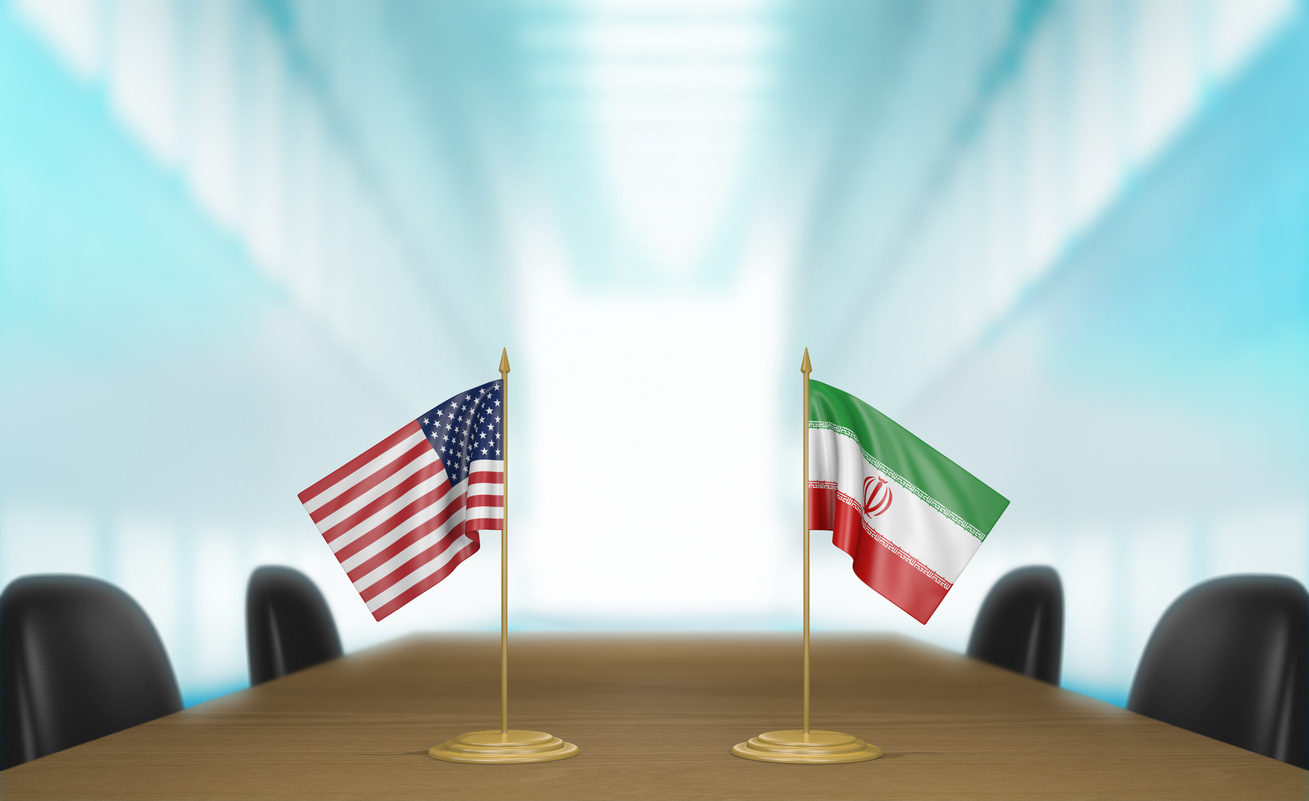
Asia-Pacific markets traded mixed on Monday as investors adopted a cautious, risk-off stance after renewed military exchanges between the US and Iran raised doubts over the durability of their interim peace agreement. South Korea led regional losses, while Japan and Australia were relatively resilient.
Brent crude climbed above $72 a barrel as traders priced in the risk of further disruptions to energy supplies through the Strait of Hormuz, although gains remained contained amid hopes that diplomacy could eventually resume.
Market sentiment deteriorated after the US launched fresh strikes on Iranian military targets following alleged ceasefire violations, prompting President Donald Trump to warn of further military action. Reports that negotiations have been put on hold, despite diplomatic channels remaining open, added to investor uncertainty.
The cautious mood was reinforced by the Bank for International Settlements' warning that elevated geopolitical tensions, supply-chain disruptions, persistent inflation risks and rising global debt continue to threaten financial stability. While the inclusion of SpaceX in the Nasdaq-100 highlighted continued investor enthusiasm for AI-related assets, geopolitical developments remained the dominant driver of global market sentiment.
THE BIG STORY
The fragile US–Iran interim peace accord showed signs of collapse Sunday after Iran launched missiles and drones at US military bases in Kuwait and Bahrain, with each side accusing the other of ceasefire violations. The strike came hours after a tanker was hit in the Strait of Hormuz and followed Trump's threat to "militarily complete the job" and eliminate Iranian leadership if Tehran failed to honour the agreement. Israel's continued strikes on Hezbollah targets in Lebanon on Saturday further complicated the diplomatic picture, with Iran insisting that fighting there must cease as a condition of the broader deal holding. Trump's warning that "the Islamic Republic of Iran will no longer exist" if diplomacy fails marked a sharp escalation in tone, raising the prospect of a return to full-scale conflict just days after the accord was signed.
The Bank for International Settlements added to the cautious mood with its Annual Economic Report on Sunday, warning that record public debt, renewed inflation pressures, financial fragilities, and uncertainty around the sustainability of the AI boom are compounding global vulnerabilities and demand urgent coordinated policymaking. The BIS cautioned that supply disruptions could entrench higher inflation expectations even if the ceasefire holds, and noted it would take time for oil markets to normalise.
Separately, SpaceX was confirmed for inclusion in the Nasdaq-100 starting July 7 — made possible by recently relaxed index entry requirements around profitability and listing tenure — despite posting a $4.9 billion net loss last year, with the addition expected to trigger a significant wave of passive buying into Elon Musk's rocket and AI giant.
Data Spotlight
The University of Michigan Consumer Sentiment Index was revised up to 49.5 in June from a preliminary 48.9, recovering from May's record low of 44.8, supported by easing gasoline prices. The expectations gauge rose to a three-month high of 50.7, as concerns over the long-term impact of the Iran conflict appeared to ease. Year-ahead inflation expectations edged down to 4.6% from 4.8% in May, while long-run expectations fell to 3.3% from 3.9%, both remaining well above pre-conflict levels.
The US goods trade deficit widened sharply to $105.8 billion in May from $83 billion in April, a 14-month high and well above expectations of $85 billion. Imports rose 3.6% to $313.4 billion despite existing tariffs, led by gains in consumer goods, industrial supplies and food. Exports fell 5.4% to $207.7 billion, with industrial supplies and consumer goods registering the steepest declines.
Takeaway: A modest improvement in consumer sentiment and easing long-run inflation expectations offer some relief, though both remain well above pre-conflict levels, reflecting lingering uncertainty tied to the Iran conflict. Meanwhile, a sharply wider goods trade deficit, driven by surging imports and falling exports, underscores the structural pressures facing the US economy and complicates the Federal Reserve's path forward.
WHAT HAPPENED OVERNIGHT
- US stocks end marginally lower as chip selloff offsets healthcare gains
- The S&P 500 fell 0.05%, Nasdaq dropped 0.24%, and the Dow slipped 0.09%, capping a tough week with the S&P 500 down 2.05% and Nasdaq losing 4.7%.
- The PHLX chip index tumbled 5.3% on the day and lost 7.9% for the week, its worst weekly performance since early April, on persistent concerns over AI capex returns.
- Moderna surged 13% to its highest since 2024 after an investor event showcasing its pipeline, while Apple rebounded 3.1% after Thursday's selloff over iPad and MacBook price hikes.
- ON Semiconductor dropped 24% after agreeing to acquire Synaptics in a $7 billion all-stock deal.
- Reports that OpenAI was considering delaying its public debut until next year weighed further on AI-related sentiment.
- Apple's memory-driven price hikes highlighted lingering inflation concerns even as oil prices retreat, with US inflation crossing 4% in May.
- Traders are pricing in one 25bps Fed hike and a 27% chance of a second by year-end, keeping rate concerns alive.
- US consumer sentiment rebounded from record lows in June, though households remained worried about the high cost of living.
- SpaceX edged up 0.15% ahead of its inclusion in Russell indexes, which will require passive funds to buy billions in the stock.
- The S&P 500 fell 0.05%, Nasdaq dropped 0.24%, and the Dow slipped 0.09%, capping a tough week with the S&P 500 down 2.05% and Nasdaq losing 4.7%.
- US Treasury yields little changed as in-line PCE prompts modest pullback in rate hike bets
- The 10-year yield held at 4.39%, down 7 basis points on the week, as a broadly in-line PCE report led investors to slightly pare rate hike expectations.
- Headline PCE rose to 4.1% and core PCE climbed to 3.4%, its highest since 2023 and well above the Fed's 2% target, though both matched forecasts.
- Markets continue to price three Fed rate hikes this year, with the probability of a first move in September at 62%.
- Oil prices extended recent declines despite geopolitical tensions resurfacing after a cargo ship was attacked near Oman in the Strait of Hormuz.
- The 10-year yield held at 4.39%, down 7 basis points on the week, as a broadly in-line PCE report led investors to slightly pare rate hike expectations.
- Dollar slips for a second session as in-line PCE trims rate hike bets slightly
- The dollar index fell to 101.1, with the largest losses against the euro and Swiss franc, though it remains up 0.3% for the week.
- Headline PCE accelerated to 4.1% in May, reinforcing sticky inflation concerns, while the broadly in-line reading prompted modest paring of rate hike expectations.
- Markets still price three Fed hikes this year, with a 62% probability of the first move in September.
- Warsh reaffirmed the Fed's commitment to bringing inflation under control, easing concerns over potential political pressure from Trump to cut rates prematurely.
- The dollar index fell to 101.1, with the largest losses against the euro and Swiss franc, though it remains up 0.3% for the week.
- Oil falls over 4% on Friday, posting steep weekly losses as Hormuz flows surge
- Brent settled at $71.99 per barrel, down 4.34%, and WTI at $69.23, down 3.74%, with Brent losing 10.86% and WTI dropping 9.62% for the week.
- Saudi Aramco resumed oil loading at its Ras Tanura terminal after a nearly four-month halt, with two VLCCs taking on crude as another waited nearby.
- Crude shipments through the Strait of Hormuz rose to their highest level since the war began, though overall traffic remains well below pre-war daily averages.
- Markets shifted toward an oversupply narrative, with analysts warning of a "flood" of oil and gas returning to markets as Gulf exports resume.
- An unknown projectile, believed to have been fired by Iran, struck a cargo vessel near Oman on Thursday, prompting the UN to suspend its voluntary evacuation scheme.
- Iran reasserted its right to control Hormuz shipping and warned Gulf states against siding with the US, keeping passage risk alive despite the ceasefire.
- China's slow pickup in crude demand added to the bearish sentiment alongside rising supply.
- Russia is considering a diesel export ban for several months after Ukrainian drone attacks extensively damaged its refinery infrastructure.
- Brent settled at $71.99 per barrel, down 4.34%, and WTI at $69.23, down 3.74%, with Brent losing 10.86% and WTI dropping 9.62% for the week.
Day’s Ledger*
Economic Data
- India May IIP Data
Corporate Actions
- SIS board to consider share buyback
- Hindustan Aeronautics board to consider dividend
- A2Z Infra Engineering board to consider financial results
- Shree Ram Proteins board to consider financial results
- Yes Bank board to consider fund raising
- Ajooni Biotech board to consider fund raising
- Viceroy Hotels board to consider fund raising
Policy
- ECB President Lagarde Speaks
- Reserve Bank of Australia Assistant Governor Kent Speaks
- BoE MPC Member Pill Speaks
Tickers to Watch
- AUROBINDO PHARMA completed a USFDA inspection of its AuroActive Pharma Srikakulam facility with two observations and no operational or financial impact.
- BAJAJ HEALTHCARE became the first Indian company to secure SEC recommendation for manufacturing and marketing Cenobamate tablets.
- DR REDDY'S LABORATORIES said the USFDA completed a pre-license inspection of its Bachupally biologics facility with seven observations.
- GODREJ INDUSTRIES made an additional investment in its wholly owned subsidiary, Godrej Investment Ltd.
- HDFC BANK said an independent legal review found no evidence supporting allegations made by former Chairman Atanu Chakraborty in his resignation statement.
- HEXAWARE TECHNOLOGIES has been named an Anthropic-authorised reseller for Amazon Bedrock.
- IIFL FINANCE approved raising up to ₹100 billion through equity and other eligible securities, while expanding its global MTN programme and borrowing capacity.
- KEC INTERNATIONAL can resume bidding for Power Grid contracts after the utility revoked its exclusion order ahead of schedule.
- KOTAK MAHINDRA BANK has begun its CEO succession process after Ashok Vaswani decided not to seek another term, with a three-member shortlist expected.
- PERSISTENT SYSTEMS will acquire Nagarro SE for €81 per share, creating a $2.9-billion AI-led digital engineering company, with closure expected by early 2027.
- POWER GRID approved increasing its borrowing limit to ₹2.2 trillion from ₹1.8 trillion, subject to shareholder approval.
- PTC INDUSTRIES approved plans to raise up to ₹18 billion through QIP, preferential issue and other permitted fundraising routes.
- PURAVANKARA approved the sale of its entire stake in Purva Ruby Properties to Prishal Office Parks III for ₹1.45 billion.
- WAAREE ENERGIES clarified that US Customs findings do not conclude it exported solar modules made with Chinese-origin cells to the US.
Must Read
- Meeting China’s Militarisation of AI
- India and Europe Are Courting Again, but Still Misreading the Signals
- The RBI has Delayed Tightening Without Abandoning it
- Your Dopamine Order Is Out for Delivery
- In God We Trust; Everyone Else Gets Audited
- Jio’s Interest Burden Is High, Yet Its Funding Pattern Is Comfortingly Normal
- Did British Rule Leave Indian Women Better Off in the Long Run?
See you tomorrow with another edition of The Morning Edge.
Have a great trading day
Five Reasons Why Modi Should Attend Khamenei’s Funeral
That diplomacy is a tightrope walk is known, but the funeral of former Supreme Leader Ayatollah Ali Khamenei is more than that. Iranian President Masoud Pezeshkian has invited Prime Minister Narendra Modi to the funeral, which will begin on July 4 in Tehran.
Rajesh Ramachandran writes, this is one engagement Modi must attend himself for when he visits Tehran, it would be an assertion of India’s standing in the world, still fighting forces of Anglo-American imperialism in the neighbourhood.
More From BasisPoint