.png)

Asia Stocks Surge on Hopes of Hormuz Reopening
Here’s your quick read to start the day: a chatty, no-fuss look at overnight moves, the big story, what’s on the docket, and the tickers you need to watch.

May 25, 2026 at 1:58 AM IST
GLOBAL MOOD: Risk On
Drivers: Iran Deal Hopes, Hawkish Fed Rhetoric
Asia-Pacific markets reflected a strong risk-on mood on Monday as easing concerns over the West Asia conflict boosted investor appetite for equities and pushed oil prices sharply lower. Japan’s Nikkei 225 surged past the 65,000 mark for the first time, supported by optimism that negotiations between the US and Iran could lead to the reopening of the Strait of Hormuz, a critical global energy shipping route.
Investor sentiment improved after US President Donald Trump said talks with Iran were progressing in an “orderly and constructive manner” and indicated that Washington was willing to give diplomacy more time instead of escalating military action. The comments reinforced hopes that disruptions to global oil supplies could ease in the coming weeks.
Crude oil prices extended last week’s decline, with Brent and WTI falling around 5%, reducing immediate inflation concerns and supporting global equities. Markets also interpreted Trump’s decision to delay planned airstrikes on Iran as a signal that diplomatic engagement remains the preferred path despite persistent geopolitical risks in West Asia.
THE BIG STORY
The comments contrasted with more optimistic remarks made a day earlier, when Trump suggested that Washington and Tehran had largely negotiated a memorandum of understanding aimed at reopening the Strait of Hormuz, a critical route that previously handled roughly one-fifth of global oil and liquefied natural gas shipments. The renewed caution reinforced uncertainty across energy markets and kept investors focused on ongoing supply disruption risks and inflation pressures.
Meanwhile, Federal Reserve Governor Christopher Waller adopted a more hawkish stance on monetary policy, arguing that the Fed should remove any perceived “easing bias” from its policy guidance. Although Waller stopped short of explicitly calling for an immediate rate hike, he said interest rates should remain restrictive until inflation clearly moved back toward the Fed’s 2% target. His comments reflected growing concern among policymakers that inflation pressures linked to elevated energy costs could become more persistent and spread more broadly across the economy.
The combination of prolonged geopolitical uncertainty and increasingly hawkish Fed rhetoric reinforced expectations that US interest rates could remain elevated for longer than previously anticipated.
Data Spotlight
The University of Michigan’s Consumer Sentiment Index fell sharply to a record low of 44.8 in May 2026, revised down from the preliminary reading of 48.2 and marking a third consecutive monthly decline. The deterioration reflected mounting pressure on household finances as disruptions in the Strait of Hormuz continued to push fuel and energy prices higher. Rising living costs remained the dominant concern, with 57% of consumers spontaneously citing high prices as negatively impacting their personal financial situation. Lower-income households and consumers without college degrees recorded the steepest decline in sentiment, highlighting the disproportionate effect of elevated gasoline and essentials costs on more price-sensitive groups.
Inflation expectations also continued to rise. One-year inflation expectations edged higher to 4.8% from 4.7%, while long-run inflation expectations climbed sharply to 3.9% from 3.5%, reinforcing concerns that consumers increasingly believed inflation pressures could spread beyond energy prices into broader areas of the economy. The survey also showed weakening confidence across political groups, particularly among Independents and Republicans.
Takeaway:
The sharp deterioration in consumer sentiment and rising inflation expectations reinforced concerns that prolonged energy disruptions were beginning to weigh more heavily on household confidence, potentially complicating the Federal Reserve’s efforts to contain inflation without damaging growth.
WHAT HAPPENED OVERNIGHT
- US stocks gained as diplomacy hopes and earnings optimism supported sentiment
- S&P 500 rose 0.4%, extending its winning streak to eight consecutive weeks, the longest since December 2023.
- Dow Jones gained 294 points and touched an intraday record high, while Nasdaq advanced 0.2%.
- Investor sentiment improved amid signs of progress in US–Iran negotiations.
- US Secretary of State Marco Rubio said talks with Iran had shown some progress, although major differences remained unresolved.
- Strong corporate earnings continued supporting broader equity market momentum.
- US computer manufacturers rallied after robust results from Lenovo Group.
- Dell Technologies reached a record high, while HP Inc. surged more than 15%.
- Estée Lauder climbed 11.9% after merger discussions with Puig ended.
- Workday rose 5.2% after reporting stronger-than-expected quarterly earnings.
- S&P 500 rose 0.4%, extending its winning streak to eight consecutive weeks, the longest since December 2023.
- US Treasury yields eased as oil-driven inflation fears temporarily softened
- The US 10-year Treasury yield eased to 4.56%, its lowest level in around one week.
- Investor sentiment improved amid renewed optimism that the US and Iran could eventually reach an agreement.
- Hopes for reopening the Strait of Hormuz helped oil prices retreat from recent highs.
- Despite the recent pullback, oil prices remained roughly 50% above pre-conflict levels, sustaining broader inflation concerns.
- Markets continued to view the geopolitical environment as fragile and highly volatile.
- FOMC minutes showed that most Federal Reserve policymakers still believed additional rate hikes may be necessary if inflation remains elevated.
- Traders increasingly priced in the possibility of a 25-basis-point Fed rate hike before year-end.
- The US 10-year Treasury yield eased to 4.56%, its lowest level in around one week.
- US Dollar held steady as markets balanced diplomacy hopes and inflation risks
- The US dollar index traded largely unchanged around 99.3 and remained broadly flat for the week.
- Investors continued to monitor developments surrounding the Middle East conflict and US–Iran negotiations.
- Mixed diplomatic signals improved optimism that a potential agreement could eventually be reached.
- Despite easing from recent peaks, oil prices remained around 50% above pre-conflict levels, sustaining inflation concerns.
- Elevated energy costs continued reinforcing expectations that major central banks would maintain a cautious policy stance.
- The US dollar index traded largely unchanged around 99.3 and remained broadly flat for the week.
- Oil prices rose as uncertainty over Iran deal supported supply concerns
- Brent crude rose 0.94% to settle at $103.54 per barrel, while WTI crude gained 0.26% to close at $96.60 per barrel.
- Both benchmarks had surged more than 3% earlier in the session before trimming gains.
- Investors remained concerned that the US and Iran may fail to reach a peace agreement soon.
- Ongoing uncertainty around the Strait of Hormuz continued to support fears of prolonged supply disruptions.
- Oil prices remained highly volatile as market expectations shifted repeatedly around the prospects for a diplomatic resolution.
- On a weekly basis, Brent declined 5.48% while WTI fell 8.37% despite Friday’s rebound.
- Brent crude rose 0.94% to settle at $103.54 per barrel, while WTI crude gained 0.26% to close at $96.60 per barrel.
Day’s Ledger*
Corporate Actions
- Earnings: Aditya Birla Fashion and Retail, Ajmera Realty & Infra India, Asian Hotels (West), BGR Energy Systems, Federal-Mogul Goetze (India), Harrisons Malayalam, HeidelbergCement India, Hitachi Energy India, IFB Industries, Kalyani Forge, Lyka Labs, NBCC (India), Nesco, Rail Vikas Nigam, Raymond, Steel Exchange India, Sundaram Finance, Surya Roshni, Suzlon Energy, and Zuari Industries,
Tickers to Watch
- COLGATE-PALMOLIVE reported in-line profit and margins, raised ad spends by 10%, and approved a second interim dividend of ₹24 per share.
- DIVI'S LABORATORIES reported Q4 net profit growth of 13% YoY, with EBITDA at ₹9.34 billion and margins at 33%.
- EICHER MOTORS reported Q4 revenue, EBITDA and profit above estimates, while recommending a final dividend of ₹82 per share.
- HINDALCO INDUSTRIES reported an 88% YoY rise in standalone Q4 net profit to ₹29.34 billion from ₹15.61 billion.
- INDIGO PAINTS reported a marginal 1.4% YoY rise in Q4 net profit to ₹580 million.
- KOLTE-PATIL DEVELOPERS posted a Q4 net loss of ₹160 million versus profit of ₹650 million a year ago.
- LUPIN received China NMPA approval for Oseltamivir Phosphate oral suspension developed with Yabao Pharmaceuticals.
- NTPC GREEN ENERGY reported a 15.6% YoY fall in Q4 net profit to ₹1.97 billion despite strong revenue and EBITDA growth.
- RBL BANK said Emirates NBD launched an open offer to acquire up to 415.9 million shares, representing 26% stake, at ₹282.38 per share.
- THE RAMCO CEMENTS reported Q4 net profit surged to ₹1.46 billion from ₹310 million last year.
- TORRENT PHARMA posted 41.8% revenue growth, below expectations, while EBITDA came in at ₹13.56 billion versus estimates of ₹13.04 billion.
Must Read
- How India’s 2015 Model BIT Hurt Investor Confidence
- Rubio’s $500 Billion India Claim Overlooks Collapse of BTA Logic
- A Leaked Cable that Tells a Post-Colonial Story
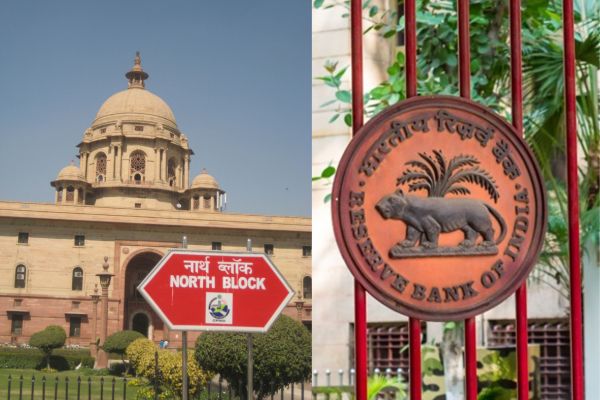
- RBI to Transfer Record ₹2.87 Trillion Surplus To Govt, CRB Buffer Set Lower at 6.5%
Three months in, is Trump losing the Iran war?
Iran has not agreed to hand over highly enriched uranium stockpile, senior Iranian source tells Reuters - ECB Faces Pressure to Hike as Iran War Feeds Prices, Kocher Says
- How a ‘Cockroach’ Jibe United India’s Jobless Youth
See you tomorrow with another edition of The Morning Edge.
Have a great trading day
RBI Dividend: The Lifeline for the Centre and Markets
The RBI’s record ₹2.9 trillion dividend is a lifeline for the Centre. But it is not a free pass. The payout, broadly in line with the 2026-27 Budget estimate, gives the government little additional fiscal room at a time when West Asia risks could raise subsidy spending and force fuel duty cuts. The fiscal pressure could be as much as 0.4% of GDP.
Gaura Sengupta writes, for markets, the bigger near-term impact is liquidity. The dividend will flow into the banking system over the next one to two months, giving the RBI some breathing room on open market purchases.
But that relief may be temporary. Currency leakage and dollar sales by the RBI are likely to drain liquidity again in the second half of 2026-27. Durable liquidity infusion needs could be around ₹7 trillion this year, including the impact of cash withdrawals and FX intervention.
So the dividend may delay OMO purchases. It may not replace them.The key question for bond markets: does the RBI dividend mark a liquidity turning point, or just a short pause before OMOs return?
(*Compiled from various media sources)
More From BasisPoint