On August 20, 2026, US Treasury Secretary Scott Bessent announced what he called the toughest sanctions in history against Iran after nearly six months of war failed to produce a decisive military outcome. Iran responded on August 23, warning that continued economic warfare could halt all oil exports through the Strait of Hormuz and the Persian Gulf. On August 24, Iran called the campaign “economic terrorism,” while China rejected Washington’s sanctions and promised to protect its interests. The defiance by Tehran and Beijing raises doubts about whether the US can enforce a global financial blockade without disrupting oil markets or triggering a new economic confrontation with China.
The US offensive may hurt Iran, but its success will depend largely on China, which buys most of Iran’s exported oil. Washington may hesitate to impose its harshest sanctions on major Chinese banks because that could open another economic front with Beijing. India’s limited trade with Iran means the direct impact should be small, but the indirect risks are serious: higher oil prices, disruption in the Strait of Hormuz, rising freight and insurance costs, and possible US tariffs of up to 100% over India’s purchases of Russian energy. For India, the real danger lies not in its reduced trade with Iran but in the widening reach of US secondary sanctions due to imports from Russia and the threat of a prolonged Gulf conflict.
History Repeats
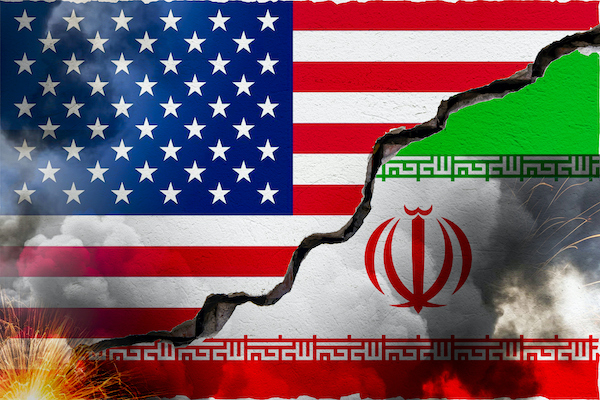
The US–Iran war is entering a more dangerous economic phase as Washington, unable to secure a decisive military outcome, prepares tougher sanctions against Tehran and its major trading partners. Iran and China have rejected the pressure, raising doubts about whether the US can enforce a global financial blockade without risking a wider confrontation with Beijing.
The conflict increasingly carries echoes of a Vietnam-like trap for Washington: a prolonged war with heavy financial costs, military losses and no clear political victory. Missiles, air-defence systems and other sophisticated equipment used in the war will take time and significant investment to replace. The US is therefore shifting toward economic pressure to weaken Iran while avoiding another costly military offensive.
The US first imposed sanctions on Iran in 1979 and expanded them into a near-total trade and financial embargo from 1995 onward. Enforced through presidential orders and laws including the Iran Sanctions Act and CAATSA, the measures generally prohibit US companies from trading with Iran, freeze Iranian assets under American control and expose foreign companies to secondary sanctions. They target Iran’s central bank, oil, petrochemicals, metals, manufacturing, aviation and shipping. The Treasury also blacklists exchange houses, shadow-fleet tankers and front companies linked to the Islamic Revolutionary Guard Corps and Iran’s missile and drone programmes.
The present war began with US–Israeli strikes on February 28, 2026. Nearly six months later, American attacks have damaged Iran’s military and nuclear infrastructure, while the US naval blockade has restricted Iranian oil shipments. But Washington has not secured Iran’s surrender, fully dismantled its nuclear programme or forced a regime change. Peace negotiations have also stalled, producing a military and diplomatic stalemate.
Treasury Secretary Bessent described the new financial offensive as a “one-two punch” combining the naval blockade with the toughest sanctions in history. In a subsequent Financial Times article, he called it an “economic D-Day” and the greatest financial offensive ever assembled against an adversary.
The campaign aims to isolate Iran by penalising foreign oil buyers, banks, shipping companies and intermediaries. Bessent specifically named China, which buys more than 80% of Iran’s shipped oil. Chinese independent refineries and banks processing payments could face secondary sanctions or exclusion from the US financial system.
Iran responded immediately. On August 23, security chief Mohsen Rezaei warned that continued economic warfare could stop all oil exports through the Strait of Hormuz and elsewhere in the Persian Gulf. He said countries supporting Washington would be treated as participants in an act of war. On August 24, Foreign Ministry spokesman Esmaeil Baghaei called the campaign “economic terrorism” and warned that Iran’s “hands are not tied.”
China also rejected Washington’s demands. On August 24, Foreign Ministry spokesman Lin Jian said pressure and sanctions would not resolve the conflict. Beijing opposes unilateral sanctions without United Nations authorisation and has promised to take necessary measures to protect its interests. Washington may therefore hesitate to impose its harshest penalties on major Chinese banks, as that could open a new economic front with Beijing.
For India, the direct trade impact should remain limited. Indian exports to Iran fell from $3.5 billion in FY2019 to $1.2 billion in FY2026. Rice accounted for $810 million, tea and coffee $82 million, medicines $63 million, bananas $54 million, sugar $48 million and pulses $34 million. Food and medicines may receive exemptions, although exporters could still face payment, freight and insurance problems.
Imports from Iran fell from $13.5 billion in FY2019, including $12.4 billion of crude oil, to less than $375 million in FY2026. Major imports included bitumen at $138 million, apples at $41 million, almonds at $36 million and dates at $35 million. India also imported Iranian crude worth $430.5 million in April 2026 and $276.7 million in May under a temporary US exemption.
India’s bigger risks are higher oil prices, disruption in the Strait of Hormuz and the Sanctioning Russia and Iran Act of 2026, passed by the US Senate on August 7 by an 86–11 vote. If enacted, it could authorise tariffs of up to 100% against major buyers of Russian energy.
.png)