.png)

Rupee Near 100: When Currency Weakness Reflects a Trust Deficit
The rupee’s slide reflects fading confidence in India’s monetary credibility, fiscal discipline and the RBI’s ability to anchor investor trust.

Venkat Thiagarajan is a currency market veteran.
May 21, 2026 at 3:14 AM IST
The rupee’s weakness is not merely an economic phenomenon. It is increasingly institutional.
The idea of dollar/rupee at 100 has become more than a numerical milestone. It is now a psychological threshold dominating every foreign exchange conversation. The rupee’s weakness is not just cyclical or global in origin. It increasingly reflects a slow erosion of institutional confidence that has built up over several years. In a world of tight liquidity and expensive capital, credibility is the single most important asset a central bank possesses. The Reserve Bank of India now faces questions over credibility across multiple fronts, and the rupee is increasingly reflecting that concern.
The most consequential damage stems from the RBI’s role as fiscal backstop.
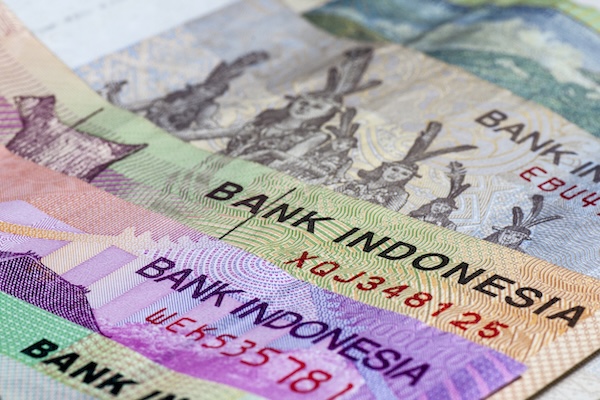
Large dividend transfers to the government may appear fiscally useful in the near term, but they risk undermining institutional independence. Peer central banks in Brazil, Mexico, South Africa and Indonesia have preserved their standing by maintaining a clearer separation between monetary policy and fiscal management. In India, that distinction has become increasingly blurred.
Once investors perceive the RBI as an extension of fiscal policy, risk premia rise, inflows slow, and the currency weakens. In emerging markets, where credibility is fragile, this perception can be damaging. India does not face the same conditions as Turkey or Argentina, but credibility erosion is precisely the channel through which emerging-market currencies begin to attract a discount.
Anchoring Bias
In 2026, with higher global yields and selective inflows, this assumption is misplaced. Large forward positions now magnify hidden risks, while shrinking them later may read less as stabilisation than as a response to accumulated pressure.
The subsequent “caged bird” policy of micromanaging the rupee within a narrow band through simultaneous buying and selling Large amounts , at times even exceeding the commercial volumes , did not inspire confidence either.
Frequent Buy Sell swap auctions deployed to support domestic liquidity while simultaneously building forward FX positions risk being read by markets as instruments that defer rather than resolve present stress. A large forward short position is a recognised marker of vulnerability, and India’s scale stands out among emerging market peers. The forward book becomes a “shadow reserve drain”: the larger it grows, the more investors conclude the central bank is firefighting.
Headline reserve figures no longer reassure unless adjusted for forward obligations.
Communication Deficit
Modern central banking recognises communication as a policy tool. Silence breeds speculation, and speculation magnifies volatility. Brazil’s Banco Central and Mexico’s Banxico have shown that proactive communication can cushion FX markets even through tough times. India’s communication gaps may have deepened market unease
The external backdrop has also become far less forgiving. The era of indiscriminate capital chasing emerging-market yield is over. Bond yields in the US and Europe are structurally higher, raising the hurdle rate for EM inflows. India can no longer rely on “automatic” capital chasing rupee assets.
Without strong institutional credibility, the country faces the twin challenge of elevated global capital costs and weaker domestic confidence. Investors are pricing risk with a rigour more reminiscent of the 1980s and 1990s than the QE era.
Calls for internationalising the rupee have been premature.
Meaningful internationalisation requires deep capital markets, credible institutions, and sustained global trust. Without these foundations, the narrative appears aspirational rather than realistic. Instead of strengthening credibility at home, India risks projecting overreach abroad.
India’s large public debt looms as a hanging sword. Rising debt without credible consolidation magnifies fiscal fragility and increases FX risk. The rupee’s depreciation, therefore, is as much a fiscal story as a monetary one.
Taken together, these negatives form a credibility spiral: fiscal buffering erodes independence; the caged bird exchange rate undermines transparency; limited communication magnifies uncertainty; higher global capital costs raise the hurdle; premature internationalisation distracts from fundamentals; and public debt magnifies fragility. Each factor feeds into the next, leaving the rupee more vulnerable to persistent depreciation.
Strategic Path
In a tight-money world, credibility is the only shield against volatility. Without it, the rupee remains structurally exposed, and credibility erosion is the channel through which emerging-market currencies can drift toward chronic weakness.
More From BasisPoint